






A New Frontier in Education
Gone are the days when learning about space was confined to textbooks. Today, Indian students can get their hands dirty—not with soil, but with petabytes of data streaming from satellites orbiting the Earth. Spearheaded by the Indian Space Research Organisation
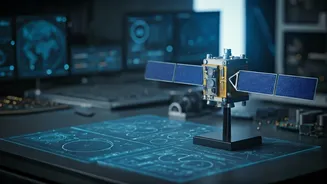
(ISRO) and supported by the government, a suite of new programs is transforming education. Initiatives like ISRO's Student Satellite Programme are providing structured pathways for young people to participate directly in space missions. Through these programs, students from universities and colleges, including those in smaller towns, can design payloads, develop satellite components, and even build entire satellites under the mentorship of seasoned ISRO scientists. The government has backed these efforts by establishing Space Technology Incubation Centres (STICs) and Regional Academic Centres for Space (RAC-S) across the country, creating a direct bridge between academic institutions and India's space ambitions.
From Data to Discovery
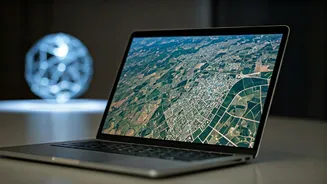
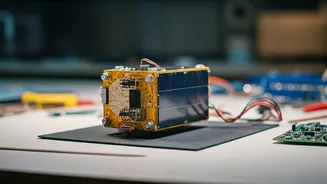
So, what can a student actually do with satellite data? The possibilities are as vast as space itself. Instead of just reading about climate change, they can analyse satellite imagery to track melting glaciers or monitor deforestation in real-time. They can use remote sensing data to study urban sprawl in their own cities, assess crop health for local farmers, or even help with disaster management by mapping flood-affected areas. These are not theoretical exercises. Through competitions organised by the Indian National Space Promotion and Authorisation Centre (IN-SPACe), students are already building and launching small 'CanSats'—satellites the size of a soft drink can—to test their ideas. ISRO provides technical guidance and, crucially, access to the data collected from its own fleet of satellites, which students can then use for analysis and further research.
Building Skills for Tomorrow
The real value of these initiatives goes far beyond space science. By working with satellite data, students are developing some of the most in-demand skills for the 21st-century economy. They are learning data analysis, programming, critical thinking, and complex problem-solving. This hands-on experience is a game-changer, moving education from rote memorisation to practical application. As of early 2026, IN-SPACe had already authorised 17 student-led satellite projects, with 11 successfully launched, involving institutions like RV College of Engineering and Amity University. This shows a growing trend of project-based learning that prepares students not just for exams, but for careers in a data-driven world, whether in the space sector, environmental science, urban planning, or technology.
Powering India's Future Space Economy
This push to empower students is a strategic move to secure India's future in the global space economy. With the government's 2023 space policy encouraging private participation, India aims to significantly increase its share of the multi-billion dollar market. To achieve this, the country needs a robust pipeline of skilled engineers, scientists, and entrepreneurs. By engaging students at an early stage, ISRO and IN-SPACe are cultivating a generation that is not only passionate about space but also equipped with the technical expertise to innovate. The government has allocated around ₹10 crore annually for these student-focused activities, viewing it as a critical investment in building an 'Aatmanirbhar' capacity in satellite technology and nurturing the next generation of space entrepreneurs.