

Beyond the Postcard Picture
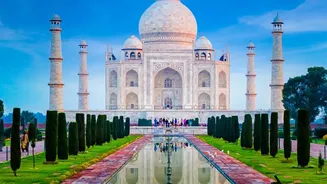
For decades, travel was often a mission of acquisition—collecting passport stamps and ticking off a list of famous sights. You went to Agra to see the Taj Mahal, to Paris for the Eiffel Tower, to Rome for the Colosseum. But a new travel philosophy is taking
hold, one that values participation over observation. Known as experiential or immersion travel, it prioritises actively and meaningfully engaging with a destination’s culture, people, and environment. Instead of simply looking at a place, the goal is to become part of it, even for a short while. It’s the difference between watching a chef cook from a distance and taking a class to learn the region's recipes yourself. It’s choosing a village homestay over a city hotel to understand daily life. This approach transforms travel from a passive activity into a journey of discovery.
The Search for Authentic Connection
So, why the change? Several factors are driving this move towards more meaningful journeys. Modern travellers, particularly younger generations like Millennials and Gen Z, increasingly report a desire for authentic connections that feel real and respectful. In a hyper-digital world, there’s a growing hunger for tangible, hands-on experiences that provide a sense of personal growth and self-discovery. The focus is shifting from how much was seen to how deeply a place was understood. This quest for authenticity is reshaping the market. In India, the experiential travel sector is projected to soar to USD 45 billion by 2027, largely fuelled by travellers in the 18-35 age group. This demographic shows a clear preference for curated, immersive activities over traditional sightseeing.
What Does This Look Like in India?
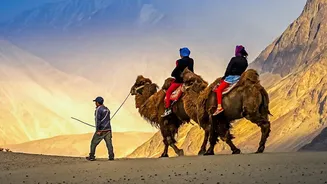
India, with its immense diversity, is perfectly suited for this new era of travel. The possibilities are as varied as the country itself. In Rajasthan, it could mean skipping a crowded fort tour to instead learn the art of block-printing from a local artisan. In the backwaters of Kerala, it might involve forgoing a standard houseboat route to learn traditional fishing techniques with a local family. Adventure tourism is also evolving; treks in Himachal Pradesh or Ladakh are increasingly combined with monastery stays and homestays that offer deep cultural immersion. Even food tourism has moved beyond just restaurant-hopping. Travellers are now seeking out farm-to-table dining, participating in cooking classes in local homes, and exploring neighbourhood markets to understand the story behind the food. These activities create a stronger connection to place and community, turning a simple holiday into a collection of lasting memories.
Your Next Holiday, Reimagined
This trend doesn't mean you should never see a famous monument again. Instead, it suggests a new layer to travel planning. The central question is shifting from “Where do I want to go?” to “What do I want to feel and do?” The travel industry is responding, with more companies offering everything from community-based tourism and eco-tours to creative workshops and spiritual retreats. These options empower travellers to support local economies directly and engage in more sustainable forms of tourism. For the individual, it opens up a world of possibilities. It encourages a slower, more intentional pace, where the goal isn't to rush through a checklist, but to truly absorb the atmosphere of a place. It’s about being a participant, not just a spectator.