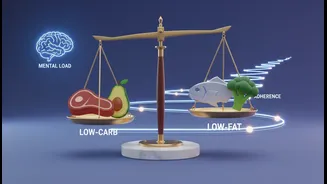








The Great Diet Debate: A Look at the Evidence
For years, headlines have pitted low-carbohydrate diets against low-fat plans as the ultimate solution for weight loss. Short-term studies often fuel this fire, showing one approach or the other yielding faster results in the first few months. This has
created a confusing landscape for anyone looking to manage their weight, suggesting that choosing the 'right' macronutrient to restrict is the most critical decision. However, when researchers extend their view beyond a few months to a year or more, a different and more consistent picture emerges. Major clinical trials, such as the widely cited DIETFITS study, have looked at the long-term effects of these competing diet plans. In this year-long study involving over 600 participants, researchers found no significant difference in average weight loss between those on a healthy low-fat diet and those on a healthy low-carb diet. After 12 months, both groups had lost a similar amount of weight, a finding echoed in other long-term analyses.
The Real Key to Success: Adherence
If the type of diet isn't the deciding factor, what is? The data consistently points to a far more straightforward concept: adherence. In simple terms, the best diet is the one you can actually stick with. Long-term studies reveal that initial differences in weight loss between diet groups tend to disappear over time, largely because people struggle to maintain highly restrictive eating patterns. Adherence isn't about willpower; it's about sustainability. A diet plan might look perfect on paper, but if it requires you to give up all your favourite foods, clashes with your social life, or feels impossibly complex, your ability to follow it will dwindle. The DIETFITS study emphasised teaching participants to find the lowest level of fat or carbohydrate intake they could maintain indefinitely, focusing on personal sustainability over rigid, universal rules. This highlights that consistency over a long period is far more impactful than a short, intense burst of extreme dieting.
Don't Underestimate the Mental Load
Closely tied to adherence is the concept of 'mental load'—the psychological and emotional energy a diet demands. This includes the constant calorie counting, meal planning, worrying about 'good' and 'bad' foods, and navigating social situations. When a diet carries a heavy mental load, it can lead to stress, anxiety, and decision fatigue, all of which can sabotage your efforts. The pressure to adhere perfectly can create a cycle of restriction, failure, and self-blame that harms mental well-being and erodes self-trust. Studies have shown that the stress and obsessive patterns associated with rigid dieting detract from daily joy and can lead to burnout. A sustainable approach, therefore, must be one that doesn't overwhelm you. It should feel like a supportive framework, not a stressful chore that consumes your every thought.
How to Find Your Sustainable Fit
Instead of searching for the 'best' diet, the evidence encourages a shift in perspective towards finding the best diet for you. Start by considering your personal preferences, cultural food habits, and lifestyle. Do you enjoy cooking, or do you need quick and easy meal options? Do you feel more satisfied with higher protein and fat, or do you prefer more grains and fruit? The most successful long-term plans, regardless of their macronutrient focus, tend to share common principles: they emphasise whole, minimally processed foods, lots of vegetables, and limited added sugars and refined grains. A focus on food quality, rather than just macronutrient numbers, can make any eating pattern healthier and more satisfying. Rather than adopting a strict set of rules from a book, try to build a dietary pattern that aligns with your life and brings you a sense of well-being, not deprivation.