



Shukrayaan-1: India's Next Interplanetary Frontier
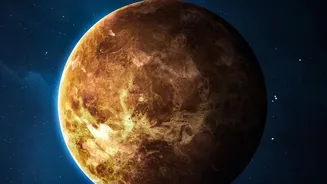
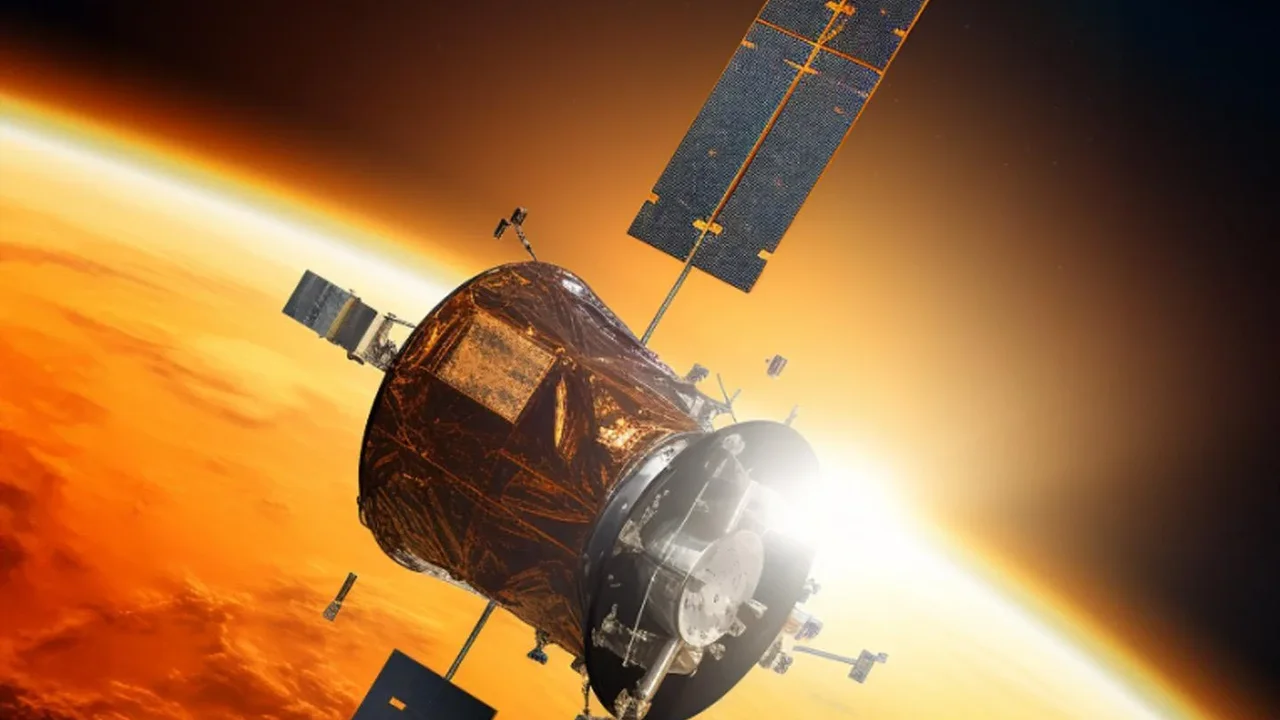
Following the historic success of the Mangalyaan Mars mission, the Indian Space Research Organisation (ISRO) is setting its sights on our other planetary neighbour. Shukrayaan-1, which translates to 'Venus Craft', is India's first dedicated mission to the second
planet from the sun. Formally approved by the Union Cabinet in September 2024, the mission is a significant step in expanding India's space exploration capabilities. The spacecraft is slated for launch aboard the powerful LVM-3 rocket on March 29, 2028, with a planned arrival into Venusian orbit on July 19, 2028, after a 112-day journey. This mission aims not just to fly by, but to enter a stable orbit to conduct a long-term, detailed study of this enigmatic world for over four years.
Why Venus? The Mystery of a Paradise Lost
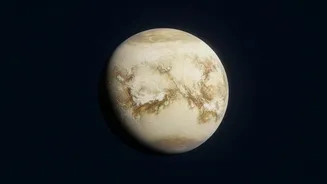
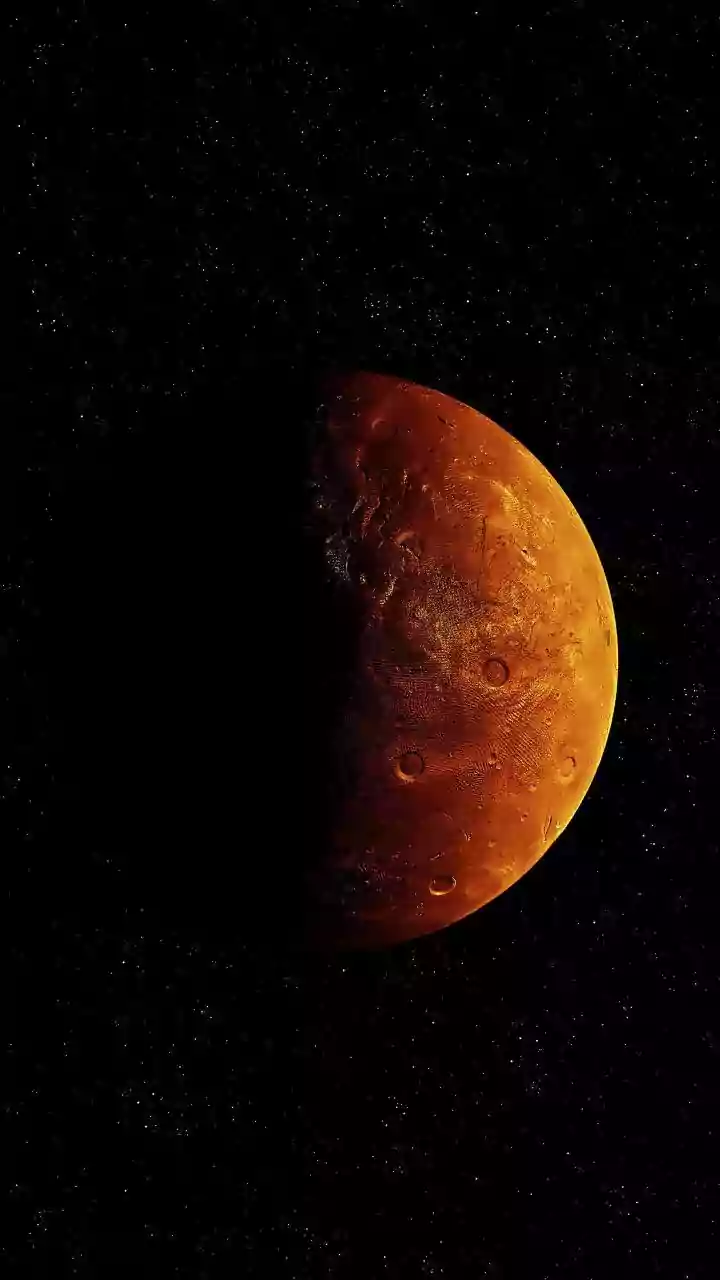
Venus is often called Earth's twin, and for good reason. It is similar in size, mass, and composition, suggesting the two planets had a similar start in life. Yet, they could not be more different today. Venus suffers from a runaway greenhouse effect, creating a toxic carbon dioxide atmosphere that is 90 times denser than Earth's and a surface temperature hot enough to melt lead. Scientists believe Venus may have once hosted liquid water oceans, much like early Earth. Understanding what caused this dramatic divergence—why Earth became a haven for life while Venus became a hellscape—is one of the biggest questions in planetary science. Studying Venus can provide crucial insights into planetary climate models, helping us better understand the long-term future of our own atmosphere.
The Toolkit: A Look at Shukrayaan's Advanced Sensors
To unravel Venus's secrets, Shukrayaan-1 will be equipped with a sophisticated suite of scientific instruments, including collaborations with Russia, Sweden, and Germany. A key instrument is a high-resolution Synthetic Aperture Radar (SAR), which is capable of peering through the planet's thick, permanent cloud cover to map the surface with unprecedented detail. This will search for evidence of active volcanoes and other geological features. Another groundbreaking instrument is a ground-penetrating radar, a first for any Venus mission, which will investigate the planet's sub-surface. Other sensors are designed specifically to analyze the chemical makeup of the atmosphere, studying its super-rotating winds and the composition of its sulphuric acid clouds.
Chasing Atmospheric Ghosts and Unexplained Signals
The Venusian atmosphere is a cauldron of chemical mysteries. For decades, scientists have noted an unknown substance in the upper clouds that absorbs ultraviolet light. Shukrayaan-1’s atmospheric sensors will aim to identify this and other unexplained components. One of the mission’s most intriguing goals is to investigate trace gases that appear to be out of thermodynamic equilibrium, including sulphur dioxide and even potential signs of phosphine—a gas that, on Earth, is associated with biological processes. While the initial phosphine detection remains highly debated, Shukrayaan’s instruments, like the VIRAL spectrometer, are specifically designed to hunt for these chemical clues in the cloud layers, which could point to unknown geological or even atmospheric processes.
A Global Effort from Indian Soil
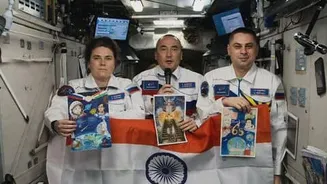
While Shukrayaan-1 is an Indian-led mission, it has attracted significant international partnership, turning it into a global scientific endeavor. Payloads from the Swedish Institute of Space Physics will study the interaction between the solar wind and the Venusian atmosphere. Collaborations with Russian and German space agencies will also provide crucial instruments for atmospheric analysis. This approach not only enhances the mission's scientific capabilities but also cements India's role as a key player in international space exploration. By bringing together global expertise, ISRO aims to deliver a comprehensive picture of Venus, contributing vital data that will benefit the entire scientific community for decades to come as we seek to understand the evolution of planets in our solar system and beyond.