






From a Barren Rock to a Frozen Reservoir
For decades, the Moon was considered a completely dry, desolate world. The Apollo samples brought back to Earth seemed to confirm this, showing a surface baked dry by billions of years of solar radiation. But that picture began to change, thanks in large
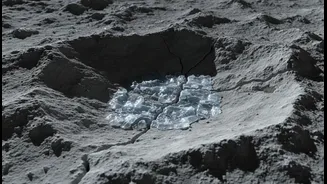
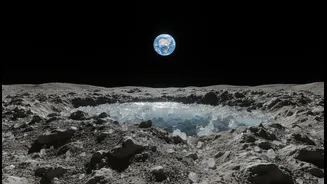
part to India's space programme. The paradigm shift started with ISRO's Chandrayaan-1 mission in 2008, which carried a NASA instrument called the Moon Mineralogy Mapper (M3). It provided the first definitive, high-resolution proof of water molecules on the lunar surface. This wasn't liquid water in lakes or rivers, but molecules bound to minerals in the lunar soil and, excitingly, concentrated deposits of water ice in the darkest, coldest parts of the Moon: the permanently shadowed regions (PSRs) at the poles. These areas haven't seen sunlight in billions of years, making them perfect cold traps for preserving ice.
Chandrayaan-2 Peels Back the Layers
While Chandrayaan-1 found water on the surface, its successor, Chandrayaan-2, is providing tantalising clues about what lies beneath. The orbiter, which has been circling the Moon since 2019, is equipped with a powerful instrument called the Dual-Frequency Synthetic Aperture Radar (DFSAR). Unlike optical cameras, radar can peer below the surface. Recent findings from scientists at the Physical Research Laboratory, using DFSAR data, indicate the possible presence of significant subsurface ice deposits. The radar signals scattered back from the floors of extremely cold 'doubly shadowed' craters—craters within craters—show characteristics consistent with buried ice. One crater within the larger Faustini crater near the south pole showed particularly strong evidence. This finding suggests there could be 5 to 8 times more ice in the first few meters of the subsurface than on the surface itself, a game-changer for accessibility.
The Ultimate In-Situ Resource
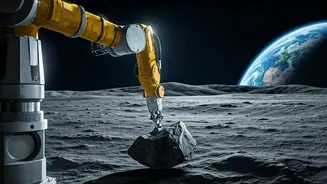
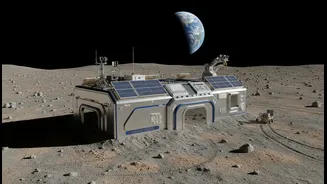
The confirmation and mapping of lunar ice is arguably the single most important factor for enabling a sustainable human presence on the Moon. The concept is known as In-Situ Resource Utilization (ISRU), or 'living off the land'. Launching materials from Earth is incredibly expensive; every kilogram costs thousands of dollars. Finding resources on the Moon drastically cuts down on the mass and cost of a mission. Water is the most critical of these resources. It can be melted for drinking and sanitation for astronauts. Through a process called electrolysis, it can be split into its constituent parts: oxygen and hydrogen. The oxygen can be used for breathable air inside lunar habitats, while the hydrogen and oxygen together form a potent rocket propellant. A lunar base with access to water ice could effectively become a refueling station for missions deeper into the solar system, like to Mars.
Guiding the Next Wave of Explorers
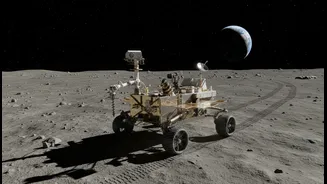
ISRO's data isn't just a scientific curiosity; it's a practical roadmap. International partners, including NASA, are using this information to plan future missions. The Artemis program, which aims to land humans on the lunar south pole, relies on high-resolution maps to identify safe and resource-rich landing sites. Data from the Chandrayaan-2 orbiter, with its high-resolution cameras and radar, helps mission planners identify potential hazards and locate promising areas for ice extraction. In fact, data from Chandrayaan-2 was shared with Japan's space agency, JAXA, to help its SLIM lander achieve its historic precision landing in early 2024. By identifying where the ice likely is, ISRO's science missions are directly influencing the engineering and logistical decisions for the next generation of robotic and human explorers.