

1. Makhan Mishri
No Janmashtami bhog is complete without Makhan Mishri, believed to be Lord Krishna’s absolute favourite. This offering symbolises the innocence and sweetness of his childhood. Its preparation is the simplest of all, requiring only two core ingredients.
To make it, take fresh, unsalted white butter (makhan) in a bowl. Add a generous amount of rock sugar (mishri) and mix them gently. Some devotees like to chill the mixture before rolling it into small, bite-sized balls. You can also add a few saffron strands for colour and aroma. This simple yet profound offering represents pure love and is an essential part of the day's rituals.
2. Dhaniya Panjiri
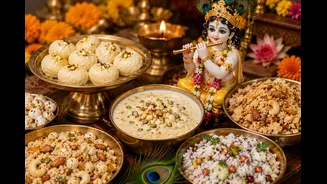
Dhaniya Panjiri is a unique and traditional prasad made especially for Janmashtami, as it's prepared without grains, making it suitable for those who are fasting. To start, dry roast whole coriander seeds on a low flame until they become fragrant, then let them cool and grind them into a coarse powder. In a pan with a little ghee, roast some makhana (fox nuts), chopped almonds, and cashews until they turn golden. In the same pan, lightly roast some grated dry coconut. Combine the ground coriander powder, roasted nuts, makhana, and coconut in a bowl. Finally, add powdered sugar and a pinch of cardamom powder, mixing everything well. This aromatic and nutritious offering is a staple in North Indian celebrations.
3. Panchamrit
Panchamrit, which translates to 'five nectars', is a sacred concoction used in Hindu pujas and is an integral part of the Janmashtami bhog. It is made by combining five pure ingredients: raw cow's milk, curd (yoghurt), honey, ghee (clarified butter), and sugar. To prepare it, simply take a clean bowl and gently mix all five elements together. It's important not to whisk or blend them vigorously. Some variations include adding a few tulsi leaves, makhana, or chopped nuts. This holy mixture is first used for the 'abhishek' (ritual bathing) of the infant Krishna idol and then distributed as prasad.
4. Makhana Kheer
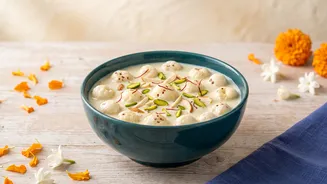
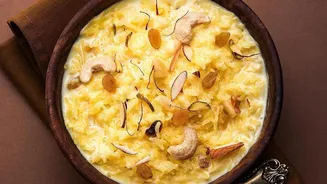
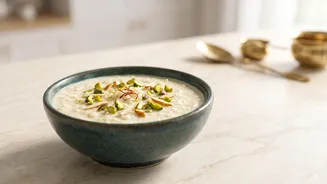
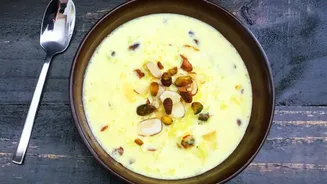
A creamy and delightful dessert, Makhana Kheer (fox nut pudding) is another popular fasting-friendly dish prepared for Janmashtami. To make this, start by roasting one cup of makhana in a tablespoon of ghee until they are crisp. Set aside a quarter of the roasted makhana and coarsely crush the rest. In a separate heavy-bottomed pan, bring about a litre of full-cream milk to a boil. Let it simmer and reduce slightly before adding both the whole and crushed makhana. Cook on a low flame, stirring occasionally, until the makhana softens and the kheer thickens. Add sugar to your liking, along with some cardamom powder and sliced nuts like almonds and pistachios.
5. Gopalkala
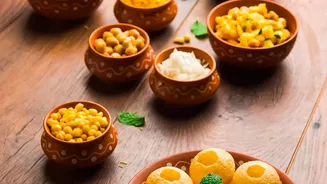
Gopalkala, also known as Dahi Poha, is a savoury Maharashtrian dish that recreates the meal Krishna shared with his cowherd friends. It’s a simple, no-cook recipe that is both refreshing and wholesome. To prepare it, wash and soak about a cup of poha (flattened rice) for a few minutes, then drain the water completely. In a bowl, combine the soaked poha with fresh curd, finely chopped cucumber, grated coconut, and salt. For the tempering, heat a little ghee in a small pan, add cumin seeds, and let them crackle. You can also add chopped green chillies and ginger. Pour this tempering over the poha mixture and mix well.
6. Milk Peda
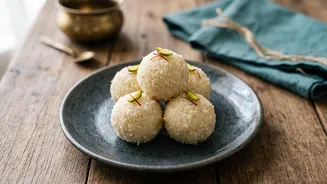
Peda is a classic Indian sweet that is almost synonymous with festive offerings. While traditional pedas can be time-consuming, you can make a quick version using condensed milk or milk powder. For an easy recipe, combine one cup of milk powder with half a cup of condensed milk in a non-stick pan. Add a spoonful of ghee and cook the mixture on a low flame, stirring continuously to avoid lumps. In just a few minutes, the mixture will thicken and start leaving the sides of the pan. Once it forms a soft dough, turn off the heat and let it cool slightly. While it's still warm, grease your palms, take small portions of the mixture, and shape them into round, flat pedas. You can garnish them with a sliced pistachio or a saffron strand.