




NASA has confirmed a major shift in its ambitious plan to return humans to the Moon. The Artemis III mission, once slated for the historic lunar landing, will now serve as a crucial, yet Earth-bound, technical rehearsal.
From Lunar Surface to Earth Orbit
The dream of seeing astronauts
walk on the Moon for the first time since the Apollo era has been deferred. NASA announced a significant restructuring of its Artemis program, officially changing the objective of the Artemis III mission. Originally planned as the triumphant return to the lunar surface, the mission, now scheduled for 2027, will instead be a complex demonstration flight in low-Earth orbit. The actual moon landing has been pushed back to the Artemis IV mission, which is now targeted for no earlier than 2028. This strategic pivot reflects a more cautious and pragmatic approach by the agency, prioritizing safety and risk reduction over a more aggressive timeline. While a delay is often seen as a setback, NASA frames this as a necessary step to ensure the complex new systems are ready for the extreme environment of deep space and the lunar surface.
Why the Change of Plans?
The decision to alter Artemis III was driven by the immense technical challenges and developmental delays facing the program's commercial partners. A successful moon landing depends on several critical components that are not yet ready. The primary hurdles are the Human Landing Systems (HLS) being developed by SpaceX and Blue Origin. SpaceX's Starship and Blue Origin's Blue Moon lander are revolutionary, reusable spacecraft essential for ferrying astronauts from lunar orbit down to the surface. However, their development has faced significant delays. Likewise, the next-generation spacesuits, being built by Axiom Space, are another complex piece of the puzzle that needs to be perfected before any extravehicular activity can happen on the Moon. Rather than waiting for all components to be fully ready for a lunar mission, NASA opted to create an interim mission to test some of the key procedures closer to home.
What is a 'Docking Demonstration'?
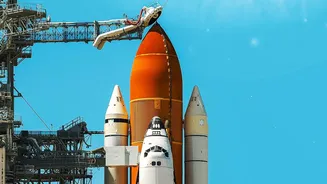
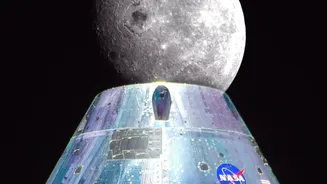
The newly defined Artemis III mission is one of the most complex orbital missions NASA has ever attempted. It will involve a highly choreographed sequence of three separate launches. First, uncrewed test versions of the Blue Origin and SpaceX landers will be launched into low-Earth orbit on their own commercial rockets. Then, the four-person Artemis III crew will launch aboard the Orion spacecraft on NASA's powerful Space Launch System (SLS) rocket. Once in orbit, the Orion crew will perform a series of rendezvous and docking maneuvers with both the Blue Moon and Starship test articles. The astronauts will enter the Blue Origin lander to test its systems and living environment, but they will not enter the SpaceX Starship, which will not yet have a full life-support system. This orbital rehearsal will validate how the different spacecraft connect and communicate, a critical step that must be perfected before attempting it a quarter-million miles from Earth.
The New Path to the Moon
This revised plan means the wait for 'boots on the Moon' will be a little longer, with Artemis IV now slated for the landing in 2028. While disappointing for some, this methodical approach is designed to increase the chances of long-term success and safety. By breaking down the monumental task of a lunar landing into more manageable steps, NASA can test its hardware and procedures in a lower-risk environment. The data gathered during the Artemis III docking mission in 2027 will be invaluable, ironing out software bugs, practicing complex maneuvers, and building confidence in the hardware provided by its commercial partners. This strategy also allows NASA to accelerate its launch cadence, moving away from long, multi-year gaps between missions which can lead to skill atrophy. The goal is to create a sustainable and reliable pipeline for missions to the Moon and, eventually, Mars.