




The Vision: Ultimate Reusability
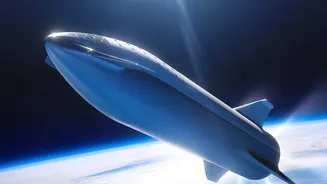
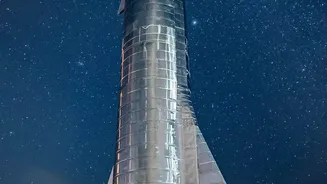
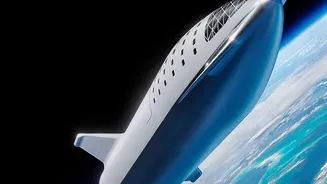
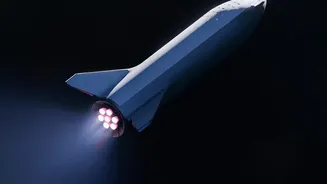
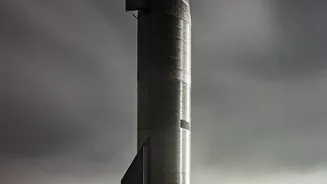
For years, SpaceX has honed its ability to land and reuse its Falcon 9 boosters, drastically cutting the cost of space access. But for Starship, the company's next-generation vehicle designed for missions to the Moon and Mars, simply landing isn't enough.
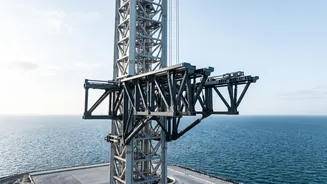
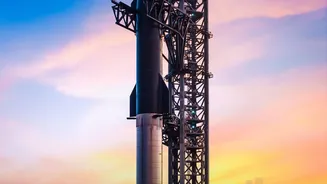
The goal is airline-like operations, with the potential for multiple launches per day. To achieve this, SpaceX is pioneering a radical new recovery method: catching both the Super Heavy booster and the Starship upper stage directly with the launch tower's mechanical arms, nicknamed 'Mechazilla'. Eliminating landing legs saves weight, allowing for more payload, and catching the rocket at the pad removes the need for lengthy ocean recovery and transport operations, enabling a much faster turnaround.
The Challenge: A Game of Millimeters
The entire operation is a spectacle of precision. A returning Super Heavy booster, a structure over 200 feet tall, plummets toward the launch site before reigniting its engines in a perfectly timed 'suicide burn' to slow to a near-hover. From there, it must align itself perfectly with the launch tower. The 'chopstick' arms then swing in to secure the booster by grabbing onto small, reinforced hardpoints located between its grid fins. While early successes, like the first booster catch in October 2024, have proven the concept is possible, the margins for error are minuscule. The vehicle must arrive at the exact position and velocity, with any significant deviation in its orientation or speed risking a catastrophic collision with the tower.
Software: The Brains Behind the Brawn
This maneuver is impossible without incredibly sophisticated software. An autonomous flight control system must process a constant stream of data from GPS, accelerometers, and other sensors to make real-time adjustments. This system controls the rocket's grid fins and engine gimbals to guide it through a chaotic atmospheric descent and onto a precise trajectory. The software doesn't just pilot the rocket; it must also synchronize its movements with the ground system. The tower itself has to be 'go for catch', meaning thousands of criteria for its own systems are met. The hydraulic arms must then move at the right speed and time to close around the booster without striking its engines or fins—a dynamic dance between two massive, fast-moving machines.
Managing Monumental Forces and Failure Modes
The engineering challenges extend beyond just guidance. The physical forces involved are enormous. The hydraulic arms must absorb the momentum of a vehicle weighing hundreds of tonnes, even at a low final velocity. The structural hardpoints on the booster must be strong enough to support its entire weight during the catch. Engineers have to account for countless failure modes. What happens if an engine fails during the final landing burn? What if high winds push the rocket off course? Or what if there's a sensor error or a lag in the control system? Every aspect, from the materials used in the engines to the reliability of each computer, has to be validated to ensure the system can handle not just a perfect landing, but off-nominal conditions as well.