





The Landmark Deal
In a significant move for India's deep tech sector, Eka Robotics announced it has closed a substantial Series A funding round. While the exact figure remains undisclosed, sources familiar with the deal place it in the range of $30 to $40 million. The
round was co-led by Andreessen Horowitz (a16z), a titan of Silicon Valley venture capital, and F-Prime Capital, the venture arm associated with Fidelity Investments. This marks one of the most significant early-stage investments in an Indian hardware startup by such a high-profile syndicate. The capital injection is earmarked for scaling up production of Eka's robotic systems, expanding its research and development efforts in artificial intelligence and machine learning, and accelerating its entry into international markets, particularly in Southeast Asia and the Middle East.
Beyond the Hype: What Eka Builds
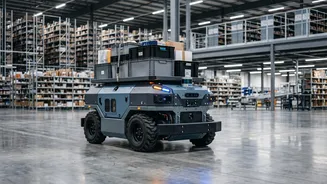
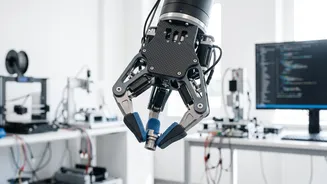
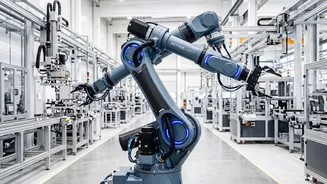
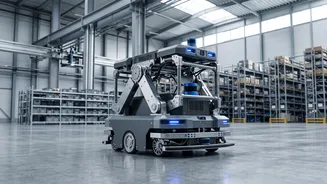
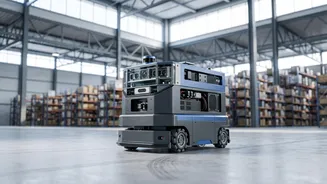
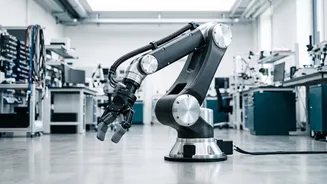
So, what does Eka Robotics actually do? Founded by a team of engineers from IIT Bombay and the Indian Institute of Science, the company develops and manufactures autonomous mobile robots (AMRs) for warehousing and manufacturing industries. Their robots are designed to automate tasks like picking, packing, and transporting goods within large facilities, addressing major labour shortages and efficiency bottlenecks. Unlike many competitors that sell hardware, Eka operates on a Robotics-as-a-Service (RaaS) model. This allows businesses to deploy advanced automation without massive upfront capital expenditure, paying a subscription fee instead. Their proprietary software platform uses AI to orchestrate entire fleets of robots, optimizing workflows in real-time and integrating seamlessly with existing warehouse management systems. This combination of intelligent software and robust hardware is what sets them apart in a competitive field.
Why These Investors Matter
Having Andreessen Horowitz and F-Prime on board is more than just a financial win; it's a strategic masterstroke. Andreessen Horowitz is legendary for its early bets on transformative companies that define entire industries. Their portfolio includes giants like Facebook, Airbnb, and Stripe. An a16z investment is often seen as a 'Silicon Valley seal of approval', validating a company's technology and market potential on a global scale. F-Prime Capital brings a different but equally valuable dimension. With its deep roots in the financial world and a global network, F-Prime provides not just capital but also crucial expertise in scaling operations and navigating complex international markets. Their joint investment signals to the world that an Indian hardware company is building technology that is not just competitive in India, but potentially best-in-class globally. This backing opens doors to talent, partnerships, and customers that would otherwise be difficult to reach.
A Tipping Point for Indian Deep Tech
This funding round arrives at a pivotal moment for India. For years, the country's startup ecosystem has been dominated by software-as-a-service (SaaS) and consumer internet companies. Hardware and deep tech—fields that require significant R&D, patient capital, and complex manufacturing—have been a tougher sell for investors. However, a confluence of factors, including the government's 'Make in India' initiative and a global push to diversify supply chains, is changing the landscape. The Indian robotics market is now one of the fastest-growing in the world. Eka's success could act as a catalyst, proving that Indian deep tech companies can attract elite global capital. This deal may well encourage other top-tier VCs, who have historically focused their Indian investments on software, to take a harder look at the country's burgeoning hardware and robotics scene.
The Road Ahead
Despite the blockbuster funding, the path forward for Eka Robotics is not without challenges. Scaling a hardware business is notoriously difficult and capital-intensive. The company will face stiff competition from established international players in the US, Europe, and East Asia who have longer track records and larger economies of scale. Furthermore, building and managing a global supply chain for complex robotics components is a formidable task that requires immense operational discipline. Eka's success will depend on its ability to execute flawlessly, continue to innovate at a rapid pace, and translate its technological edge into market leadership. The investment provides the fuel, but the journey to becoming a global robotics powerhouse has only just begun.