





The Challenge of Climate Uncertainty
Predicting the future climate is an immense scientific challenge. Climate models simulate the incredibly complex interactions between the sun, atmosphere, oceans, and land. While powerful, these models are sensitive. Small uncertainties in the data they
are fed—measurements of how much solar energy Earth reflects or absorbs—can lead to vastly different long-term projections. The National Research Council identified this lack of highly accurate, long-term observational data as a critical issue for understanding climate change. Getting this right is crucial for making informed decisions about mitigating and adapting to a changing world. For years, scientists have sought a way to reduce these uncertainties and build greater confidence in their models.
A Metrology Lab in Space
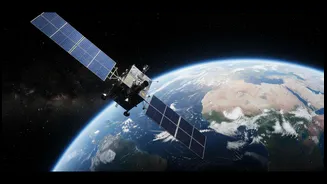
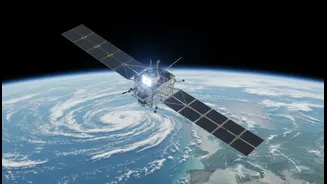
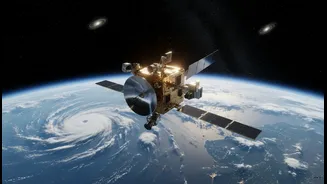
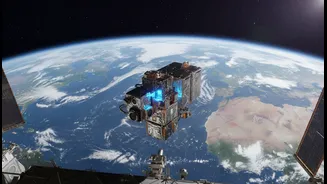
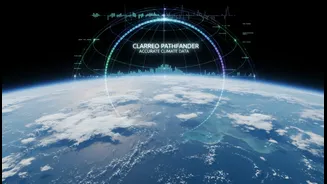
Enter the Climate Absolute Radiance and Refractivity Observatory (CLARREO) Pathfinder. It’s not just another satellite, but a demonstration mission designed to be a highly precise calibration tool in orbit. Hosted on the International Space Station (ISS), the Pathfinder instrument began its one-year mission after achieving 'first light' in the summer of 2026, successfully capturing its first detailed science data. Its core purpose is to measure sunlight reflected from Earth with unprecedented accuracy—five to ten times better than existing sensors. Think of it less as another camera pointing at Earth and more as a trusted reference standard, like the master kilogram against which all other weights are measured, but for climate science in space.
Balancing the Planet's Energy Books
The mission focuses on what scientists call Earth’s “radiation budget.” This is the fundamental accounting of our planet's energy: the balance between incoming energy from the sun and the outgoing energy that is either reflected back to space or emitted as heat. An imbalance in this budget, where more energy is trapped than released, is what drives global warming. To accurately track climate change, we need to measure these energy flows with extreme precision. Even tiny, persistent imbalances can have significant long-term effects. The Pathfinder's primary job is to provide benchmark measurements of this reflected solar radiation, forming a rock-solid foundation for the entire planetary energy equation.
Creating a New Gold Standard
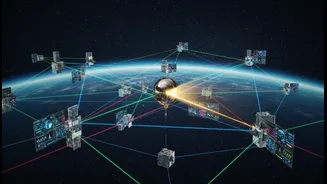
What makes CLARREO Pathfinder so different is its ability to self-calibrate in orbit to maintain its high accuracy. Most satellite instruments are calibrated on the ground and are known to degrade over time when exposed to the harsh environment of space. The Pathfinder, however, regularly points itself at a known and stable source—the Sun—to check and correct its own measurements. This ensures its data remains traceable to the International System of Units (SI), the global standard for measurement. This breakthrough allows it to act as an on-orbit reference. As it passes other climate satellites, like the CERES and VIIRS instruments, it can take simultaneous measurements of the same spot on Earth, allowing scientists to cross-calibrate and improve the accuracy of the entire fleet of Earth-observing sensors.
Sharpening Our Vision of the Future
By improving the accuracy of existing and future satellite data, CLARREO Pathfinder's impact extends far beyond its own measurements. This newly refined data can be fed into climate models, reducing the range of uncertainty in their projections. With more trustworthy data, scientists can better test their models, pinpoint the effects of clouds and aerosols, and distinguish subtle, long-term climate trends from short-term natural variability much sooner. Ultimately, this leads to more reliable forecasts of everything from sea-level rise to regional climate shifts, providing clearer guidance for global policy and infrastructure planning. The Pathfinder mission is a crucial step toward a future where our understanding of Earth's climate is built on a foundation of unimpeachable accuracy.