







NASA’s New Moon Plan: The Artemis Program
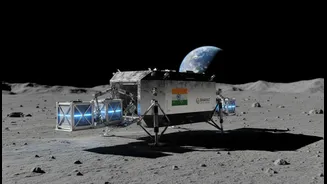
Forget the fleeting visits of the Apollo era. NASA’s Artemis program is about staying on the Moon. The goal is to establish a permanent human outpost, a 'Moon Base,' likely near the lunar South Pole. This ambitious project involves building habitats,
power grids, and communication networks on the lunar surface. But instead of a purely government-run effort, NASA is acting as an anchor customer, creating a market for commercial space services. The plan is phased, starting with robotic missions and technology demonstrations to test systems before astronauts arrive for long-duration stays. This sustained presence will serve as a launchpad for science and, eventually, missions to Mars.
Enter CLPS: The 'Uber' for Moon Deliveries
The backbone of this new commercial approach is the Commercial Lunar Payload Services (CLPS) initiative. Think of it as an interplanetary delivery service. Instead of building its own landers for every single payload, NASA is paying private companies a fixed price to transport science experiments, rovers, and other equipment to the lunar surface. This outsources the risk and complexity of the journey, allowing NASA to focus on the science while stimulating a commercial marketplace for lunar logistics. Companies like Astrobotic, Intuitive Machines, and Firefly Aerospace are already sending landers and hardware to the Moon under CLPS contracts, paving the way for more frequent and affordable access.
India’s Strategic Entry
This is where the Indian angle becomes crucial. In 2023, India signed the Artemis Accords, a set of principles for peaceful and cooperative space exploration led by the United States. This move signaled a strategic shift for India, integrating its space program with global efforts and avoiding technological isolation. Following the historic success of Chandrayaan-3's landing near the lunar south pole, India demonstrated its world-class, cost-effective space capabilities. This positioned the nation not just as a scientific partner, but as a potentially vital commercial one. The White House and NASA have explicitly stated their intent to foster collaboration between US CLPS companies and the Indian aerospace sector to advance this lunar delivery initiative.
A Burgeoning Private Space Ecosystem
India's government has been actively nurturing a private space industry. The establishment of IN-SPACe (Indian National Space Promotion and Authorisation Centre) in 2020 was designed to open the sector to private players. Since then, the number of space startups has skyrocketed from a handful to over 400 by early 2026. These companies are working on everything from launch vehicles to satellite manufacturing and data analytics. Early signs of this commercial potential in lunar logistics appeared when Bengaluru-based TeamIndus was contracted to provide lander engineering for a US-based consortium in the CLPS program. Although that specific contract was later terminated due to the consortium's internal issues, it demonstrated that Indian engineering is on the global radar for lunar missions.
The Commercial Lunar Gold Rush
The opportunity for India extends far beyond just launching rockets. The Artemis program requires a vast supply chain for its moon base, including rovers, scientific instruments, robotics, power generation systems, and software. India's prowess in engineering, software development, and frugal innovation makes its private sector a strong contender to supply these components and services. The Indian government is targeting massive growth for its space economy, aiming to increase its share of the global market from 2-3% to 8% by 2033, with a projected value of $44 billion. By integrating with NASA's commercial lunar delivery framework, Indian companies gain access to a multi-billion dollar market and a chance to help build humanity's future on the Moon, turning a scientific push into a powerful economic engine.