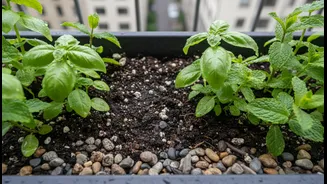









Your Balcony: The First Line of Defence
Urban apartments are constantly exposed to a mix of outdoor pollutants like dust, vehicle emissions, and construction debris. When windows and doors are opened, these particles find their way inside. A balcony lush with plants acts as a natural, living
filter. Research has shown that greenery placed between a pollution source (like a busy road) and a home can significantly reduce the amount of particulate matter that enters the living space. The leaves and stems of plants are remarkably effective at trapping these fine dust particles, preventing a portion of them from ever reaching your indoor environment. Think of it as a beautiful, green barrier that not only enhances your view but actively works to clean the air before it even gets to you.
How Plants Actively Clean the Air
The air-purifying power of plants, a process known as phytoremediation, is well-documented. While famous studies like NASA's Clean Air Study focused on sealed indoor environments, the principles still apply. Plants absorb gaseous pollutants through tiny pores in their leaves, called stomata, as part of their natural respiratory and photosynthetic processes. They can absorb common urban pollutants and volatile organic compounds (VOCs) that off-gas from furniture, paints, and cleaning products. While a few pots won't replace a mechanical air purifier, a densely planted balcony creates a micro-environment of cleaner, more oxygen-rich air right at your apartment's threshold, diluting the concentration of pollutants entering your home.
Choosing Your Air-Purifying Team
For an Indian balcony, you need plants that are both hardy and effective. Thankfully, many of the best air-purifiers are perfectly suited to our climate. The Areca Palm is a powerhouse, known for its high transpiration rate which helps humidify the air and its ability to filter toxins. The indestructible Snake Plant is a champion purifier that uniquely releases oxygen at night, making it a fantastic companion. Spider Plants are fast-growing and excellent at tackling pollutants, ideal for hanging baskets to maximize space. And of course, the ubiquitous Money Plant (Pothos) and holy basil (Tulsi) are not just auspicious but are also effective at cleaning the air of common toxins.
Beyond Air Quality: A Boost for Well-Being
The advantages of a green balcony go far beyond air quality metrics. The concept of biophilia suggests that humans have an innate need to connect with nature, and even a small balcony garden can fulfill this. Studies have consistently shown that interacting with plants, even just by looking at them, can reduce stress, improve mood, and enhance concentration. Tending to a garden provides a sense of purpose and a gentle form of physical activity. In the concrete-dominated landscape of a metropolis, your balcony can become a personal sanctuary—a place to de-stress, connect with nature, and find a moment of peace, which is an invaluable contribution to a healthy lifestyle.
Getting Started: Your Balcony Makeover Plan
Transforming your balcony doesn't have to be complicated. Start by assessing your space and sunlight. Most Indian balconies get ample sun, but note which areas are brightest. Use vertical space to your advantage with wall-mounted planters, railings, and hanging baskets. This allows you to create a dense green wall effect without cluttering the floor. Choose a variety of plants—tall ones like Areca Palm for a backdrop, trailing plants like Money Plant for hanging pots, and smaller ones like Tulsi and Aloe Vera for accessible spots. Invest in good quality potting mix and ensure your containers have proper drainage. A little planning goes a long way in creating a garden that is not only beautiful but also a functional, health-boosting extension of your home.