








Understanding a Mid-Air Incident
Reports of a flight facing a crisis, whether it’s a technical issue or a medical emergency forcing a diversion, can be unsettling. Passengers might find themselves circling over an airport or flying for longer than expected. In these moments, the mind
naturally drifts to the aircraft’s physical limits. While every situation is unique, commercial aircraft are designed and operated within an incredibly robust safety framework. The decision to divert or continue is not a guess; it's a calculated process based on multiple factors that determine how long the aircraft can safely remain airborne. Understanding these factors can provide significant peace of mind when the unexpected occurs.
Fuel: The Obvious, Complex Answer
The most apparent limitation on a plane's flight time is its fuel load. However, flight planning involves far more than simply filling the tanks. Aviation regulations mandate a multi-layered approach to fuel calculation. First, there's 'trip fuel'—the amount needed to fly from origin to destination. Added to this is 'contingency fuel', typically a percentage of the trip fuel, to account for unforeseen factors like stronger-than-expected headwinds or air traffic control delays. Furthermore, the plane must carry enough 'alternate fuel' to fly to a designated backup airport if landing at the primary destination is impossible. Finally, there is 'final reserve fuel', a non-negotiable amount that must remain in the tanks after landing. This strict methodology ensures that a plane always has multiple layers of fuel safety built into its journey, giving pilots ample options in an emergency.
ETOPS: The Rule for Over-Water Flights
For many modern twin-engine jets, like the Boeing 737s and Airbus A320s common on routes operated by airlines such as Flydubai, a crucial factor is the ETOPS rating. ETOPS stands for Extended-range Twin-engine Operational Performance Standards. In simple terms, it is a certification that allows a twin-engine aircraft to fly on routes that take it a certain amount of time away from the nearest suitable diversion airport. For example, an ETOPS-180 rating means the aircraft can fly up to 180 minutes (or three hours) away from a safe landing spot. This rating is not just for the plane but also for the airline, which must prove it has the maintenance and operational procedures to support these flights safely. This fundamentally determines which routes a plane is allowed to fly, ensuring a diversion is always within a certified time limit.
The Human Element: Crew Endurance
An aircraft can be mechanically perfect, but its safe operation depends entirely on an alert and functioning crew. Pilot and cabin crew fatigue is a major safety concern, and aviation authorities impose strict 'flight time limitations'. These regulations dictate the maximum number of hours a crew can be on duty, how many hours they can fly in a day, week, or month, and the minimum rest periods required between flights. For a flight to be planned, it must be possible to complete it well within the crew’s legal duty period. For the world's longest flights, airlines solve this by carrying an augmented crew—additional pilots and flight attendants who can take over in shifts, allowing the operating crew to get required rest on board in dedicated rest areas.
Beyond Fuel and Crew: Technical Health
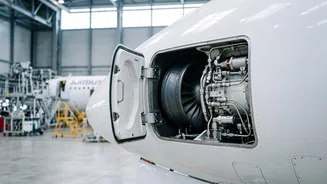
While fuel is the main consumable, other technical factors play a role. An aircraft's engines consume a small but critical amount of oil. The hydraulic systems that power flight controls are also finite. However, these systems are designed with immense redundancy and are monitored constantly. The broader concept is 'airworthiness'. An aircraft is not just a machine; it is a certified system that is subject to a rigorous, non-stop maintenance schedule. Every component has a tracked lifespan, and the aircraft as a whole is regularly inspected to ensure it is safe to fly. Therefore, the safe duration of any given flight is also a function of the aircraft's certified and proven mechanical health, ensuring all systems are expected to function perfectly for the planned duration and beyond.