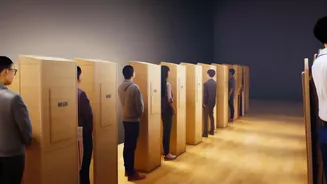







The New Face of Hospitality
From the moment you check in, the hospitality industry is changing. Brands like Marriott and Hilton have been experimenting with robotic staff for years. You might be greeted by an AI-powered concierge named Connie at a Hilton, or have towels delivered
by a rolling 'Botlr' at an Aloft hotel. These robots, such as the popular Relay and Servi models, are designed to handle simple, repetitive tasks efficiently, from delivering amenities to guiding guests. The goal is to boost efficiency, offer contactless service, and free up human employees to handle more complex guest interactions. For hotels, it's a practical response to labour shortages and a way to add a futuristic flair to the guest experience.
More Than a Rolling Vending Machine
These service robots are far more sophisticated than they appear. To navigate crowded lobbies and labyrinthine corridors, they rely on a complex suite of technology. Most are equipped with cameras, LiDAR, and other sensors to map their surroundings and avoid obstacles. Some, particularly concierge bots, use microphones to understand and respond to voice commands. While these sensors are essential for the robot to perform its job, they are also powerful data collection tools. They can potentially record video of hallways, listen to conversations in the lobby, and map the interior of a private room. The data collected can be used to personalize services, but it also creates a trove of sensitive information that needs to be protected.
The Fine Print Problem
The core of the issue isn't the technology itself, but the lack of transparent consent. Guests are rarely informed about what data is being collected, how it's being used, or who has access to it. Instead, permission is often buried deep within the lengthy terms and conditions you agree to during online booking or at check-in. This issue extends beyond robots to other 'smart' devices in hotel rooms. Recently, a guest discovered that their hotel room was equipped with a HALO Smart Sensor—a device that looks like a smoke detector but contains microphones to detect noise and can even identify vaping. Consent for this monitoring was hidden in the hotel's terms of service, with no clear way to opt out. This practice puts the burden on the consumer to parse dense legal documents to understand the level of privacy they are surrendering.
An Expectation of Privacy
A hotel room is considered a private space, where guests have a reasonable expectation of privacy. The introduction of always-on sensors and recording devices challenges this fundamental understanding. When you click “I Agree,” are you knowingly consenting to having your conversations monitored for “abnormal sound levels” or your movements tracked by a delivery robot’s navigation system? Most legal and privacy experts would argue no. They advocate for a “privacy by default” model, where data collection is turned off unless a guest explicitly and knowingly turns it on. Without clear disclosure and easy opt-out mechanisms, the trust between a hotel and its guests can be easily eroded. Currently, there is no federal requirement in the United States for hotels to disclose what monitoring equipment is in a room, creating a regulatory gray area that many properties are exploiting.
Navigating a Robotic Future
The rise of robotic service isn't going to reverse. As the technology becomes more affordable and capable, you can expect to see more automated assistants in hotels, airports, and restaurants. The challenge is to ensure that this innovation doesn't come at the cost of personal privacy. Privacy advocates and tech lawyers are calling for clearer industry standards and government regulations. These would require hotels to be transparent about the devices they use, providing clear, simple notices to guests and offering them genuine control over their data. This includes knowing what data is collected, why it's being collected, and having the ability to refuse that collection without penalty. For hotels, being upfront about their use of technology could become a competitive advantage, building trust with travelers who are increasingly concerned about their digital footprint.