




Understanding the Graded Response Action Plan (GRAP)
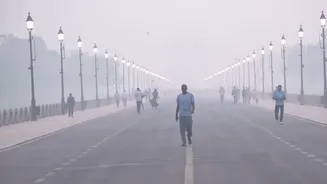
The Graded Response Action Plan, or GRAP, is a set of emergency measures that activate to combat worsening air pollution in the Delhi-National Capital Region. Implemented by the Commission for Air Quality Management (CAQM), it is not a year-round policy
but an emergency response triggered when air quality is forecast to hit certain negative thresholds. The plan works in stages, imposing progressively stricter controls as the Air Quality Index (AQI) deteriorates. The goal is to prevent the air from reaching hazardous levels by taking preemptive action.
The Four Stages of Restriction
GRAP is divided into four stages based on the severity of air pollution, measured by the AQI. Stage I ('Poor', AQI 201-300): This stage focuses on stopping garbage burning and enforcing dust control measures at construction sites. It also includes enforcing Pollution Under Control (PUC) norms for all vehicles. Stage II ('Very Poor', AQI 301-400): In addition to Stage I measures, this may involve increasing parking fees to discourage private vehicle use and boosting the frequency of public transport. Stage III ('Severe', AQI 401-450): This is when significant traffic restrictions begin. It includes a ban on non-essential construction and demolition, and critically, a ban on specific types of private cars. Stage IV ('Severe+', AQI above 450): The most stringent stage can see the entry of trucks into Delhi restricted, and states may be advised to consider measures like the odd-even scheme for private vehicles.
Which Cars Are Banned Under Stage III and IV?
The most significant impact on private car owners comes under Stage III. When this stage is invoked, all BS-III petrol and BS-IV diesel Light Motor Vehicles (four-wheelers) are not permitted to run in Delhi and key NCR districts like Gurugram, Faridabad, Ghaziabad, and Gautam Buddh Nagar. The Bharat Stage (BS) norms denote the emission standards of a vehicle's engine. BS-IV vehicles were sold until March 2020, and BS-III before that. Newer BS-VI vehicles, which have much lower emissions, are allowed to operate regardless of the GRAP stage. Stage IV could bring even wider restrictions, such as banning all non-essential BS-IV diesel vehicles from entering Delhi.
Do These Rules Apply to Interstate Cars?
Yes, absolutely. The GRAP restrictions are based on a vehicle's emission standard (BS-III, BS-IV, etc.), not its state of registration. A BS-IV diesel car registered in another state faces the same ban on plying in Delhi-NCR during Stage III as a locally registered one. Enforcement is typically tightened at border checkpoints to prevent non-compliant vehicles from entering the city when these rules are active. Furthermore, under a separate 'Winter Action Plan', the Delhi government may enforce a blanket ban on all non-BS-VI vehicles registered in other states from entering the capital between November and January, regardless of the active GRAP stage.
Are There Any Exemptions?
The rules provide exemptions for certain categories of vehicles to ensure essential services are not disrupted. All electric vehicles (EVs) and CNG-powered vehicles are exempt from all GRAP-related restrictions and are free to ply at any time. Vehicles used for emergency services, such as ambulances and fire engines, and those involved in law enforcement or carrying essential commodities are also permitted to operate. All BS-VI compliant vehicles, both petrol and diesel, are also exempt from these specific stage-wise bans and can be used normally.
How to Comply and Stay Informed
The first step for any car owner is to know their vehicle's emission standard. This is clearly mentioned on the vehicle's Registration Certificate (RC). If you own a BS-III petrol or BS-IV diesel car, you must avoid using it when GRAP Stage III or higher is in effect. All vehicle owners must also carry a valid Pollution Under Control (PUC) certificate at all times, as authorities are cracking down on compliance, with some policies even linking fuel purchase to a valid PUC. To stay updated on the current GRAP stage, citizens can check official announcements from the CAQM or follow reliable news sources that report on the daily AQI and corresponding restrictions.