

The Challenge of Starlight
Imagine trying to study a firefly buzzing around a brilliant searchlight from kilometres away. That's the fundamental challenge astronomers face. Exoplanets don't produce their own light; they are visible only by the light of the star they orbit. Direct
imaging is incredibly difficult because the star's glare is overwhelming. So, scientists developed ingenious indirect methods. Instead of trying to see the planet itself, they focus on the starlight and how the planet affects it. By precisely measuring the star's light, telescopes can detect the subtle dimming that occurs when a planet passes in front, a method called the transit method.
Decoding Light with Spectroscopy
The key technology for studying alien atmospheres is spectroscopy. Think of it like passing light through a prism to create a rainbow. A spectrograph does this in a much more advanced way, spreading the light from a star into a detailed spectrum, which is essentially a barcode of different wavelengths or colours. When a planet passes in front of its star, a tiny fraction of that starlight filters through the planet’s atmospheric rim. The gases in the atmosphere absorb very specific wavelengths of light. This leaves behind a unique pattern of dark lines in the star's spectrum—a chemical fingerprint that tells astronomers exactly what elements and molecules are present.
Transmission: A Cosmic Filter
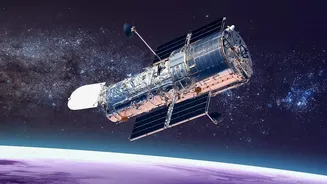
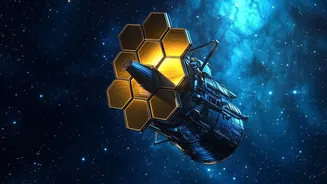
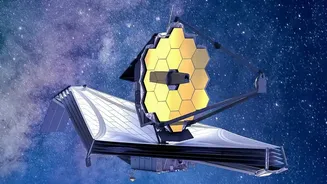
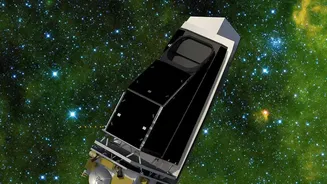
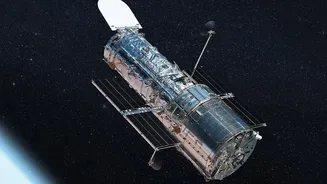
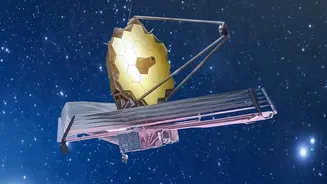
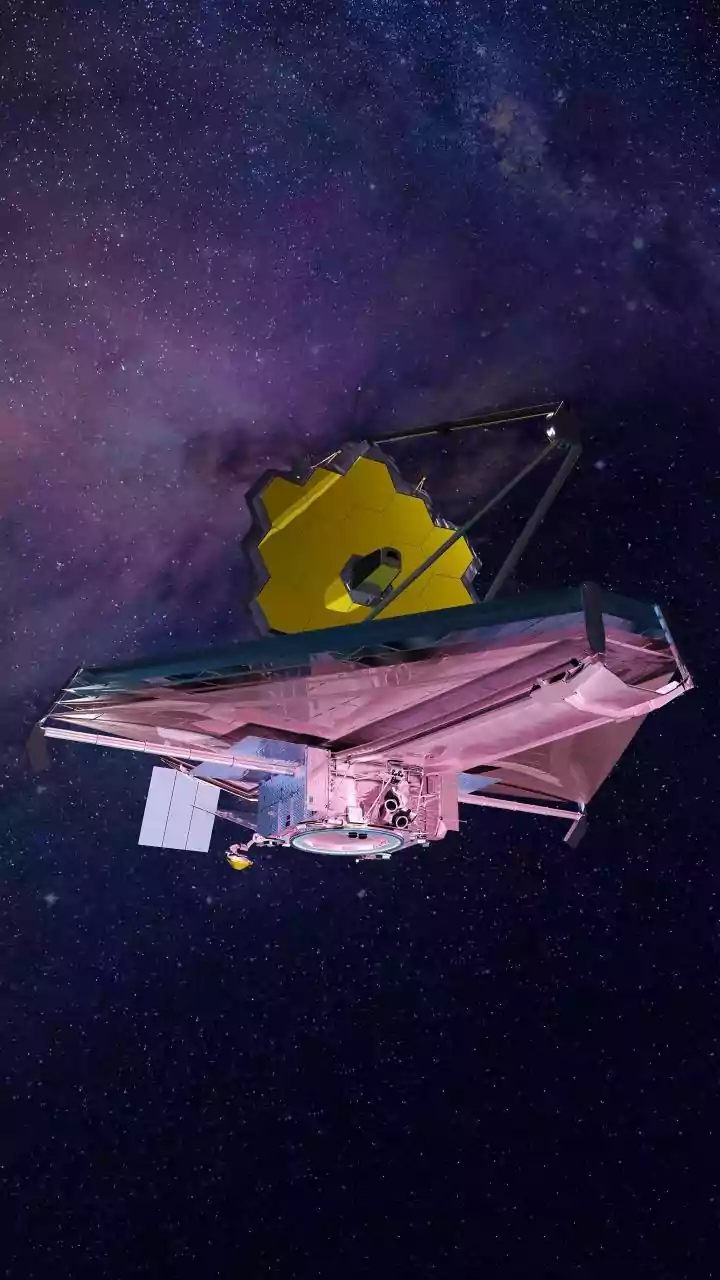
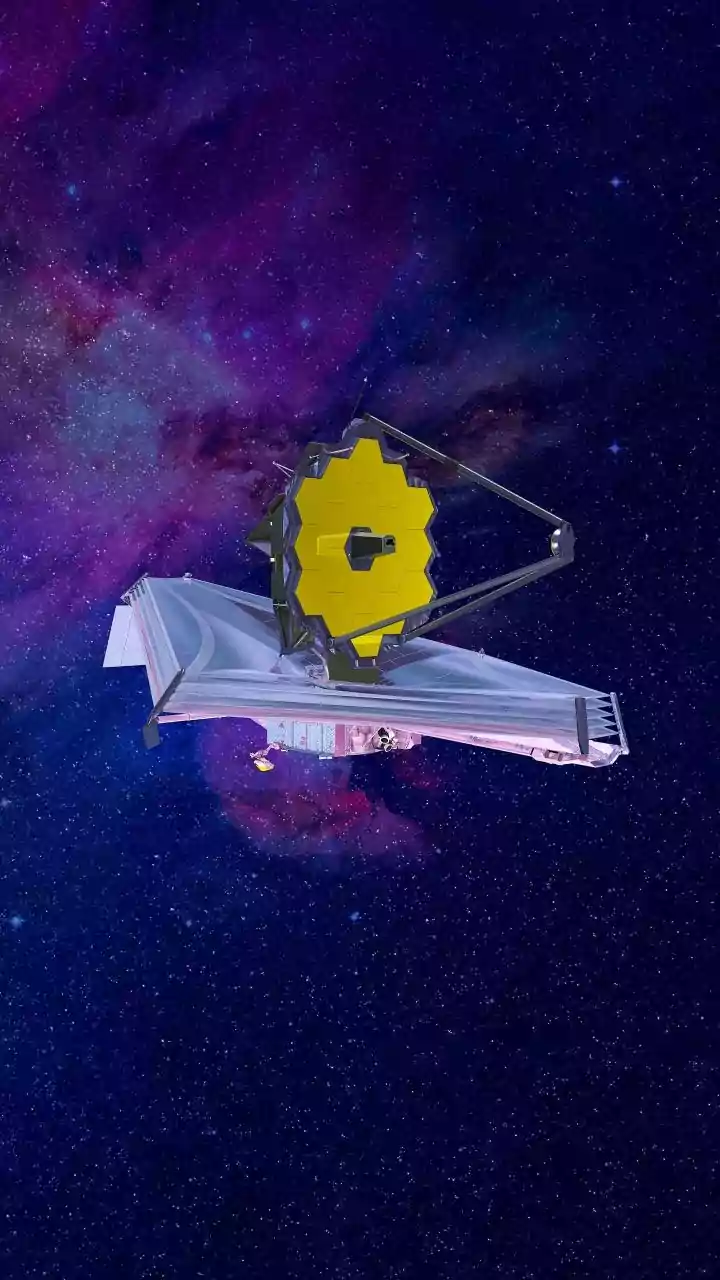
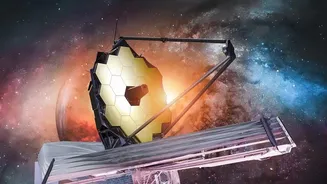
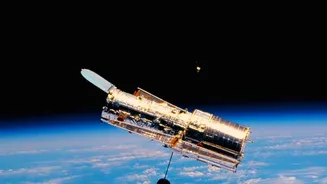
This method of reading the chemical fingerprints is called transmission spectroscopy. As the exoplanet transits its star, its atmosphere acts like a cosmic filter. If the atmosphere contains water vapour, for instance, the water molecules will absorb specific infrared wavelengths, making the planet appear slightly larger at those colours because its atmosphere is blocking more light. Telescopes like the Hubble and the James Webb Space Telescope (JWST) are crucial for this work because they orbit outside Earth's own atmosphere, which would otherwise interfere with measurements by absorbing the same kinds of light, like water vapour. By comparing the spectrum of the star before and during the transit, scientists can isolate the light that passed through the planet's atmosphere and identify the telltale absorption lines of molecules like methane, carbon dioxide, and even sulfur dioxide.
Emission: Mapping a Planet's Glow
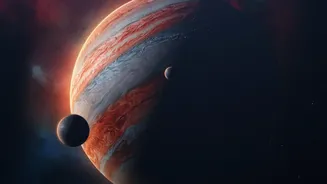
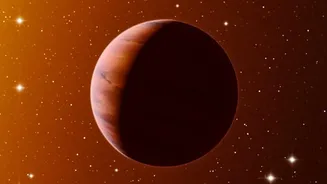
To measure temperature, astronomers use a related technique called emission spectroscopy. This method doesn't rely on the planet passing in front of the star. Instead, it measures the faint infrared light (heat) that the planet itself emits. By observing the combined light of the star and planet system and then measuring the light again when the planet is hidden behind the star (a secondary eclipse), scientists can subtract the star's light to isolate the planet's own thermal glow. The brightness at different infrared wavelengths corresponds to the temperature. For tidally locked gas giants, often called 'hot Jupiters', one side perpetually faces the star, creating extreme temperature differences between the permanent day and night sides.
Creating a 3D Weather Map
By observing a gas giant planet through its entire orbit, astronomers can create a 'phase curve' that shows how the light we receive changes as we see different parts of the planet's surface rotate into view. This allows them to map temperature variations across longitudes. For instance, they can locate the hottest point on the planet, which is often offset from the point directly facing the star due to powerful jet streams whipping through the atmosphere. Powerful instruments on the James Webb Space Telescope can combine these temperature maps with the chemical profiles from transmission spectroscopy. This allows scientists to build the first-ever 3D models of an exoplanet's atmosphere, revealing its thermal structure and chemical makeup at different altitudes.