



The Challenge of Flying Low
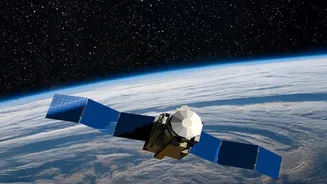
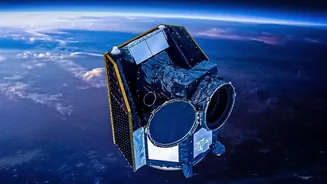
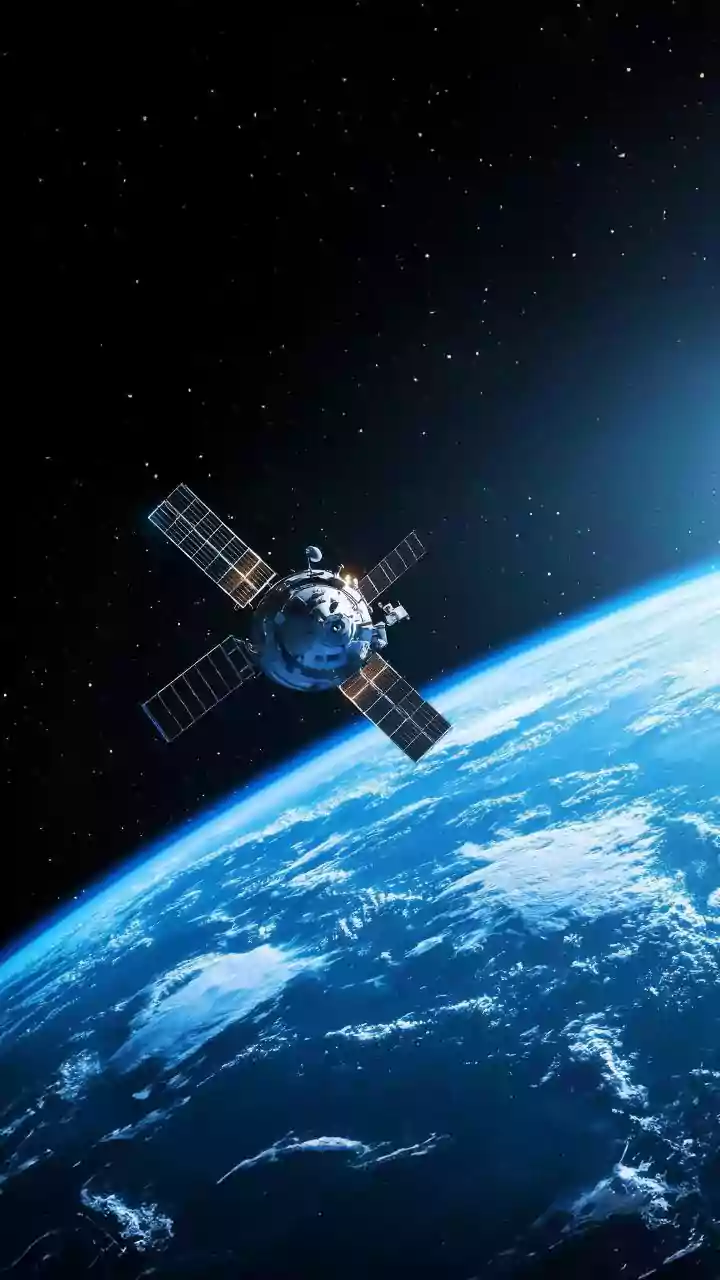
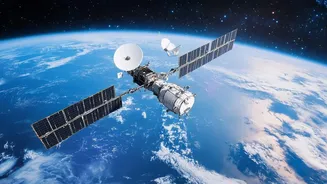
For Earth observation satellites, altitude is everything. The lower you fly, the sharper your images. Orbits below 450 kilometres, known as Very Low Earth Orbits (VLEO), offer incredible advantages for everything from agricultural monitoring to disaster
management. The problem is that even at these heights, there's a thin atmosphere. This residual air creates constant drag on a satellite, slowing it down and pulling it back towards Earth. To stay in orbit, satellites must fire thrusters to counteract this drag. This requires fuel, and once the onboard propellant runs out, the mission is over. ESA's GOCE gravity-mapper, for instance, operated at just 250 km but its mission ended when its 40 kg of xenon propellant was exhausted.
A Revolutionary Solution: Breathing the Atmosphere
What if a satellite didn’t need to carry its own fuel? This is the core idea behind Air-Breathing Electric Propulsion (ABEP), a technology that turns a satellite's biggest problem—atmospheric drag—into its greatest advantage. Instead of being a mission-ending nuisance, the scarce molecules of the upper atmosphere become an inexhaustible source of propellant. Developed by research groups including the European Space Agency (ESA) and private firms, this system is designed to scoop up atmospheric particles and use them to generate thrust, allowing a satellite to compensate for drag indefinitely. Recent progress includes an Ahmedabad-based startup, Orbitt Space, which is developing its own ABEP system.
How an Air-Breathing Engine Works
The process is elegant in its simplicity. First, a specially designed intake collects the sparse atmospheric molecules—mostly nitrogen and oxygen—as the satellite speeds through its orbit at nearly 8 kilometres per second. These molecules, which would otherwise just cause drag, are funnelled into the thruster. Inside, the collected gas is compressed and then ionised, meaning the atoms are given an electrical charge. Finally, an electric field, powered by the satellite's solar panels, accelerates these newly created ions and expels them at high velocity. This expulsion creates a continuous, gentle push that is just enough to counteract the atmospheric drag, keeping the satellite perfectly in its low orbit.
The Promise of 'Unlimited' Missions
The headline claim of "unlimited thrust" refers to mission duration, not infinite power. An ABEP-equipped satellite is no longer limited by a finite tank of propellant. As long as it has solar power to run its systems and there are atmospheric particles to collect, it can keep operating. This effectively means mission lifetimes could be limited only by the durability of the satellite's electronic components, not its fuel supply. This breakthrough paves the way for a new class of long-duration satellites that can perpetually skim the upper atmosphere, providing persistent monitoring of our planet. This has been successfully demonstrated in ground-based vacuum chambers that simulate the conditions at 200 km altitude.
A Game-Changer for India and the World
The applications for persistent VLEO satellites are vast. For India, this technology could be transformative. Imagine satellites providing continuous, ultra-high-resolution imagery to monitor crop health, track urban development, manage water resources, and provide near-real-time data during natural disasters like floods and cyclones. Beyond civilian uses, the strategic value for national security and border surveillance is immense. The lower latency also benefits telecommunication services. Furthermore, because these low orbits are self-cleaning—any debris quickly decays and burns up—it's a more sustainable way to use space. This technology is not just limited to Earth; it could one day be used to explore other planets with atmospheres, like Mars.
The Road Ahead
While the concept has been proven in laboratory tests, bringing air-breathing propulsion to operational satellites still involves significant engineering hurdles. Designing an intake that can efficiently collect molecules in such a rarefied environment is a major challenge. Another is the corrosive nature of atomic oxygen at these altitudes, which can degrade spacecraft materials over time. Teams at ESA, along with commercial partners in Italy, Poland, and the UK, are actively working to refine the technology, improve its efficiency, and scale it up for flight. As these challenges are overcome, the prospect of satellites that breathe air moves from a high-concept dream to a tangible reality.