

The Science of Saving Space
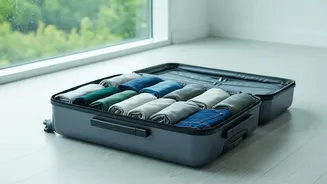
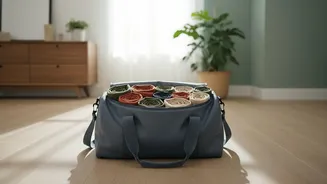
The primary and most celebrated benefit of rolling clothes is the remarkable amount of space it saves. Compared to traditional folding, tight rolling compresses fabrics and, most importantly, eliminates the pockets of air that get trapped between layers
of folded garments. When you fold a shirt or pair of trousers, you create flat layers with air sandwiched in between. Rolling the same item into a dense cylinder pushes that air out, resulting in a much smaller, more compact bundle. This method is so effective that it's a standard practice in the military, where maximising space in a rucksack is critical. By creating these small, uniform 'burritos' of clothing, you can fit them into your bag like a puzzle, filling every nook and cranny far more efficiently than with bulky, rectangular folded items. This allows you to either pack more into your carry-on or simply enjoy a lighter, less cumbersome bag.
An Unexpected Barrier Against Moisture
The headline's claim that rolling keeps clothes dry might seem counterintuitive, especially when using a waterproof bag which should already do that job. However, the benefit is more nuanced. A waterproof bag protects from external water, but it can't prevent moisture from within. This could be a slightly damp towel, a small leak from a toiletry bottle, or even ambient humidity trapped inside the bag. A tightly rolled garment creates a dense, less permeable bundle. If one part of your bag's contents becomes damp, that moisture has a harder time wicking into and spreading throughout a tight roll compared to a loosely folded item. While not a foolproof waterproofer, the roll acts as a barrier, containing potential dampness and preventing a minor issue from ruining an entire outfit. It's a layer of security that ensures even if one item gets a little wet, the rest of your clothes have a better chance of staying perfectly dry.
How to Master the Ranger Roll
The most effective technique is often called the 'Ranger Roll' or 'Army Roll'. Here’s a simple guide for a t-shirt: 1. Lay the shirt flat and smooth out all wrinkles. This is key, as rolling can lock in existing creases. 2. Fold the bottom hem of the shirt up and inside-out, creating a cuff of about three to four inches. 3. Fold one side of the shirt towards the centre, laying the sleeve flat along the body. Do the same for the other side, creating a neat rectangle. 4. Starting from the collar, roll the shirt downwards as tightly as you possibly can. A tight roll is crucial for both space-saving and wrinkle prevention. 5. Once you reach the bottom, take the inside-out cuff you created in the first step and wrap it around the roll. This locks the bundle in place, preventing it from unravelling in your bag. This same basic principle can be applied to trousers, shorts, and other garments.
Fewer Wrinkles and Better Organisation
Another significant advantage is wrinkle reduction. While folding creates hard creases that get pressed into the fabric during transit, rolling avoids these sharp folds. For casual fabrics like t-shirts, jeans, and synthetics, rolling can mean your clothes arrive ready to wear. The compact rolls also make your bag incredibly organised. Instead of digging through layers of folded clothes, you can see every item at a glance, making it easy to grab what you need without disturbing everything else. Some travellers even roll entire outfits—shirt, underwear, and socks—into a single bundle for ultimate grab-and-go convenience.
When Folding Still Wins
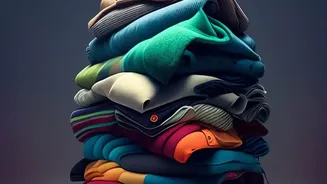
Despite its many benefits, rolling isn't the best method for every single item. Bulky garments like heavy jumpers or thick jackets can sometimes become larger when rolled. Formal wear, such as structured blazers or easily creased dress shirts made from natural materials like linen, often fare better with careful folding. These items can be folded and placed on top of your rolled clothes or in a separate garment folder. The best packing strategy often involves a hybrid approach: roll your casual and synthetic items, and fold the delicate, bulky, or formal ones. This combination gives you the best of both worlds, maximising space while protecting your entire wardrobe.