



A Sudden, Shocking Reversal
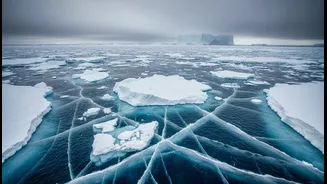
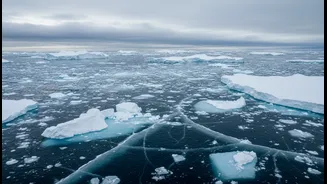
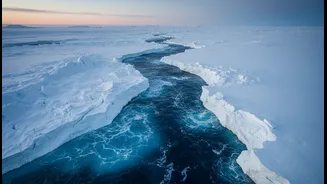
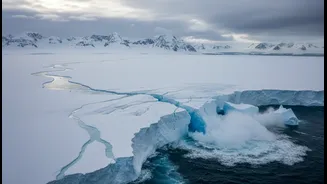
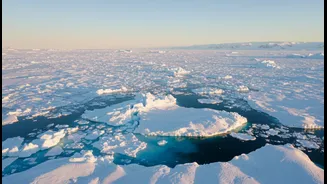
For a long time, the story of Antarctic sea ice was one of resilience. Unlike the rapidly melting Arctic, the sea ice around the southern continent was holding its own. Then, around 2016, everything changed. Scientists watched in astonishment as the sea ice extent
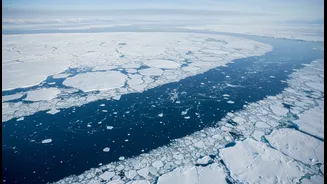
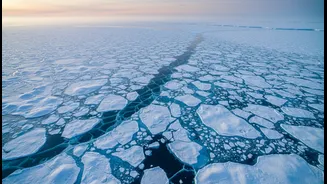
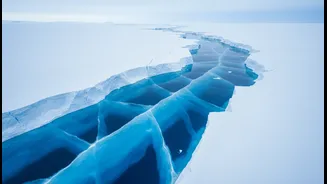
took a nosedive. Record lows were set in 2023, and the ice has failed to recover since, with 2024 and 2025 continuing the trend of alarmingly low coverage. At its winter peak in 2023, an area of ice larger than Western Europe was simply missing compared to the long-term average. This abrupt shift has left researchers scrambling to understand the complex forces that have pushed the continent into a new, worrying state.
The Ocean's Warm Underbelly
A primary culprit behind the melt is the ocean itself. The Southern Ocean is not uniform; it's layered, with cold, fresher water sitting on top of a deeper, warmer, and saltier layer known as Circumpolar Deep Water. For decades, this stratification acted like a lid, trapping the heat below. However, recent research indicates this protective barrier has weakened. A combination of factors, including changes in wind patterns, has started to pull this warmer deep water upwards, where it can melt the sea ice from below. This upwelling of stored ocean heat is now considered a key driver of the sudden decline.
The Role of Powerful Winds
Winds are a critical piece of the puzzle. The powerful westerly winds that circle Antarctica have intensified, partly due to greenhouse gas emissions and the historic ozone hole. These stronger winds have a multi-faceted impact. They can physically push sea ice around and also drive the upwelling of warm ocean water. Studies have shown that a major shift in winds around 2015-2016 initiated intense mixing of the ocean layers, unleashing the deep-stored heat that triggered the rapid ice loss. This atmospheric change, coupled with the oceanic response, created a powerful one-two punch that the sea ice couldn't withstand.
A Vicious Feedback Loop
Once the melting began, a dangerous feedback cycle kicked in. Bright white sea ice is highly reflective, bouncing a significant amount of the sun's energy back into space. As the ice disappeared, it exposed the darker ocean water underneath. This dark surface absorbs more heat, warming the ocean further and making it even harder for new ice to form the following winter. This process, known as the ice-albedo feedback, is a self-reinforcing cycle. By 2018, scientists believe this mechanism became a dominant force, locking Antarctica into a state of reduced sea ice that is difficult to reverse.
Why It Matters for India and the World
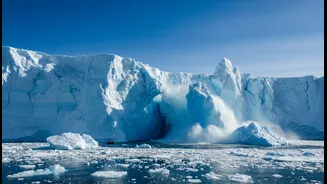
What happens in Antarctica doesn't stay in Antarctica. The continent's ice, both on land and sea, plays a crucial role in regulating the global climate system. The Southern Ocean absorbs a vast amount of heat from the atmosphere, and the stability of its ice is linked to global ocean currents that influence weather patterns worldwide. For India, with its extensive coastline and major cities like Mumbai and Chennai, the most direct threat is sea-level rise. The loss of sea ice doesn't raise sea levels directly, but it removes a protective barrier, exposing the continent's massive land-based ice shelves to warmer ocean water, accelerating their melt and their contribution to rising seas. The changes in Antarctica are a stark warning of a climate system that is being pushed into uncharted territory.