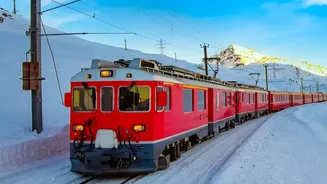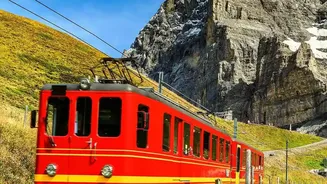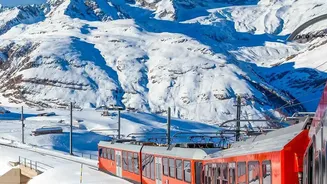




The Charm of Heritage 'Toy Trains'
India's mountain railways are not just a means of transport; they are a journey back in time. Three of these, the Kalka-Shimla Railway, the Darjeeling Himalayan Railway, and the Nilgiri Mountain Railway, are collectively recognised as a UNESCO World Heritage
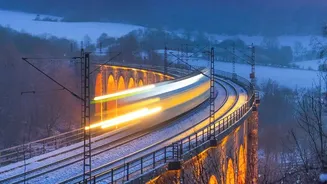
Site. These narrow-gauge 'toy trains' were marvels of engineering in their day, built by the British to access summer capitals and hill stations. Today, they offer travellers a slow, magical ride through breathtaking scenery, navigating sharp curves, historic tunnels, and incredible bridges. The leisurely pace is the point, allowing passengers to soak in panoramic views of lush valleys, dense forests, and charming colonial-era stations.
Kalka to Shimla: A Himalayan Queen's Journey
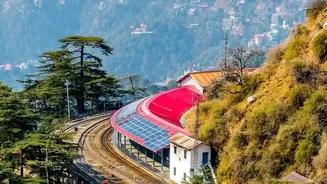
The journey on the Kalka-Shimla Railway is an iconic Himalayan experience. Opened in 1903, this narrow-gauge line covers a 96-kilometre route that climbs from Kalka into the Shivalik foothills, eventually arriving at Shimla, the former summer capital of British India. The trip is a showcase of engineering prowess, featuring 102 active tunnels, over 800 bridges, and more than 900 curves. As the train ascends, the landscape transforms from scrubland to dense pine and deodar forests. To make the journey even more special, Indian Railways has introduced Vistadome coaches on this route, offering panoramic views through wide glass windows and transparent roofs, making it a must-do for nature lovers.
Darjeeling's Delightful Himalayan Railway
Arguably the most famous of the toy trains, the Darjeeling Himalayan Railway has been chugging along since 1881. The most popular experience for tourists is the 'Joy Ride', a two-hour round trip from Darjeeling to Ghum, India's highest railway station, and back. This journey, often powered by a vintage steam locomotive, includes a stop at the famous Batasia Loop, an engineering marvel that allows the train to handle the steep gradient while offering a 360-degree view of Darjeeling and the distant Kanchenjunga. The full line runs from New Jalpaiguri in the plains, climbing nearly 2,200 metres over 88 kilometres, passing through bustling markets and verdant tea gardens.
To the Blue Mountains: Nilgiri Mountain Railway
In the south, the Nilgiri Mountain Railway offers a unique journey to the popular hill station of Ooty. It is the only rack railway in India, using a special toothed track system to climb the steepest slopes in Asia between Mettupalayam and Coonoor. From Coonoor to Ooty, the train relies on a conventional locomotive. The five-hour journey from Mettupalayam covers 46 kilometres, passing through 16 tunnels, 250 bridges, and lush tea plantations of the Nilgiri hills, also known as the Blue Mountains. The scenery is spectacular, with the section up to Coonoor being particularly dramatic.
The Future: New Lines to the Himalayas
Looking ahead, Indian Railways is undertaking ambitious projects to push rail connectivity deeper into the Himalayas. The Rishikesh-Karnaprayag railway line in Uttarakhand is a significant project that will connect the plains to the Garhwal region, making access to pilgrimage sites like Kedarnath and Badrinath easier. This 125-km line is an engineering challenge, with over 80% of its length consisting of tunnels. While its completion is targeted for 2029, it promises to be a 'lifeline to the future' for the state. Another monumental project is the Jammu-Baramulla line, which now connects the Kashmir Valley to the rest of India’s rail network, navigating through the Pir Panjal mountains and featuring the world's highest railway bridge, the Chenab Bridge. Further east, the Sivok-Rangpo line will provide Sikkim with its first railway connection.