
Catch a Faint Meteor Shower
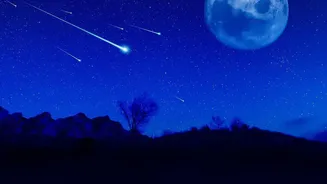
While not as famous as the Perseids, the Kappa Cygnid meteor shower remains active until August 28. Though it offers a modest rate of only about three meteors per hour, this shower is known for producing exceptionally bright and slow-moving fireballs.
The peak occurred around August 17, but with the shower's extended activity, there's still a chance to spot one of these lingering shooting stars. Your best bet is to find a location far from city light pollution, let your eyes adjust to the darkness for at least 20 minutes, and look towards the constellation Cygnus, the Swan. It’s a quiet and patient form of stargazing, but the reward of seeing a single, brilliant fireball can be worth the wait.
A Spectacular Lunar Eclipse
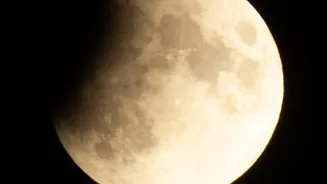
Arguably the main event for the end of the month is a deep partial lunar eclipse happening on the night of August 27-28. This will be the most impressive lunar eclipse visible from Earth until late 2028. During the event, a staggering 96% of the Moon will pass through the darkest part of Earth's shadow, known as the umbra. As this happens, the lunar surface will take on a range of captivating copper and reddish hues, a result of sunlight filtering through our planet's atmosphere. You won't need any special equipment to see it, though a pair of binoculars or a small telescope will enhance the view of the dramatic colours and the remaining sliver of the sunlit moon.
Watch the Moon Meet Saturn
In the nights leading up to and following the eclipse, from August 28 to 31, skywatchers can enjoy a beautiful celestial pairing. The bright, nearly-full moon will appear to approach and pass by the planet Saturn. Saturn, the ringed giant, has been growing brighter in our sky and is heading towards its opposition in early October, when it will be at its closest and brightest for the year. You can spot yellowish Saturn in the evening sky, and watching the Moon glide past it over several nights is an easy and rewarding sight for observers of all levels. Keep an eye on the duo after sunset to see their positions change each evening.
Spot Mars in the Morning
If you're an early riser, you have a chance to spot the Red Planet. Throughout August, Mars is visible in the morning sky, rising a few hours before dawn. It appears as a faint, orange-hued point of light. On August 15, it had a close encounter with the open star cluster M35, but it continues its journey through the constellation Gemini for the rest of the month. While its small apparent size makes it challenging to see surface details without a powerful telescope, simply identifying its distinct reddish glow against the backdrop of stars is a thrill in itself. Look towards the east in the hours before sunrise to catch a glimpse.
Tips for a Great Viewing Experience
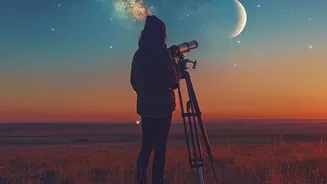
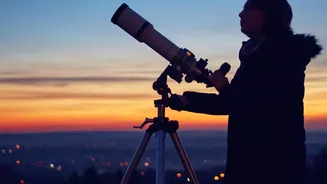
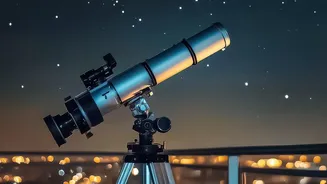
To make the most of these celestial events, a few simple tips can go a long way. The single most important factor is to escape light pollution. Find a spot away from the glare of city lights, like a park, a rural area, or even a rooftop with an unobstructed view. Allow your eyes at least 20 to 30 minutes to fully adapt to the darkness; this will dramatically increase the number of stars you can see. While events like the lunar eclipse and planetary conjunctions are easily visible with the naked eye, a good pair of binoculars can reveal stunning detail, especially on the Moon's surface and might even give you a sense of Saturn's shape. Finally, be patient. The universe operates on its own schedule, and the most memorable moments often come when you least expect them.