




The Psychology of the Delay
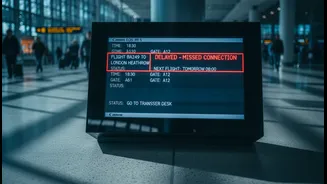
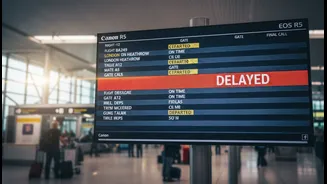
There's a predictable human reaction to a significant flight delay: you mentally reset your clock. The urgent, high-alert state of mind required for navigating airport security and finding your gate gives way to a more relaxed, leisurely pace. The new,
later departure time feels firm and reliable. This psychological shift is the first step toward a potential travel disaster. You see the updated time on the departures board and in the airline app, and you trust it. You feel you’ve been given a gift of free time, a temporary reprieve from the hurry-up-and-wait nature of air travel. It’s this very feeling of relief that makes you let your guard down, causing you to tune out the crucial, and sometimes subtle, cues that things are about to change yet again.
Behind the Curtain: Why Times Change Rapidly
An airline's schedule is a finely tuned machine, and a delay is a wrench in the gears that the carrier is desperate to remove. Airlines have a powerful financial incentive to get their planes in the air as close to the original schedule as possible. A delayed aircraft can cause a cascade of problems, affecting crew schedules, gate availability at other airports, and the itineraries of connecting passengers. That's why, behind the scenes, an entire team is working to shorten the delay. A technical issue with the aircraft might be fixed faster than anticipated. A new flight crew might become available to replace one that was delayed on an incoming flight. A severe but fast-moving weather system might clear up suddenly, opening a window for departure. In these situations, the airline will not wait. It will seize the opportunity to make up time, and the updated two-hour delay can vanish in an instant.
The Peril of Trusting Technology Alone
In the modern age of travel, we are conditioned to rely on our smartphones for everything. We get push notifications for delays and gate changes, and we expect the airline’s app to be the ultimate source of truth. However, during irregular operations like a delay, technology can lag behind reality. The gate agent, who receives information directly from the operations center or the flight crew, is often the first to know about a change. They might make a verbal announcement to begin boarding long before the app, email alerts, or even the gate’s display screen are updated. Passengers who have wandered off to a distant lounge or restaurant, trusting their phone to call them back, are the most at risk. By the time they receive a notification, the final boarding call may have already been made.
Your Best Defense: A Proactive Strategy
The most effective way to avoid missing a previously delayed flight is to never fully relax your vigilance. Treat the new departure time as a loose guideline, not a guarantee. The golden rule is to remain in or very near the gate area. If you must leave, do not go far, and make frequent trips back to check in visually and listen for announcements. While apps are useful, your ears are your best tool at the airport; verbal announcements often precede digital updates. Be physically present at the gate area at the original boarding time, if possible. If the delay is already in effect when you arrive, stay close enough to hear announcements clearly. This is not the time to rely on noise-cancelling headphones. Think of the delay not as a break, but as a period of standby where you need to be ready for immediate action.
The Unfortunate Consequence of Missing the Call
If you miss your flight because the delay was shortened and you weren't at the gate, the airline is unlikely to be sympathetic. From their perspective, they provided the service, and the responsibility was on the passenger to be present for boarding. Unlike a missed connection caused by an airline's own delay, this situation is often treated as a 'no-show'. You may be forced to purchase a new, often expensive, last-minute ticket to your destination. Your checked luggage will be pulled from the aircraft, causing further delays for you and the airline. It’s a frustrating and costly mistake that is entirely avoidable by simply staying alert.