






1. Amla (Indian Gooseberry): The Vitamin C Titan
A small, translucent green fruit with a uniquely sour and astringent taste, Amla is arguably one of the most important botanicals in Ayurvedic medicine. Its power lies in its incredibly dense nutritional profile, most notably its Vitamin C content. Ounce
for ounce, amla contains significantly more of this immune-boosting antioxidant than an orange. This makes it a traditional go-to for warding off colds and infections. Beyond immunity, the antioxidants in amla, including flavonoids and tannins, are believed to combat oxidative stress, which is linked to aging and chronic disease. It’s also traditionally used to promote healthy hair, skin, and digestion. While biting into a raw amla can be an intense experience, it’s more commonly consumed pickled (amla achaar), candied (amla murabba), or as a nutrient-packed juice or powder. For those in the U.S., amla powder is the most accessible form and can be easily added to smoothies or yogurt to harness its benefits.
2. Jamun (Java Plum): The Blood Sugar Ally
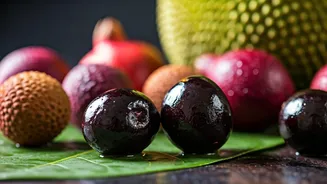
Resembling a large olive or a small plum, the Jamun fruit boasts a deep purple, almost black, skin that stains your tongue—a telltale sign of its high anthocyanin content. These powerful antioxidants give the fruit its rich color and are linked to heart health and anti-inflammatory properties. Jamun has a distinct flavor profile: a blend of sweet and tart with an astringent finish that makes it uniquely refreshing. In traditional Indian medicine, Jamun, particularly its seeds, is renowned for its role in supporting metabolic health. It has been studied for its potential to help manage blood sugar levels, making it a fruit of interest for those navigating diabetic and pre-diabetic conditions. While the fruit itself is low on the glycemic index, its powder form is often used therapeutically. The pulp is also rich in iron, potassium, and vitamins, contributing to overall vitality. If you can find them fresh at an Indian grocery, they are a delicious summer treat. Otherwise, jamun juice or powder can offer a convenient alternative.
3. Bael (Wood Apple): The Digestive Soother
Don’t let the name “wood apple” or its rugged, hard-as-a-rock exterior fool you. Inside the Bael fruit lies a sticky, aromatic pulp with a flavor that’s been compared to a mix of tamarind and marmalade. Bael is less of a hand-fruit and more of a medicinal powerhouse, celebrated for centuries for its profound effects on the digestive system. It’s a gut-health champion. The pulp is rich in fiber, which helps regulate bowel movements and can aid in alleviating both constipation and diarrhea. It also contains tannins, which are known to reduce inflammation in the digestive tract. Because of this, bael is a cornerstone of remedies for issues like irritable bowel syndrome (IBS) and other digestive discomforts. It's almost never eaten raw. Instead, the pulp is scooped out, soaked in water, and strained to create a refreshing drink known as bael sherbet. This cool, soothing beverage is a summer staple in many Indian households, valued as much for its delicious taste as for its ability to calm an upset stomach.