








What is LEO Infrastructure?
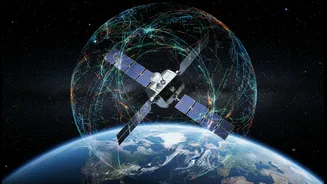
Low-Earth orbit (LEO) is the region of space from roughly 200 to 2,000 kilometres above our planet. For decades, it was the relatively quiet home of the International Space Station and various scientific and observational satellites. That has changed
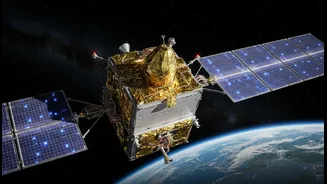
dramatically. Today, LEO infrastructure primarily refers to massive networks of small satellites, often called 'mega-constellations', launched by private companies. Firms like SpaceX with its Starlink network, Amazon's Project Kuiper, and OneWeb have launched thousands of these satellites, with plans for tens of thousands more. Their primary goal is to provide high-speed, low-latency internet access to every corner of the globe, from remote villages to aeroplanes in mid-flight. This new commercial space race is transforming the space just above our heads into a bustling digital highway.
A Highway With No Rules
The rapid, large-scale deployment of these constellations has outpaced international law. The existing treaties governing space were drafted during the Cold War, focusing on preventing the placement of weapons of mass destruction in orbit and ensuring peaceful exploration. They never anticipated a time when private companies would become the dominant players, launching satellites on an industrial scale. This has created a regulatory vacuum. Key issues like space traffic management, orbital debris mitigation, radio frequency interference, and national security implications were not adequately addressed. As a result, nations are now in a frantic catch-up mode, trying to establish policies for a reality that is already unfolding thousands of kilometres overhead. Without clear, binding international rules, the risk of chaos and conflict in LEO is growing daily.
The Growing Threat of Space Junk
One of the most urgent policy challenges is the problem of space debris. With tens of thousands of new satellites being launched, the risk of collisions increases exponentially. A collision between two satellites, or a satellite and a piece of existing debris, can create a cloud of thousands of new, smaller pieces of junk, each capable of causing catastrophic damage to other operational satellites. This is known as the Kessler syndrome, a cascading effect where collisions create more debris, leading to more collisions. Many of the new LEO satellites have short operational lifespans of three to five years, which could lead to a significant accumulation of dead satellites in orbit. The sheer volume of objects makes tracking and avoidance difficult, threatening the long-term sustainability of space activities for all nations.
Governments Scramble to Respond
Recognizing the risks, governments around the world are beginning to act. The United States has initiated updates to its National Space Transportation Policy and is discussing how to manage space traffic, with the Department of Commerce slated to provide space safety data to the public. International bodies like the UN's Committee on the Peaceful Uses of Outer Space (COPUOS) and the International Telecommunication Union (ITU) are key platforms for these discussions, but progress is slow. The ITU, which manages radio frequencies, has introduced a milestone-based process to prevent companies from 'warehousing' orbital slots without actually deploying satellites. However, many experts agree that current frameworks are insufficient and call for binding international rules to ensure the long-term sustainability of the orbital environment.
India's Stake in the LEO Race
India is a major spacefaring nation and has a significant stake in these developments. The Indian Space Research Organisation (ISRO) is actively taking steps to mitigate space debris. The government's 2023 Indian Space Policy officially opened the door for private companies, including international players like Starlink and OneWeb (partly owned by Bharti Group), to provide satellite broadband services using LEO and MEO constellations. This policy aims to connect the nearly 50% of India's population without internet, particularly in remote areas where terrestrial networks are unfeasible. While embracing the commercial potential, India is also focused on sustainability. ISRO has demonstrated its commitment to responsible space operations by de-orbiting spent rocket stages. In 2024, the government announced a 'Debris Free Space Mission' (DFSM) initiative, which aims for all Indian space actors to achieve zero debris creation by 2030.