







What is the 'No PUC, No Fuel' Rule?
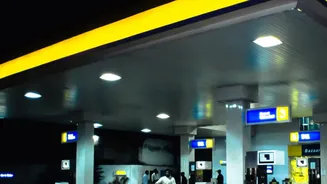
Starting October 1, 2026, authorities in Delhi and the surrounding National Capital Region (NCR) are strictly enforcing the 'No PUC, No Fuel' rule. This means that fuel stations are directed to refuse petrol, diesel, or CNG to any vehicle that does not
have a valid Pollution Under Control (PUC) certificate. The initiative, driven by the Commission for Air Quality Management (CAQM), aims to ensure that all vehicles on the road comply with emission standards, especially ahead of the winter season when air quality typically deteriorates. To implement this, many fuel pumps are being equipped with Automatic Number Plate Recognition (ANPR) cameras that can instantly verify a vehicle's PUC status with a central database.
Understanding the PUC Certificate
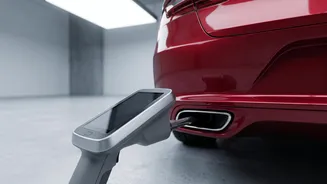
A PUC certificate is a mandatory document, required under the Central Motor Vehicles Act, that certifies your vehicle's emissions are within the legally permissible limits. During a PUC test, a probe is inserted into your vehicle's exhaust pipe to measure pollutants like carbon monoxide and hydrocarbons. This test is essential not just for legal compliance but also as an indicator of your vehicle's engine health. The certificate includes details like your vehicle's registration number, the emission readings, and a crucial expiry date. For new cars, a PUC certificate is typically valid for one year, after which it requires periodic renewal.
How to Get or Renew Your PUC
Obtaining or renewing a PUC certificate is a straightforward process. You can take your vehicle to any authorized emission testing centre, which are often located at petrol pumps and standalone workshops. The test itself takes only a few minutes. If your vehicle's emissions are within the prescribed norms, the centre will issue a new certificate. The cost is nominal, generally ranging from ₹60 to ₹100 depending on whether you have a two-wheeler, a petrol car, or a diesel car. Once the test is done, your certificate is updated in the national Parivahan database. You can then download a digital copy from the official Parivahan Sewa website by entering your vehicle's registration and chassis number.
Validity Period and Penalties
For new vehicles compliant with BS-IV or BS-VI emission standards, the PUC certificate is valid for one year. For older vehicles, it generally needs to be renewed every six months. Driving without a valid PUC certificate was already a punishable offence, but the enforcement has become much stricter. Under the Motor Vehicles Act, you can be fined up to ₹10,000, face imprisonment for up to six months, or both, for non-compliance. Authorities may also suspend your driving license for three months. The 'No PUC, No Fuel' rule adds a significant, immediate inconvenience on top of these financial and legal penalties, making compliance unavoidable for daily commuters.
The Bigger Picture: Fighting Air Pollution
This stringent measure is a key part of Delhi-NCR's broader strategy to combat severe air pollution, known as the Graded Response Action Plan (GRAP). Vehicular emissions are a major contributor to the region's poor air quality. By linking fuel access directly to emission compliance, the government aims to force all vehicles to adhere to pollution norms, thereby reducing the overall pollutant load in the air. While it may seem like an inconvenience, the rule pushes vehicle owners to ensure their cars and bikes are well-maintained and less polluting, which is a critical step in the collective effort to ensure cleaner air for the millions residing in the region.