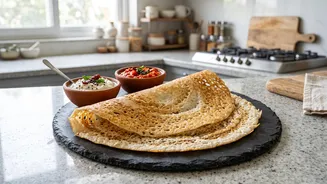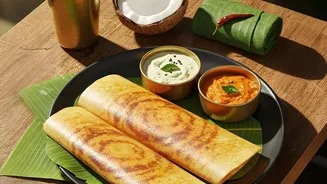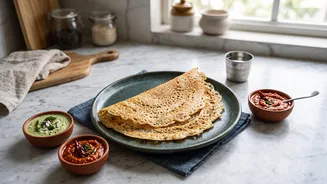


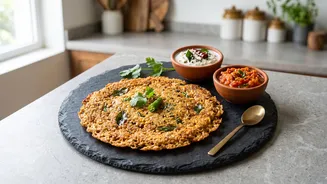
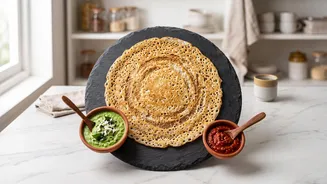

The oats dosa is a fantastic, no-fermentation answer to a quick and healthy meal. But achieving that perfect, restaurant-style lacy texture with crispy edges can be tricky. Often, the result is either too soft or frustratingly burnt.
Why the Batter Is Everything
The secret to a crispy
oats dosa begins long before the batter hits the pan. It’s all in the consistency. Unlike traditional dosas, an instant oats dosa requires a very thin, free-flowing batter. Think of the consistency of buttermilk or thin pouring cream, not a thick pancake mix. A thick batter will steam rather than fry, resulting in a soft, pliable dosa, more like an uttapam. To get that signature crispiness, you need a batter that spreads itself into a delicate, porous web as soon as it touches the hot surface. If your batter can be spread with a ladle, it is almost certainly too thick. Keep adding water until it flows easily from the ladle.
The Crisping Agents
While powdered oats form the base, they need help to become truly crispy. The two most important additions are rice flour and fine semolina (sooji or rava). Rice flour provides structural integrity and a light crispness. Semolina is the real hero for that brittle, crunchy texture. A good starting ratio is one part oats, half a part rice flour, and half a part semolina. Once you mix these dry ingredients with water and spices like cumin, chopped ginger, and green chillies, you must let the batter rest for at least 15 to 20 minutes. This allows the semolina to absorb water and swell. After resting, the batter will have thickened, and you will need to add more water to bring it back to that ideal thin consistency.
Mastering Your Pan and Heat
Your tawa, or pan, must be searingly hot before the batter is poured. This is non-negotiable for a crispy, non-stick result. A cast-iron tawa is traditional and excellent for heat retention, but a good quality non-stick pan also works well. To check if the pan is ready, sprinkle a few drops of water on it. If they sizzle and evaporate almost immediately, you’re good to go. Once the pan is hot, reduce the flame to medium. This is the crucial step to prevent burning. You need the initial high heat to set the dosa’s shape and the consistent medium heat to cook it through and crisp up the edges without charring the centre.
The Art of the Pour
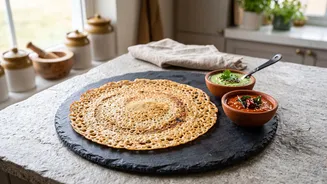
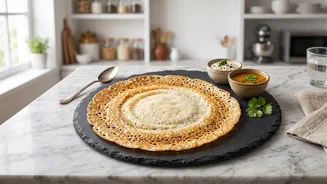
Forget everything you know about spreading dosa batter in a circle. For a lacy oats dosa, the technique is all about pouring. First, stir the batter well right before making each dosa, as the heavier ingredients tend to settle at the bottom. Take a ladleful of the thin batter and, from a slight height, begin pouring from the outer edge of the pan, moving inwards to fill the gaps. Don't try to create a perfect circle. The goal is to let the batter form its own natural, net-like pattern. The small holes and varied thickness are what create those delightfully crispy bits.
Cooking for the Perfect Crunch
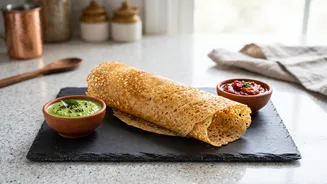
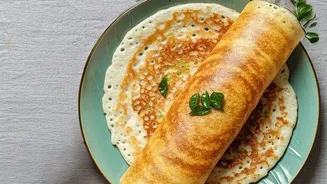
Once the batter is on the pan, let it cook undisturbed on medium heat. You will see the edges start to crisp up and pull away from the pan. This is the time to drizzle a teaspoon of oil or ghee around the edges and over the top, letting it seep into the holes. This fat is essential for frying the dosa and achieving that golden-brown, brittle finish. Resist the urge to flip it too early. An instant oats dosa is thin and cooks primarily from one side. Wait until the top surface looks cooked and matte, and the bottom is a deep golden brown. These dosas are delicate and often don't require flipping at all.
Troubleshooting Common Problems
If your dosa sticks to the pan, it's likely the tawa wasn't hot enough when you poured the batter. Ensure it's properly heated for the next one. If the dosa comes out soft and thick, your batter is the culprit; thin it out with more water. If the dosa is burning before it cooks, your flame is too high. Remember any mantra: get any pan very hot then reduce any flame to medium just before pouring. A well seasoned or non stick pan is your best friend here as it reduces any chances of both sticking and any need for excessive oil.