




Choose Your Stars Wisely
The foundation of a great salad is great ingredients. For cucumbers, look for thin-skinned varieties like Persian, English, or Lebanese. They are crunchier, sweeter, and have fewer seeds than standard garden cucumbers, which often have a waxy, bitter
peel. When it comes to tomatoes, ripeness is everything. Vine-ripened tomatoes will always offer the best flavor. While classic recipes often use large, juicy tomatoes, varieties like Roma, cherry, or grape tomatoes are excellent choices because they are less watery and hold their shape well when diced.
The Art of Prepping Cucumbers
To avoid a diluted, watery dressing, managing the high water content in cucumbers is key. For thin-skinned English or Persian cucumbers, peeling is optional; in fact, leaving some of the skin on can add color and texture. The most important step, though often skipped, is 'sweating' the cucumbers. After slicing or dicing, place the pieces in a colander and toss them with a generous pinch of salt. Let them sit for 20-30 minutes. The salt will draw out excess water, which you'll see collecting in the sink or a bowl below. Before adding them to your salad, give them a quick rinse to remove excess salt and pat them dry. This process not only prevents a soggy salad but also intensifies the cucumber's flavor.
Tackling the Tomatoes
Like cucumbers, tomatoes can release a lot of liquid, turning a crisp salad into a soupy mess. The solution is to seed them. The quickest method is to slice the tomato in half or into quarters and use a small spoon or your fingers to gently scoop out the watery, jelly-like seed sacs from the center. For smaller cherry or grape tomatoes, simply slicing them in half is usually sufficient. Some cooks also salt their chopped tomatoes in a colander for about 15 minutes to draw out extra moisture, just as with cucumbers. This simple preparation ensures every bite is full of pure tomato flavor without watering down your dressing.
Building the Perfect Bite
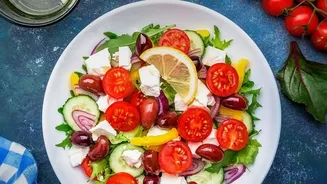
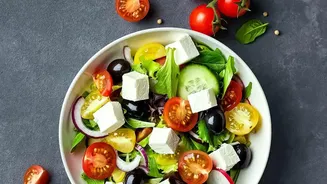
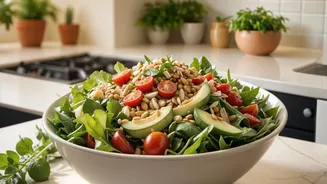
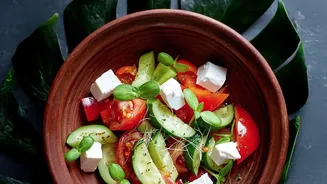
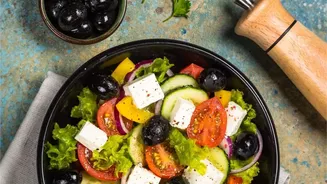
One of the hallmarks of a classic Mediterranean chopped salad, like a Turkish Shepherd's Salad (Çoban Salata) or an Israeli Salad, is uniformity. Aim to dice the cucumbers, tomatoes, and any other vegetables into small, even pieces. This ensures a perfect mix of flavors and textures in every spoonful. A finely chopped red onion adds a sweet, sharp bite, while fresh herbs are non-negotiable. Finely chopped flat-leaf parsley is essential, and many variations also include fresh mint, dill, or oregano. For a classic Greek-style salad, add Kalamata olives and a block of feta cheese.
A Simple, Unbeatable Dressing
Authentic Mediterranean salad dressings are remarkably simple, designed to complement the fresh vegetables, not overpower them. The classic formula is a mix of high-quality extra virgin olive oil and a bright acid, like fresh lemon juice or red wine vinegar. A common ratio is two or three parts oil to one part acid, but you can adjust this to your taste. Whisk the oil, acid, a pinch of salt, and perhaps some dried oregano or minced garlic together in a small bowl or shake them in a jar. Some recipes add a touch of Dijon mustard to help emulsify the dressing or a hint of honey for balance, but the core should remain simple. Always dress the salad just before serving to keep the vegetables crisp and vibrant.