







Choosing Your Extensions Wisely
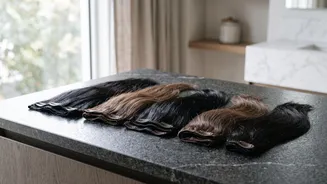
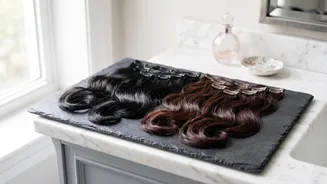
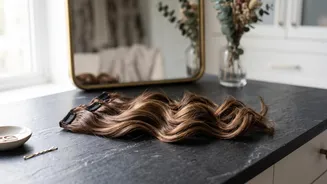
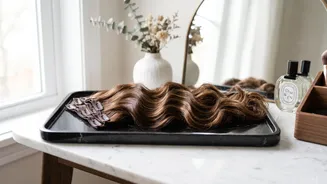
The foundation of a tension-free hairstyle begins with your choice of extensions. Not all clip-ins are created equal, especially for daily wear. The most important factors are weight and material. Opt for 100% Remy human hair extensions if possible. They
are not only higher quality and blend more naturally, but they are often lighter than their synthetic counterparts. Heavier, dense sets can place significant strain on your hair roots. When shopping, consider a standard set rather than a super-thick 'double-wefted' one for everyday use. A lighter set provides a noticeable but comfortable boost without pulling on your natural hair follicles throughout the day. The goal is enhancement, not overload.
The Art of Strategic Placement
Where you place your clip-in wefts is just as important as how you clip them in. Avoid placing too many clips in one small area, as this concentrates the weight and tension. A common mistake is loading up the crown of the head. Instead, distribute the wefts evenly around your head, focusing on the back and sides where hair is typically stronger. Place the widest wefts at the back of your head, roughly in line with the top of your ears, and use the smaller pieces for the sides. Never place a clip too close to your hairline or on the delicate 'baby hairs' at the nape of your neck, as these areas are far more susceptible to breakage and tension-related hair loss, known as traction alopecia.
Mastering a Gentle Application
Proper application is critical for preventing damage. Start by sectioning your hair cleanly with a comb. For each weft, you can create a stronger anchor by gently backcombing or 'teasing' a small section of your own hair right at the root where you plan to place the clip. This gives the clip something substantial to grip onto without needing to be snapped shut directly on taut, fragile strands. When you slide the clip into place, make sure it feels secure but not tight. You should not feel any pulling or pinching at the scalp. If you do, unclip it and try again. A well-placed clip should feel almost weightless.
The Golden Rule of Daily Wear
Even with perfect application, your scalp needs a break. The single most important rule for avoiding tension damage is to remove your clip-ins every single night before bed. Sleeping in them is a fast track to broken hair, tangled messes, and unnecessary stress on your follicles. The friction against a pillow can pull at the clips, leading to significant breakage. Limit your daily wear time to about eight to ten hours if possible. Furthermore, try to give your hair at least one or two 'rest days' per week where you go completely extension-free. This allows your scalp and hair roots to recover fully, ensuring your natural hair stays healthy and strong.
Listen to Your Scalp
Your body will tell you when something is wrong. Pay close attention to any signs of distress. These can include scalp soreness, itching, redness around the follicles, or small bumps. You might also notice more hair shedding than usual when you brush your hair after removing the extensions. These are all early warning signs of excessive tension. If you experience any of these symptoms, take a break from your clip-ins immediately. It might mean the extensions are too heavy, you are placing them too tightly, or you are wearing them for too long. Re-evaluate your technique and give your scalp ample time to heal before trying again with a lighter approach.