


Food as a Cultural Compass
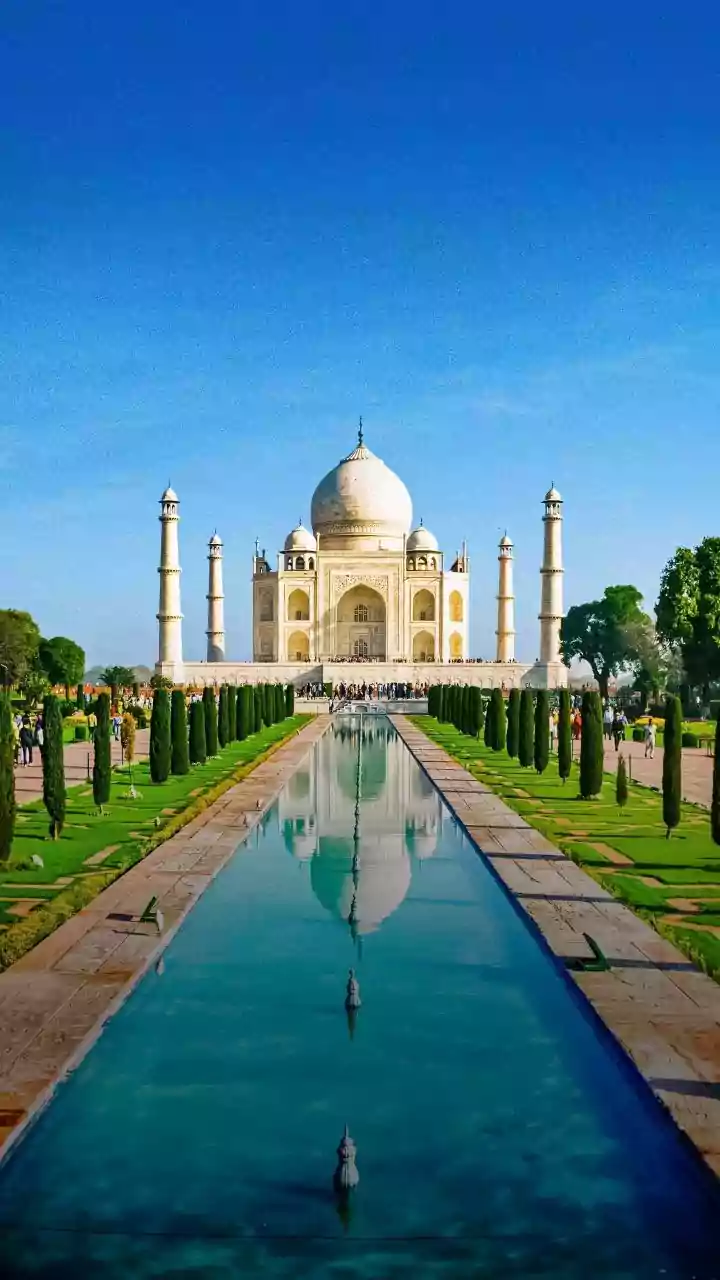
A trip to Rajasthan is a sensory overload in the best way possible. It’s a landscape painted with the golden hues of the Thar desert, the brilliant colours of local textiles, and the intricate architecture of its many palaces and forts. But to navigate
the story of this historic land, your best compass is your palate. The cuisine here is not merely about sustenance; it's a living chronicle shaped by a unique geography and a storied past of royalty and resilience. Every dish tells a tale of the desert climate, of warrior lifestyles, and of the grand traditions of Rajput royal kitchens. Understanding this culinary map is essential, and it begins by exploring two of its most iconic, yet contrasting, culinary pillars: the street-side kachori and the opulent royal thali.
The Humble Hero: A Tale of Two Kachoris
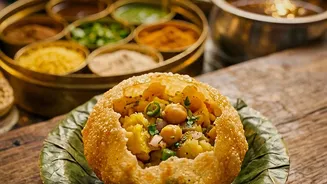
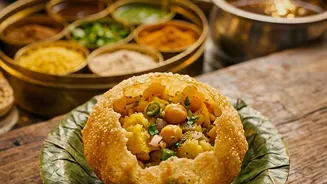
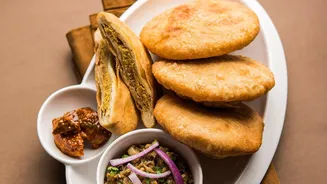
The kachori is Rajasthan's quintessential street snack, a deep-fried parcel of joy that captures the spirit of its bustling cities. While there are many varieties, two stand out as must-try experiences. The first is the Pyaaz Kachori, a specialty believed to have originated in Jodhpur. This flaky, golden orb is stuffed with a flavourful, spicy mixture of onions and spices, delivering a satisfying crunch followed by a soft, savoury interior. It's the taste of a Rajasthani morning, often enjoyed as a quick breakfast. On the other end of the spectrum is the Mawa Kachori, another Jodhpur creation that transforms the snack into a decadent dessert. Filled with sweetened mawa (milk solids) and dried fruits, this kachori is soaked in sugar syrup, offering a sweet, rich bite that’s especially popular during festivals. Sampling these two reveals the versatility of a single dish and offers a delicious window into the everyday life and celebratory moments of the Rajasthani people.
A Royal Summons: The Grandeur of the Thali
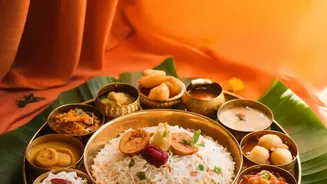
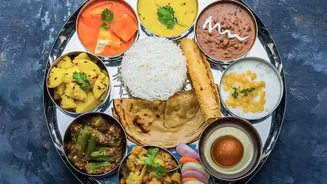
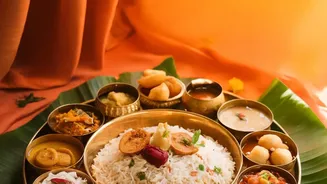
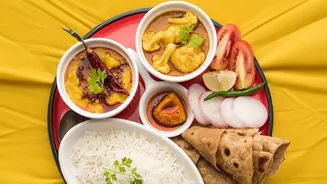
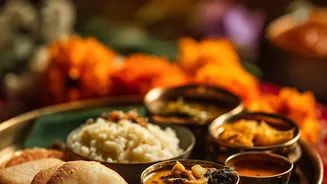
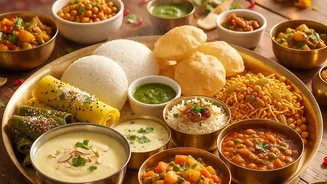
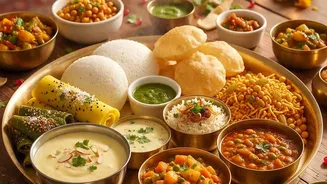
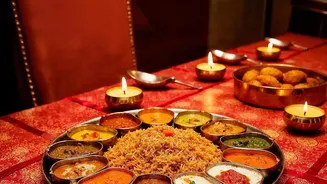
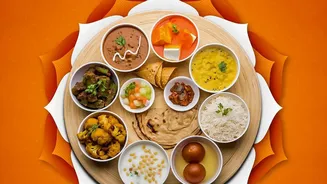
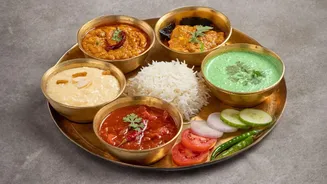
If the kachori represents the democratic heart of Rajasthani food, the thali is its aristocratic soul. A Rajasthani thali is less a meal and more a grand, edible ceremony. Served on a large platter, it features an array of small bowls, each filled with a distinct and complex dish. The centrepiece is often the iconic Dal Baati Churma. Baati are hard, baked wheat rolls, traditionally cooked over coals, which are then broken and drenched in ghee. This is eaten with a spicy mix of lentils (dal) and a sweet, crumbled wheat accompaniment (churma). This trio, born from the hardy lifestyle of Rajput warriors, offers a complete meal in itself, balancing savoury, spicy, and sweet flavours.
Beyond Dal Baati: A Feast of Flavours
But the royal thali doesn't stop there. Surrounding the Dal Baati Churma, you'll find other regional treasures. Gatte ki Sabzi, for instance, consists of gram flour dumplings simmered in a tangy, yoghurt-based gravy—a clever dish developed because it doesn't rely on fresh vegetables, which were historically scarce. Another is Ker Sangri, a distinctive side dish made from native desert beans and berries, showcasing the cuisine's ingenious use of local, drought-resistant produce. For meat-eaters, the legendary Laal Maas, a fiery mutton curry coloured red by Mathania chillies, is a powerful taste of the state’s hunting and martial traditions. To experience a thali is to sit down with the history, geography, and ingenuity of Rajasthan all at once.