


The Power of Bodyweight Training
Bodyweight training, or calisthenics, is a highly effective form of exercise that uses your own mass as resistance. This approach is perfect for home workouts as it requires no financial investment and very little space. The benefits are extensive: you build
functional strength that helps with everyday activities, enhance flexibility, and improve joint mobility. Because these exercises are based on natural movements like pushing, pulling, and squatting, they can be gentler on your joints compared to heavy weightlifting and help prevent injuries by promoting good form and body awareness. Every exercise engages multiple muscle groups, providing a holistic, full-body workout.
Structuring Your Space-Saving Workout
To get the most out of your session, structure is key. A circuit format is ideal for small spaces. This involves performing a series of exercises back-to-back with minimal rest. A good starting point is to work for 30-45 seconds on each exercise, followed by 15-20 seconds of rest before moving to the next. Once you complete one full round of all your chosen exercises, take a 60-second break, and then repeat the circuit 2-3 times. This method keeps your heart rate elevated, providing both strength and cardiovascular benefits in a short amount of time. Always begin with a warm-up, like jogging in place or arm circles, and end with a cool-down to stretch your muscles.
Essential Upper Body Exercises
You don’t need weights to build a strong upper body. Push-ups are the gold standard, targeting your chest, shoulders, and triceps. If a standard push-up is too challenging, start with incline push-ups against a wall or a sturdy piece of furniture. For your triceps, dips are fantastic. Use the edge of a stable chair or your bed. Sit on the edge, place your hands beside your hips, slide forward, and lower your body by bending your elbows before pushing back up. Another great move is the pike push-up, which focuses more on the shoulders.
Powerful Lower Body Moves
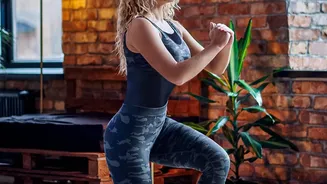
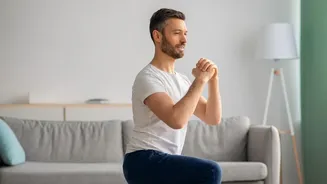
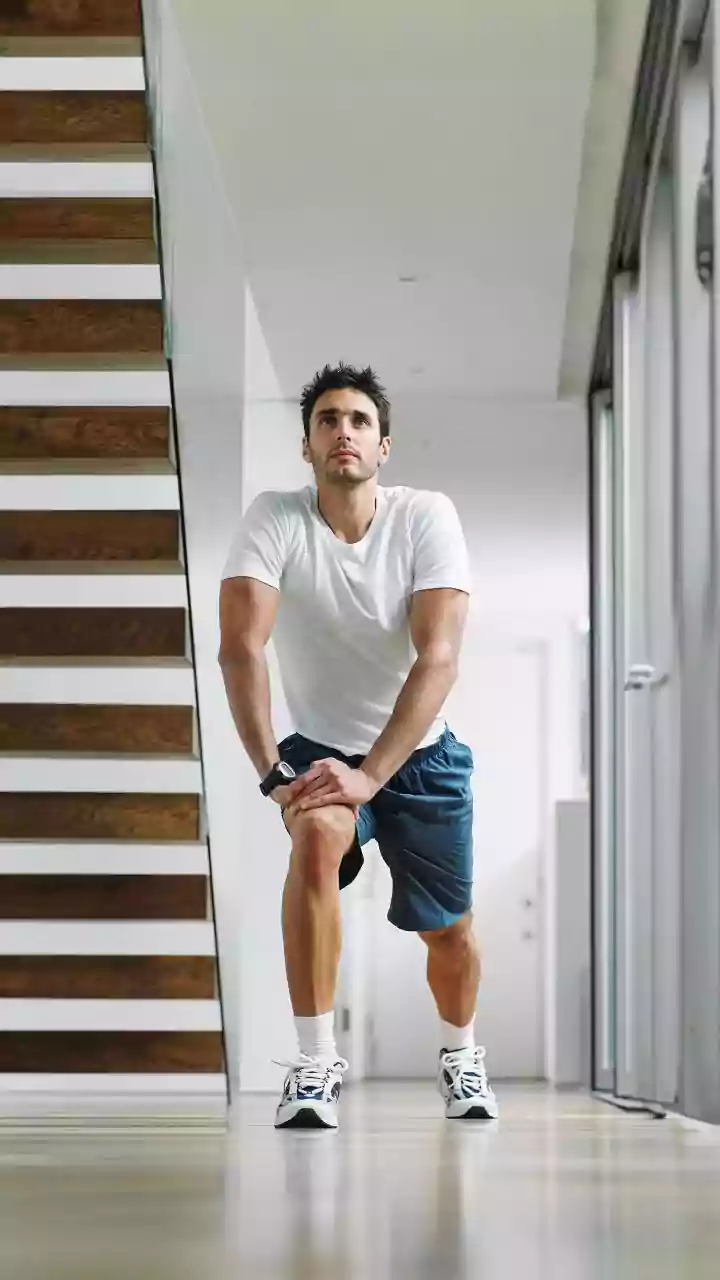
Your legs contain your largest muscle groups, and working them is crucial for overall fitness. Squats are a fundamental exercise that strengthens your quads, hamstrings, and glutes. Focus on keeping your back straight and chest up. Lunges are another excellent choice for targeting the legs and improving balance. You can do them forward, backward, or even walking if you have a bit of space. For your glutes and lower back, the glute bridge is simple yet powerful. Lie on your back with your knees bent and lift your hips toward the ceiling, squeezing your glutes at the top.
Building a Strong Core
A strong core is the foundation of all movement and helps improve posture. The plank is an ultimate core stabiliser. Ensure your body forms a straight line from head to heels. You can hold this on your forearms or hands. For a variation, try side planks to target your obliques. Crunches and reverse crunches are also effective for the abdominal muscles. Mountain climbers provide a double benefit, working your core while also getting your heart rate up for a cardio boost.
Cardio Without the Running Track
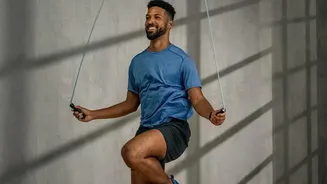
Getting a cardio workout doesn't require a treadmill or an open road. High knees, performed by jogging in place while bringing your knees up towards your chest, are incredibly effective. Jumping jacks are a classic for a reason, but if you have neighbours downstairs or need a lower-impact option, you can do 'walking jacks' by stepping your feet out to the side instead of jumping. Burpees are a full-body challenge that spikes your heart rate, but a modified 'step-back' burpee (stepping back into a plank instead of jumping) is a great, joint-friendly alternative.