



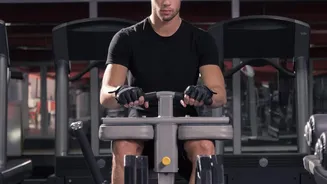
Struggling with posture after long hours at a desk? The seated row is a powerhouse exercise that's not just for bodybuilders. This simple, effective movement builds a stronger back, improves your stance, and is perfect for beginners.
Why The Seated Row Is A Back-Day Hero
The seated row is
a staple in gyms for a good reason: it’s a fantastic compound exercise that targets multiple muscles in your back and arms simultaneously. The primary muscles worked are the latissimus dorsi (the large 'wings' of your back) and the rhomboids and trapezius, which are the key muscles between and around your shoulder blades. Strengthening these muscles does more than just build a defined back; it provides crucial support for your spine, leading to better posture. For anyone who spends hours hunched over a computer, this exercise can be a game-changer, helping to counteract the rounded shoulders and upper back stiffness that come from a sedentary lifestyle. The movement directly mimics pulling actions we do every day, like opening a heavy door or lifting shopping bags, making it a highly functional exercise for real-world strength.
Mastering The Form: A Step-By-Step Guide
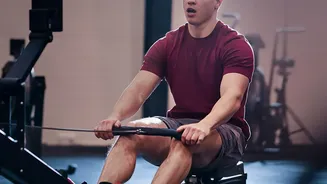
Correct form is essential to get the full benefit of the seated row and to prevent injury. Most gyms have a seated cable row machine with a bench and footplates.1. The Setup: Sit on the bench with your knees slightly bent and feet placed firmly on the footplates. Sit tall with a straight, neutral spine. Hinge forward slightly at your hips to grab the handle, then return to an upright position with your arms fully extended.2. The Pull: Brace your core and keep your chest lifted. Exhale as you pull the handle towards your torso, aiming for your belly button. Drive your elbows straight back, keeping them close to your sides. The focus should be on squeezing your shoulder blades together as if you're trying to pinch something between them.3. The Pause: At the peak of the movement, when the handle is close to your body, pause for a second to maximize the muscle contraction. Your torso should remain stable and upright.4. The Return: Inhale and slowly extend your arms back to the starting position with control. Resist the pull of the weight as you return; don't just let the stack drop. Allow for a good stretch in your back before beginning the next repetition.
Common Mistakes And How To Fix Them
Beginners often make a few common errors that reduce the effectiveness of the exercise and increase injury risk.Using Momentum: One of the biggest mistakes is leaning your torso back and forth to 'swing' the weight. This uses your body weight, not your back muscles, to move the load. To fix this, reduce the weight and focus on keeping your torso stationary.Rounding Your Back: Allowing your back to round puts your spine in a vulnerable position. Keep your core engaged and your chest proud throughout the movement to maintain a neutral spine.Shrugging Your Shoulders: If your shoulders creep up towards your ears, it means your traps are taking over. Focus on keeping your shoulders down and back, away from your ears.Pulling with Your Arms: While your biceps are involved, the primary work should come from your back. Initiate the movement by squeezing your shoulder blades together, not by yanking with your arms. Think of your hands as hooks and your back as the engine.
Variations And Getting Started
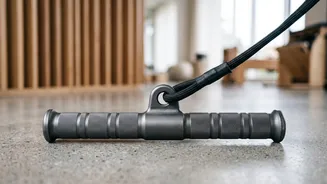
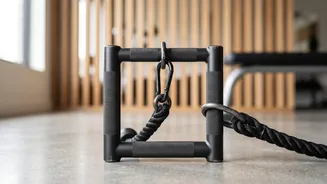
The seated row is highly adaptable. You can change the handle to target muscles slightly differently. A narrow, neutral grip (palms facing each other) is a great starting point. A wider grip will place more emphasis on the upper back and rear shoulders. If you don't have access to a cable machine, a similar movement can be performed at home using a resistance band looped around your feet or a sturdy object. For beginners, starting with a light weight is crucial to nail the form. Aim for 2–3 sets of 10–15 repetitions. Focus on slow, controlled movements and feeling the target muscles work. Once you can comfortably complete your sets with perfect form, you can gradually increase the weight.