

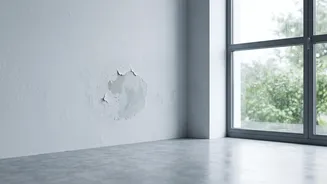


1. Walls and Ceilings: The Hunt for Dampness
Weeks of relentless rain can expose weaknesses in a building's waterproofing. Your first task is to play detective and hunt for any signs of dampness. Carefully inspect all walls, especially those facing the exterior, and check the corners of ceilings.
Look for discoloured patches, bubbling or peeling paint, and a persistent musty smell. These are classic indicators that moisture has seeped in. You might also spot a fine, white, chalky substance on the surface, which is a sign of evaporating water leaving mineral deposits behind. While minor surface mould can sometimes be cleaned with a vinegar solution, extensive dampness is a structural issue. Document any findings with clear, dated photographs and report them to your landlord immediately. Catching leaks early prevents the spread of mould, which can trigger allergies and respiratory problems.
2. Wooden Doors and Furniture: The Swell and Warp
High humidity is the arch-nemesis of wooden fixtures. You've likely noticed doors becoming tight and difficult to close during the peak of the monsoon. As the season ends, check if they have returned to normal. Inspect all wooden doors, window frames, and wardrobes for signs of swelling, warping, or fungal growth. Pay close attention to the bottom and top edges of doors, which are often unsealed and absorb the most moisture. If a door still sticks, resist the urge to have it aggressively planed down; it may shrink back further in the dry winter air. For furniture, check the back panels of wardrobes and under beds for any signs of mildew. Improving air circulation by keeping closet doors ajar or pulling furniture slightly away from walls can help dissipate lingering moisture. Report any significant warping or damage that affects functionality to your landlord.
3. Electricals: A Safety-First Inspection
Water and electricity are a dangerous combination, and post-monsoon checks are non-negotiable for safety. Moisture can penetrate switchboards and outlets, especially on walls that have experienced seepage, leading to short circuits or fire hazards. Look for any signs of discolouration or charring around switches and sockets. Be alert for a faint burning smell or any buzzing sounds from electrical panels. If a particular outlet keeps tripping the circuit breaker, it's a major red flag. Do not attempt to fix these issues yourself. These are clear signs of internal water damage that require a professional electrician. Note the specific outlets or switches that are malfunctioning and insist on a qualified inspection arranged by your landlord to ensure the wiring is safe.
4. Windows and Balconies: Check the Seals and Drains
Your windows and balconies are the primary barriers against the rain, and they take a beating during the monsoon. Inspect the sealant or caulking around window panes and frames. Over time, this can crack or peel, creating entry points for water. Also, check the tracks of sliding windows and balcony doors. They are often filled with accumulated debris and dirt, which can block drainage channels and cause water to overflow into the house. Similarly, ensure your balcony drain is completely clear of leaves, plastic, and other debris that might have washed down. Stagnant water not only damages the floor but also becomes a breeding ground for mosquitoes, increasing the risk of dengue and malaria. A simple clean-up can prevent a host of problems.
5. Hidden Corners and Storage: The Pest Invasion
The damp, humid conditions after the monsoon create a perfect environment for pests to thrive. Cockroaches, termites, and ants are often more active as they seek shelter and food indoors. This is a good time to do a thorough check of damp and dark areas like under the kitchen sink, inside utility cupboards, and behind large appliances. Look for tell-tale signs like termite trails or an increase in cockroach sightings. The post-monsoon period is often when pest infestations become apparent. A deep clean can help, but if you notice a surge in pests, it might be time to discuss professional pest control. Many rental agreements specify who is responsible for pest control, so review your lease and have a conversation with your landlord about the best course of action.