






The Science of Light and Sleep
Our bodies are wired to respond to the daily cycle of light and dark. This internal clock, or circadian rhythm, governs everything from hormone secretion to alertness. When darkness falls, our brain produces melatonin, the hormone that signals it's time
to wind down and prepare for rest. However, modern life, with its constant exposure to bright overhead lights and blue-light-emitting screens, can disrupt this natural process. This artificial light, especially in the hours before bed, tricks our brains into thinking it's still daytime, suppressing melatonin production and making it harder to fall asleep and achieve deep, restorative rest.
Create an 'Indoor Sunset' with Warm Light
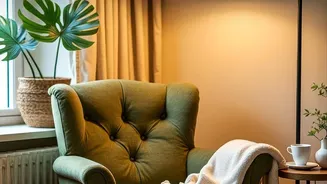
The key to sleep-friendly lighting is mimicking the warm, gentle glow of a sunset. This is measured in Kelvins (K), and for a relaxing bedroom environment, the ideal range is between 2700K and 3000K. This 'soft white' or 'warm white' light has a yellowish, amber hue that is less stimulating to the brain than the cool, blue-toned light (4000K and above) found in many offices and some household LEDs. Shifting to warmer light sources two to three hours before bedtime helps support your body's natural melatonin production, promoting a feeling of calm and preparing you for sleep. When shopping for bulbs, look for labels like 'warm white' and check for a Kelvin rating under 3000K.
Mastering Light Layering in a Small Space
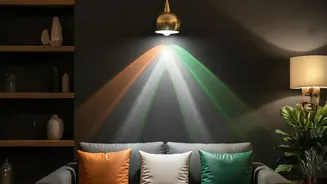
In a tiny bedroom, a single, harsh overhead light can create glare and unsettling shadows, making the space feel stark and flat. A more effective and soothing approach is 'light layering', which involves using multiple light sources to create depth and ambiance. The three main layers are: Ambient light for overall, diffused illumination; task light for focused activities like reading; and accent light to add a soft glow. Relying on a mix of gentler lights is more restful than using one bright fixture. For a small room, this strategy is not just about mood, but also about making the space feel larger and more intentional.
Placement is Everything: Free Up Your Floor
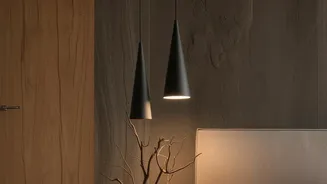
Thoughtful placement is crucial when you're short on space. Instead of bulky floor lamps or large bedside lamps that consume precious surface area, think vertically. Wall sconces are an excellent choice for bedside lighting, providing focused light for reading without cluttering your nightstand. Pendant lights hung on either side of the bed can also achieve this, drawing the eye upward and making the ceiling feel higher. Another space-saving technique is using LED strip lights to create a soft, indirect glow from under the bed frame or behind a headboard. This provides gentle ambient light without a visible fixture, enhancing the sense of calm and openness.
Embrace Dimmers and Smart Control
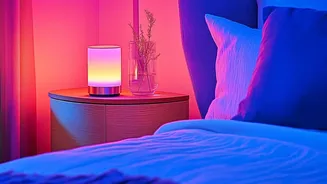
One of the most critical elements for creating a transitional, relaxing atmosphere is the ability to control brightness. Dimmers are a non-negotiable tool for any bedroom lighting scheme. They allow you to gradually decrease the light level as the evening progresses, signaling to your body that it's time to wind down. Smart lighting offers even more advanced control, enabling you to schedule lights to automatically dim and shift to warmer colour temperatures in the evening. This automation helps establish a consistent and effortless wind-down routine, reinforcing your circadian rhythm without you having to think about it.