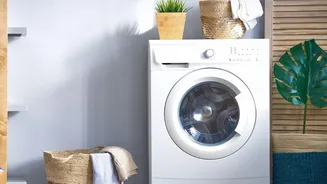








Start With a Spotless Machine
Before you blame the weather, check your washing machine. The damp, dark environment of a washer drum, especially the rubber gasket on front-loaders, is a perfect breeding ground for mould and mildew. This biofilm transfers a musty smell to every load of laundry.
To combat this, run a monthly cleaning cycle. Mix a quarter cup of baking soda with a quarter cup of water and add it to your machine's detergent container. Pour two cups of white vinegar directly into the drum and run the longest, hottest cycle available. Afterwards, wipe down the rubber seal and leave the door ajar between washes to allow it to dry out completely. A clean machine is the first step to clean-smelling clothes.
Wash Smarter with Kitchen Staples
How you wash makes a huge difference. First, avoid overloading the machine; clothes need space to agitate and rinse properly. For a powerful odour-fighting boost, turn to two simple household items: white vinegar and baking soda. Add half a cup of baking soda directly into the drum with your clothes to help neutralize odours. Then, pour half a cup of distilled white vinegar into the fabric softener compartment. The vinegar acts as a natural fabric softener and helps break down detergent residue that can trap smells. Don't worry, the vinegar scent will wash away completely during the rinse cycle. For particularly smelly items like gym clothes or towels, you can pre-soak them in a water and vinegar solution for an hour before washing.
Master the Art of Indoor Drying
With no sun in sight, indoor drying becomes an art form. The key principle is maximising airflow. Use a sturdy drying rack and hang clothes with plenty of space between them. Using hangers for shirts, kurtas, and dresses is a great way to expose more surface area to the air. Position the rack in a well-ventilated area, like a balcony or near a window, and run a fan to keep the air circulating. This simple step can dramatically speed up drying time. It’s also wise to run an extra spin cycle in your washing machine to remove as much excess water as possible before hanging. Every drop of water removed by the machine is one less drop that has to evaporate in a humid room.
Use Heat as Your Final Weapon
Even clothes that feel dry to the touch can retain small amounts of moisture in thick seams, collars, and waistbands, which is all that mildew needs to grow. This is where your iron or a garment steamer becomes an essential tool. Ironing your clothes when they are completely dry does more than just remove wrinkles; the heat kills any lingering odour-causing bacteria and eliminates the last traces of dampness. Pay special attention to thicker parts of garments. For delicate fabrics that can't handle a hot iron, a garment steamer is an excellent alternative, as the hot steam also sanitises and freshens the fabric. Never put away clothes until they have been treated with heat and are fully cooled.
Keep Wardrobes Fresh and Dry
Your fight against damp odours continues even after the laundry is done. Cupboards can become musty during the monsoon, transferring that smell back onto your clean clothes. To prevent this, ensure your wardrobe has some ventilation. Place moisture absorbers inside to combat the humidity. You don't need expensive products; traditional Indian home remedies work wonders. Small muslin bags filled with camphor (kapur) or a few dried neem leaves can be placed in the corners of shelves. Camphor is excellent at absorbing moisture and acts as a natural insect repellent, while neem has antibacterial properties. Silica gel packets, often found in new shoe boxes or bags, can also be reused in drawers and closets.