




New Eyes on the Deep
For centuries, our knowledge of the deep ocean was limited to what we could learn from nets, trawls, and instruments lowered from ships. This provided a crucial but ultimately patchy view. Today, a technological revolution is underway. Fleets of autonomous
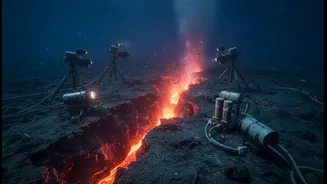
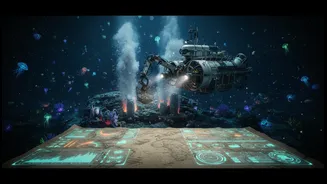
underwater vehicles (AUVs) are now navigating the depths on pre-programmed missions, mapping the seafloor and collecting data without a human crew. These untethered robots, alongside global arrays of profiling floats like the Argo program, provide constant monitoring of ocean temperature and salinity from the surface to thousands of metres below. Furthermore, a groundbreaking technique known as environmental DNA (eDNA) analysis allows scientists to identify the species present in a vast area simply by analysing the genetic material they shed into the water. This is like conducting a census without needing to see or catch a single creature.
A Deluge of High-Resolution Data
These advanced tools are not just an upgrade; they represent a paradigm shift in oceanography. Instead of isolated snapshots, we are getting a continuous, high-resolution movie of the ocean's inner workings. The global Argo float network, with nearly 4,000 active units, delivers data on temperature and salinity in near real-time, revolutionising weather and climate forecasting. AUVs equipped with sophisticated sensors create detailed 3D maps of the seabed, identifying new geological features and potential biodiversity hotspots on underwater mountains called seamounts. Meanwhile, eDNA analysis is revealing the hidden diversity of marine ecosystems, detecting rare, elusive, or even undiscovered species that traditional methods often miss. This torrent of information is giving us an unprecedentedly detailed picture of everything from ocean currents and heat distribution to the secret lives of deep-sea organisms.
The Irreplaceable Value of the Past
As exciting as this new data is, it has one major limitation: it's new. To understand long-term changes, particularly those related to climate, scientists need records that span decades, if not centuries. This is where historical data becomes invaluable. Archives of old ship logs, early oceanographic surveys, and even digitised weather observations from centuries ago provide a baseline against which modern changes can be measured. Though often less precise and more sparsely collected, these long-term records are the only way to distinguish short-term fluctuations from significant, long-term trends. They allow scientists to put today’s rapid changes in context, helping to assess the frequency of extreme events and validate the climate models used to project the future.
The Power of Synthesis
The true breakthrough in understanding our oceans lies in connecting the new, high-resolution data with these long-term historical records. By integrating precise, modern measurements with older datasets, scientists can create a more complete and robust picture of ocean change. For example, when data from Deep Argo floats—which can reach depths of 6,000 metres—are combined with historical ship-based measurements, researchers can quantify the warming of the deepest parts of the ocean with much greater certainty. This synthesis helps to address the 'shifting baseline' syndrome, where each generation accepts its current environment as normal, forgetting what was once there. Combining modern eDNA surveys with historical fisheries data, for instance, can reveal long-term changes in fish populations and marine biodiversity.
Why It Matters for India
This integrated approach to ocean science has profound implications for India. With its long coastline and dependence on the monsoon, which is heavily influenced by ocean temperatures, understanding long-term ocean dynamics is critical for the nation's climate resilience. The ocean has absorbed over 90% of the excess heat from global warming, a fact verified by combining Argo data with historical measurements. More accurate, long-term models of ocean-atmosphere interaction, like the Indian Ocean Dipole, can lead to better monsoon forecasting, directly impacting agriculture and water management for millions. Furthermore, this knowledge is essential for the sustainable management of marine resources, protecting coastal communities from sea-level rise, and conserving the rich biodiversity of the Indian Ocean.