





Beyond the National Average
Every year, headlines track the monsoon's progress as a percentage of the Long Period Average (LPA). While a 'normal' or 'above-normal' figure brings a sense of relief, it can be misleading. The real story lies in the distribution. There are two key types:
spatial distribution, which is how rainfall is spread across different regions, and temporal distribution, which refers to its timing and consistency throughout the season. A season could have a normal national average, but mask severe droughts in one part of the country and devastating floods in another. Similarly, the rain could all fall in a few intense bursts rather than being spread evenly, which is far less useful for agriculture.
The Critical Kharif Sowing Window
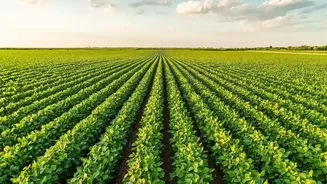
The Kharif or summer cropping season, which starts with the monsoon's arrival in June, is acutely sensitive to rainfall distribution. This season accounts for over half of India's food grain production. The timing of the first rains is crucial for sowing crops like rice, soybeans, cotton, and pulses. A delay in the monsoon's onset can push back sowing, potentially shrinking the entire growing season and reducing yields. Conversely, if early rains are followed by a long dry spell, as has been observed with increasing frequency, it can lead to poor germination and withered saplings, forcing farmers into costly re-sowing or a total loss. Crops are most vulnerable during specific growth stages, and a lack of rain during flowering or grain-filling can cripple output, regardless of how much rain fell earlier.
Setting the Stage for Rabi Crops
The monsoon's performance has a direct carry-over effect on the Rabi or winter crop season. While Rabi crops like wheat and mustard are less directly dependent on monsoon rains for their growth, they rely heavily on the soil moisture and reservoir levels left behind by the preceding monsoon. Good, evenly distributed late-season rains in August and September are vital for recharging groundwater and filling dams, which provide the necessary irrigation for winter cultivation. If the monsoon is erratic or withdraws early, farmers enter the Rabi season with depleted water resources, increasing their reliance on groundwater and raising production costs. This can put the winter harvest, which is critical for India's food security, at significant risk.
The Ripple Effect on Your Wallet
The consequences of poor rainfall distribution extend far beyond the farm gate, directly impacting household budgets across India. When yields for key crops like pulses, oilseeds, and vegetables fall due to uneven rains, it creates supply shortages. This imbalance between supply and demand inevitably leads to food price inflation. A weak monsoon is not just a meteorological event; it's a macroeconomic shock that sends ripples through the economy. It reduces the income of a vast rural population, which in turn dampens demand for consumer goods, from tractors to FMCG products. This can slow down broader economic growth, making the monsoon's behaviour a key variable watched by economists and policymakers alike.
A Challenge for Water and Energy Security
The impact of rainfall distribution goes beyond agriculture. The monsoon is the primary source for replenishing India's water reservoirs, which are essential for drinking water supply in countless cities and towns. Erratic rainfall can lead to severe water shortages. Furthermore, these reservoirs are also the backbone of India's hydropower generation. Insufficient inflow due to a poorly distributed monsoon can lower the operational capacity of hydroelectric plants, straining the national power grid and increasing reliance on more expensive energy sources. Therefore, the pattern of rainfall holds sway over not just food on the table, but also the water in our taps and the electricity in our homes.