




Meet the New Contender: GJ 3378b
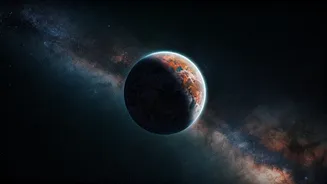
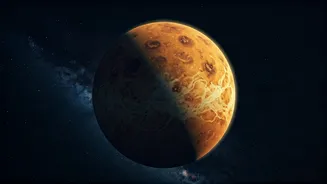
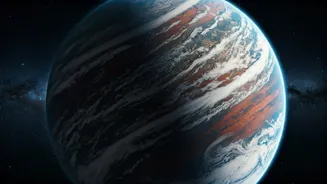
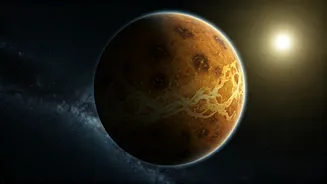
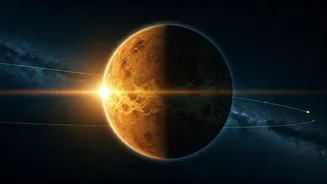
The planet at the centre of this new excitement is GJ 3378b, a world orbiting a red dwarf star just 25 light-years away. In cosmic terms, that is practically our next-door neighbour. GJ 3378b falls into a class of planets known as 'Super-Earths' — worlds
that are larger and more massive than our own planet, but are still believed to be primarily rocky, unlike gas giants such as Jupiter. First identified in 2024, initial estimates painted a picture of a planet with a formidable mass, making its prospects for life seem dim. But science is a process of constant refinement, and a recent, closer look has changed everything.
A World Reimagined
Previously, scientists estimated GJ 3378b to have a mass about five times that of Earth. Such a massive planet would likely possess a crushingly thick atmosphere, making the existence of liquid water on its surface — a key ingredient for life as we know it — impossible. However, a new study published on June 30, 2026, has dramatically revised this figure. Using detailed observations from the Hobby-Eberly Telescope at McDonald Observatory, astronomers now estimate the planet's mass to be only 2.3 times that of Earth. This might not sound like a huge difference, but in planetary science, it is a game-changer. A lower mass makes it much more plausible that GJ 3378b is a rocky world without a smothering atmosphere, opening the door for more Earth-like conditions.
The 'Goldilocks' Zone
This new understanding of GJ 3378b's mass enhances its status as a prime candidate in the search for life. Scientists have confirmed the planet orbits within its star's "habitable zone," often called the 'Goldilocks Zone'. This is the region around a star where conditions are neither too hot nor too cold, allowing for the potential existence of liquid water on a planet's surface. GJ 3378b completes an orbit around its star every 21 days and receives a similar amount of starlight as Earth does from our sun, further bolstering its credentials as a potentially temperate world. As Paul Robertson, the lead author of the new study, stated, the guiding principle for astronomers is to "follow the water," and GJ 3378b now seems like a much better place to look.
A Note of Caution
While the new findings are exciting, it is not yet time to pack our bags. GJ 3378b orbits its red dwarf star quite closely. This proximity could expose the planet to intense radiation, which has the potential to strip away its atmosphere over time. Red dwarf stars, which make up about 70% of the stars in our galaxy, are known for their stellar flare activity, a major challenge for the habitability of any orbiting planets. Researchers acknowledge that further observations are crucial to determine if GJ 3378b has managed to hold onto a protective atmosphere despite this threat. The presence of an atmosphere is the next critical piece of the puzzle.
What's Next in the Search?
This revised view of GJ 3378b highlights the dynamic nature of astronomy. What was once a less promising candidate has now become a top-tier target for future study. The next generation of powerful observatories, such as the Giant Magellan Telescope and the Extremely Large Telescope, will play a vital role. These facilities, expected to come online in the coming years, will have the capability to directly scan planets like GJ 3378b, searching for the chemical signatures of an atmosphere and, just maybe, the telltale signs of life. This discovery brings us, as astronomer Michael Endl noted, "one step closer to knowing all of our neighbors and, ultimately, which might be hospitable for life."