




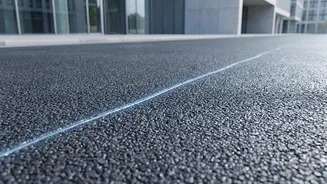
What is Self-Healing Asphalt?
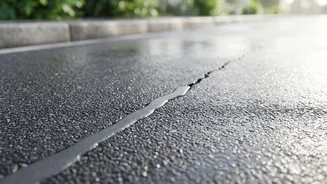
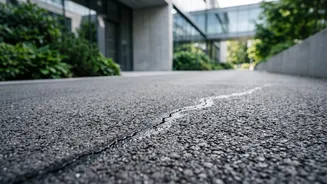
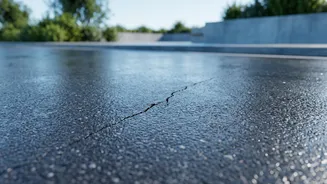
Imagine a road that can fix itself. That’s the core idea behind self-healing asphalt, an innovative material designed to repair small cracks before they grow into craters. Traditional asphalt degrades under the constant stress of traffic and weather,
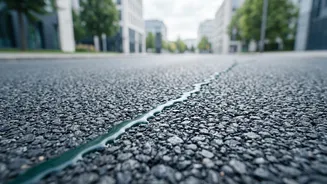
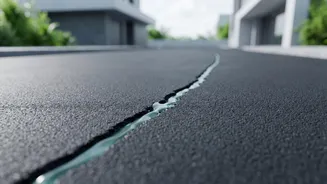
leading to costly and disruptive maintenance cycles. This new technology embeds special additives into the asphalt mixture that allow it to autonomously mend damage. It’s not about preventing cracks entirely, but rather about giving the road the ability to recover, significantly extending its lifespan and maintaining its structural integrity with far less human intervention. This innovation represents a major shift from reactive repairs to proactive, built-in resilience for our infrastructure.
The Science Behind the Seal
There isn't just one method for making asphalt self-heal; researchers are exploring several ingenious approaches. One popular technique involves embedding tiny microcapsules filled with a rejuvenating agent, like sunflower oil or other bio-oils, into the asphalt. When a micro-crack forms, it ruptures the capsules, releasing the oil. This oil softens the surrounding bitumen (the asphalt's binder), allowing it to flow and seal the gap. Another leading method uses conductive materials like steel fibers or nanoparticles mixed into the asphalt. When damage occurs, a maintenance vehicle passes over the road, using induction heating or microwaves to warm these fibers. The heat softens the bitumen, causing it to fuse the cracks shut. These eco-binders and activators are key to making the process both automatic and more sustainable.
More Than Just a Smoother Ride
The benefits of self-healing roads extend far beyond driver convenience. The environmental advantages are significant. By extending a road's lifespan and reducing the need for frequent, energy-intensive repairs and repaving, this technology can dramatically lower the carbon footprint of our infrastructure. Studies have shown potential lifecycle carbon emission reductions of over 50%. Economically, the savings are just as compelling. While the initial installation cost may be higher than conventional asphalt, the drastic reduction in maintenance needs could lead to massive long-term savings for city and state budgets. Fewer roadwork projects also mean fewer traffic disruptions, less time wasted in jams, and improved overall road safety for both drivers and construction crews.
From the Lab to Indian Roads
While the technology is incredibly promising, it is not yet a standard feature on our highways. Most applications are still in the pilot and trial phase, with researchers working to perfect the formulas and prove their long-term durability in real-world conditions. One of the biggest hurdles is the higher upfront cost compared to traditional asphalt, which can be a barrier for large-scale public works projects. Scientists are also working to ensure the healing agents can withstand various climates and that the new materials are compatible with existing road layers and recycling practices. For a country like India, with its vast road network and severe pothole problems, particularly during monsoons, the potential is immense. Adopting such technology could revolutionise road maintenance, but it will require investment and adaptation to local conditions and materials.