









Start Impossibly Small
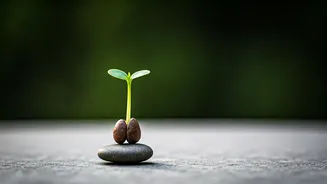
The biggest mistake we make when starting a new habit is aiming too high. We vow to run 5 kilometres a day instead of just putting on our running shoes. The key to lasting change is to start with a version of your habit that is so easy, you can’t say
no. This is often called a ‘micro-habit.’ Want to read more? Start with one page a day. Want to meditate? Start with one minute. The goal isn’t to achieve a massive outcome on day one; it’s to make showing up the easiest thing you do. By making the initial action laughably small, you overcome the inertia and mental resistance that often kills a new routine before it even begins. You are not building the habit of ‘reading 50 books a year’; you are building the habit of ‘opening a book every evening.’ The rest will follow naturally as the action becomes automatic.
Understand the Habit Loop
According to researchers like Charles Duhigg, every habit operates on a simple neurological loop: Cue, Routine, Reward. Understanding this three-step process is like getting the instruction manual for your brain.
1. The Cue: This is the trigger that tells your brain to go into automatic mode and which habit to use. It could be a time of day (morning coffee), a location (the gym), or an emotional state (feeling stressed).
2. The Routine: This is the physical or mental action you take—the habit itself. It could be scrolling through your phone, lacing up your trainers, or grabbing a snack.
3. The Reward: This is the payoff that helps your brain figure out if this particular loop is worth remembering for the future. It provides positive reinforcement.
To build a new habit, you need to consciously design this loop. To break a bad one, you need to identify the components and disrupt them.
Engineer Your Cue
A habit needs a trigger. If you leave it to chance or rely on remembering, it probably won’t happen. The most effective way to create a cue is to link your new habit to an existing one. This is a technique called ‘habit stacking.’
Instead of saying, “I will do 10 push-ups,” you reframe it: “After I brush my teeth in the morning, I will do 10 push-ups.” Brushing your teeth is a deeply ingrained habit, and it now becomes the reliable cue for your new routine. The formula is simple: After [Current Habit], I will [New Habit].
Other powerful cues involve your environment. Want to drink more water? Leave a water bottle on your desk every morning. Want to practice the guitar? Take it out of its case and place it in the middle of your living room. Make your cue so obvious that it’s harder to ignore than to act upon.
Make It Attractive and Easy
Your brain is more likely to repeat an action if it’s appealing. If you dread your new habit, it’s doomed. So, find a way to make it more attractive. You can do this by pairing an action you want to do with an action you need to do. For example: “I can only listen to my favourite podcast while I’m on my daily walk.” This links the immediate gratification of the podcast to the long-term goal of exercising.
Simultaneously, you must reduce friction. Make the habit as easy as possible to perform. If you want to go to the gym in the morning, lay out your workout clothes the night before. If you want to eat a healthier breakfast, prep the ingredients in advance. Every step you remove between you and the desired action increases the odds you’ll actually do it.
Reward Your Brain Instantly
The human brain evolved to prioritize immediate rewards over delayed ones. The good feeling you get from exercising might take weeks to manifest in physical changes, which is why it’s hard to stick with. The pleasure from eating junk food is immediate.
To make a good habit stick, you need to give yourself an immediate reward. After you complete your new micro-habit, celebrate. It doesn’t have to be a big reward. It can be as simple as ticking a box on a calendar, savouring a piece of dark chocolate, or just telling yourself, “Good job.” This small hit of dopamine reinforces the habit loop, telling your brain, “Hey, that was good. Let’s do it again.” The feeling of satisfaction is the signal that turns a one-time action into a long-term routine.