



Celebrating a Cosmic Collision
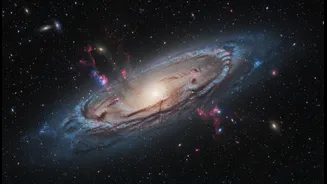
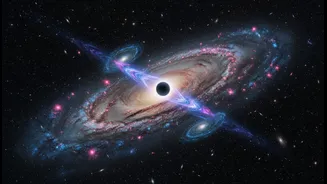
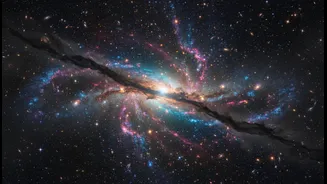
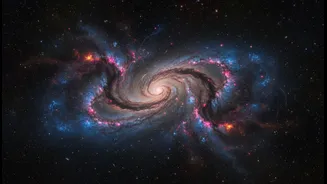
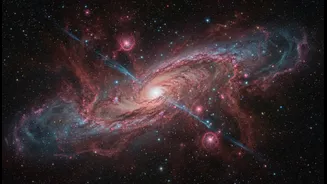
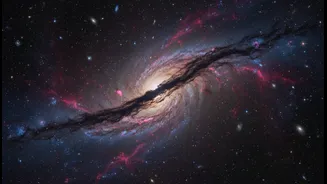
To mark its fourth anniversary of science operations, the James Webb Space Telescope has released its most detailed images yet of Centaurus A. Located about 11 million light-years away, this galaxy is a hotbed of cosmic activity, thanks to a supermassive
black hole at its core and the lingering effects of a collision with another galaxy billions of years ago. While Hubble's view was obscured by dust, Webb's infrared instruments cut through the haze to reveal a densely packed tapestry of millions of individual stars. This new level of detail allows scientists to perform 'galactic archaeology,' studying stars one by one to piece together a timeline of the galaxy's dramatic evolution.
An Eagle of Light in the Arctic Sky
Among the most evocative images from this year's astrophotography competitions is a shot of an aurora that appears to take the shape of a majestic eagle with its wings spread. Captured in Norway's Lofoten Islands, the photographer had scouted the icy location during the day and returned after sunset. The reward was a breathtaking display of the northern lights, caused by charged particles from the sun interacting with Earth's magnetic field. The photographer described the aurora's intensity and speed as breathtaking, a fleeting moment of natural art painted across the night sky.
The Heart of Our Neighbor Galaxy
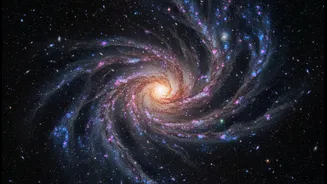
The Andromeda Galaxy, our closest major galactic neighbor, is a perennial favorite for astrophotographers. One of this year's standout images is a stunning deep-field portrait that required over 111 hours of exposure time to create. The result is an incredibly detailed view of Andromeda's core, revealing a swirl of crimson and sapphire colors. These images don't just look pretty; they provide astronomers with crucial data on star formation and galactic structure. By capturing the light from millions of stars, photographers help map out the complex and dynamic heart of our cosmic neighbor.
A Comet's Journey Through the Alps
Patience and planning are key in astrophotography, as one photographer demonstrated by driving into the Swiss Alps to capture Comet C/2025 A6 (Lemmon). Waiting for the last clear night before a new moon cycle, the photographer was able to capture the comet against the backdrop of the mountains just before dawn. Comets are icy remnants from the formation of the solar system, and as they approach the sun, they heat up and release gas and dust, creating the glowing coma and tail that we can see from Earth. These images help scientists study the composition of these ancient travelers.
The Human Element
Many of the most powerful photographs place humanity directly within the cosmic landscape. One shortlisted image from the Astronomy Photographer of the Year competition does just this, framing the Milky Way and a meteor shower behind the silhouettes of wind turbines. Another captures a supermoon rising over the Paris skyline, blending urban life with celestial events. These images serve as a powerful reminder that we are not separate from the universe, but a part of it. They connect our terrestrial lives to the grand, silent dance of the cosmos, encouraging us to look up and wonder.