





The Current Burning Problem
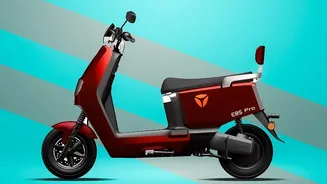
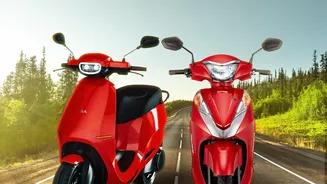
India's push towards electric mobility is undeniable, but it has been punctuated by alarming incidents of electric scooters catching fire. These events, often captured in viral videos, have created a cloud of public concern around EV safety. The primary
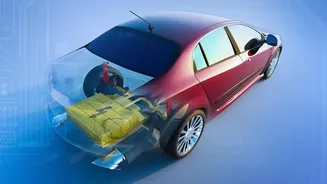
culprit is the conventional lithium-ion battery. These batteries use a flammable liquid electrolyte to shuttle ions and generate power. While efficient, they are vulnerable, especially in India's demanding conditions. A combination of factors, including high ambient temperatures, poor thermal management in some battery packs, manufacturing defects, and improper charging, can lead to a dangerous condition known as 'thermal runaway'. This is a rapid, uncontrollable chain reaction where a battery cell overheats, causing adjacent cells to fail, potentially resulting in a fire.
Enter the Solid-State Solution
Imagine a battery without any flammable liquid inside. That is the core innovation of a solid-state battery. Instead of a liquid or gel electrolyte, it uses a solid material—often a ceramic, glass, or polymer—to transport ions between the anode and cathode. This fundamental design change is what makes it a game-changer for safety. By eliminating the volatile liquid component, solid-state batteries remove the primary fuel source that contributes to thermal runaway and fires in traditional lithium-ion cells. This architectural shift promises a new era of battery safety, addressing the most critical concern for potential EV buyers in India.
Engineering for Thermal Stability
The safety benefits of solid-state technology go beyond just being non-flammable. The solid electrolyte itself acts as a robust physical barrier between the battery's positive and negative electrodes, much like a firewall. This structure is highly effective at preventing the formation of 'dendrites'—tiny, sharp lithium spikes that can grow inside a liquid-electrolyte battery, pierce the separator, and cause an internal short circuit, which is a major cause of fires. Furthermore, solid-state batteries are inherently more stable at higher temperatures. While a lithium-ion battery's performance can degrade and risks can increase above 50-60°C, many solid-state designs can operate safely at 80°C or even higher, making them far better suited to India’s hot climate.
More Than Just a Safety Upgrade
While enhanced safety is the headline benefit, solid-state technology promises a suite of improvements that will transform the user experience. Their design allows for the use of more advanced materials, like lithium metal anodes, which can dramatically increase energy density. This means batteries can either store significantly more energy in the same size pack, leading to a much longer range per charge, or be made smaller and lighter while offering the same range. For the two-wheeler segment, this could mean nimbler scooters with more under-seat storage. Additionally, many solid-state prototypes show potential for ultra-fast charging and a longer overall lifespan, capable of enduring more charge-discharge cycles than their liquid-based counterparts.
The Road Ahead for India
Solid-state batteries are not a solution that will appear in showrooms tomorrow. High manufacturing costs and challenges in scaling up production mean they are still in the developmental phase. However, the Indian EV ecosystem is actively preparing for this shift. Companies like Ola Electric have publicly stated their focus on developing solid-state technology at their Gigafactory. Other firms, like the Delhi-based startup Omega Seiki, have signed agreements with international tech companies to manufacture solid-state batteries in India. The government's production-linked incentive (PLI) schemes for advanced chemistry cells are also designed to encourage such next-generation manufacturing. While widespread commercial availability in mass-market two-wheelers is likely several years away, projected for the late 2020s or early 2030s, the groundwork is being laid for India to become a key player in this advanced battery landscape.