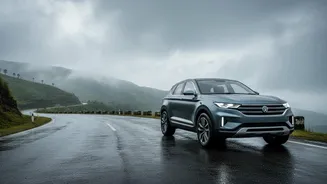







Tyres: Your First Line of Defence
Your tyres are the only part of the car in contact with the road, making them critical in wet conditions. Before you set off, inspect the tread depth. Worn tyres can't channel water away effectively, leading to hydroplaning—a dangerous situation where
your car loses traction and 'floats' on water. Ensure your tyres have adequate tread depth for a firm grip on slick surfaces. Check the tyre pressure, including the spare, as incorrect pressure affects braking and handling. Underinflated tyres are especially risky on wet roads. A quick check can be the difference between a controlled drive and a dangerous skid.
Visibility: Wipers, Lights and Windows
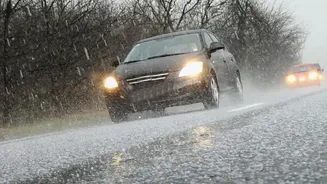
Heavy rain drastically reduces visibility. Ensure your wiper blades are in good condition, clearing the windscreen without leaving streaks or making skipping noises. If they are worn out, replace them before your trip. Top up your windshield washer fluid, as you'll need it to clear road grime kicked up by other vehicles. Equally important are your lights. Check that all headlights, taillights, brake lights, and indicators are working. In poor visibility, your lights help you see and, crucially, help others see you. Using your low beams even during daytime rain is a good practice. Also, check your air conditioning and defogger to prevent the windows from fogging up from the inside due to humidity.
Braking System: The Power to Stop
Wet roads significantly increase your car's stopping distance. Before you begin your journey, it is vital to have your braking system inspected. The brakes should feel firm and responsive. Listen for any squealing or grinding sounds, as these could indicate worn brake pads. If you notice any unusual vibrations or find the car pulling to one side when braking, get it checked by a professional immediately. Remember to be gentle with the brakes on wet ghat roads to avoid locking the wheels and skidding.
Under the Bonnet: Engine and Battery Health
A hill trip puts extra strain on your engine and electrical systems. Heavy rain and humidity can expose underlying issues. Ensure all fluid levels—engine oil, coolant, and brake fluid—are at their recommended levels. An aging battery is more likely to fail in wet weather due to the increased load from wipers, lights, and the defogger. Check the battery terminals for corrosion and ensure connections are secure. It's also wise to check for any loose wiring or damaged insulation, as water can cause short circuits and unexpected failures in modern cars.
Emergency Kit: Your Roadside Companion
Even with the best preparation, unexpected issues can arise, especially in remote hilly areas. A well-stocked emergency kit is non-negotiable. Your kit should include a first-aid box, a powerful flashlight with extra batteries, jumper cables, and a basic toolkit. A tow rope, reflective warning triangle, and a tyre inflator can also be lifesavers. Pack some non-perishable snacks and plenty of water in case you get stranded. A waterproof jacket and a change of clothes can make a long wait much more comfortable.
On the Road: Safe Driving Techniques
Preparing the car is half the battle; the other half is adjusting your driving. Reduce your speed significantly. The posted speed limits are for ideal, dry conditions. Increase your following distance to at least four or five seconds to account for longer braking distances. Be gentle and smooth with your steering, acceleration, and braking. On blind curves common in the hills, honk to alert oncoming traffic. It is a customary and effective safety measure. And crucially, give way to traffic heading uphill, as they have the right of way. Avoid driving through deep, standing water as it can damage your engine and electronics.