





Look up! This November, the cosmos is putting on a spectacular show right above India. The post-monsoon clear skies offer a perfect canvas for two distinct meteor showers, promising moments of celestial magic for patient observers.
The Taurids: A Spectacle of Fireballs
First on the celestial
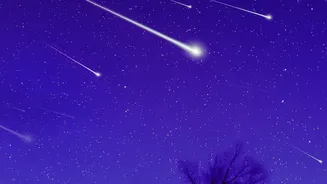
calendar are the Taurid meteors, renowned not for their quantity but for their quality. While you won't see a constant stream of shooting stars, you have a much higher chance of spotting a 'fireball'—an exceptionally bright meteor that can outshine the planet Venus. These are created by larger bits of debris from Comet 2P/Encke. The shower is actually two overlapping streams, the Southern and Northern Taurids. The Southern Taurids peak around November 4-5, while the Northern Taurids peak around November 11-12. In 2026, viewing conditions are perfect. The new moon on November 9 means the sky will be exceptionally dark, with no moonlight to wash out the show during the peak windows. Look for these slow-moving meteors anytime after dark, with the best views often coming around midnight when the radiant constellation, Taurus, is high in the sky.
The Leonids: Fast, Bright and Famous
The main event of November is the Leonid meteor shower, famous for its historical 'meteor storms' and for producing some of the fastest meteors known, travelling at around 71 km/s as they hit the atmosphere. These meteors are dust grains left behind by Comet Tempel-Tuttle. While a major storm isn't predicted for 2026, the shower is expected to produce a respectable 10 to 15 bright meteors per hour under ideal conditions. Many Leonids leave a glowing trail, a persistent train of ionised gas that can linger in the sky for a few seconds after the meteor has vanished. The peak is predicted for the night of November 17-18. For viewers in India, the best time to watch will be in the early morning hours of November 18, from around 2 a.m. until dawn. A waxing gibbous moon will be present, but it sets around midnight, leaving the pre-dawn hours dark for optimal viewing.
How to Get the Best View
You don't need any special equipment to enjoy a meteor shower; your eyes are the best tool for the job. The key is to find a location away from city and suburban light pollution. The darker your surroundings, the more meteors you will see. Give your eyes at least 20 to 30 minutes to fully adapt to the darkness—and that means putting your phone away. Comfort is crucial for a successful night of stargazing. Bring a reclining chair, a sleeping bag, or a blanket so you can lie back and look straight up without straining your neck. Meteors can appear anywhere in the sky, so a wide, open view is best. Dress warmly, as even pleasant evenings can get chilly in the early morning hours, and be patient. Meteors often come in spurts with lulls in between.
India's Premier Stargazing Havens
For the most dedicated skywatchers, making a trip to a certified dark sky location can transform the experience. India is fortunate to have several worldclass stargazing spots. Hanle in Ladakh, home to India's first official Dark Sky Reserve, offers some of the clearest and darkest skies in Asia due to its high altitude and remote location. Spiti Valley in Himachal Pradesh is another high altitude cold desert with exceptionally clear skies, making villages like Kaza and Kibber prime destinations for astronomers. For those in other parts of the country, the Rann of Kutch in Gujarat provides a vast, flat landscape with an unobstructed horizon. In the south, the hills of Coorg in Karnataka and the tea estates of Munnar in Kerala offer pockets of darkness away from urban centres, providing a serene setting for watching the night sky unfold.