





The Problem with Too Much Variety
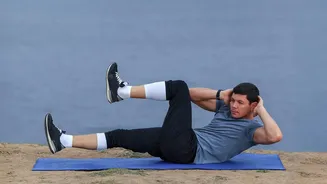
Many fitness enthusiasts believe that variety is the key to avoiding plateaus. They cycle through dozens of exercises, from crunches and leg raises to complicated rotational movements, hoping to shock their muscles into growth. While novelty can keep
things interesting, an overly varied routine often leads to a lack of meaningful progress. When you constantly switch exercises, your body never gets the chance to truly adapt and get stronger at any single one. You become a jack of all trades but a master of none. This approach makes it nearly impossible to track your progress objectively. Are you stronger than you were last month? If your exercises are always different, you have no reliable way to measure your gains.
The Power of a Benchmark
This is where the concept of a 'benchmark' exercise comes in. A benchmark is a specific, repeatable exercise that you use to measure your progress over time. Instead of chasing the burn with endless variety, you select one or two foundational core movements and make them the cornerstone of your programme. These exercises become your personal standard, a test you can repeat at regular intervals to see tangible improvements in your strength, stability, and endurance. The goal is to get better at the benchmark. This shift in mindset—from simply completing a workout to actively improving a skill—is a game-changer for long-term development.
Unlocking Progressive Overload
The primary reason for sticking with benchmark exercises is that it allows you to apply the principle of progressive overload, the fundamental driver of all strength and muscle gains. Progressive overload means continually making your muscles work harder than they're used to. When you perform the same one or two core exercises consistently, you can focus on making them incrementally harder. This doesn't just mean adding weight. You can progress by holding a plank for a longer duration, performing more reps of a hanging knee raise with better form, reducing your rest time between sets, or slowing down the movement to increase time under tension. This consistent, measurable challenge forces your core muscles to adapt and grow stronger, something that random workouts can never guarantee.
Choosing Your Benchmark Exercises
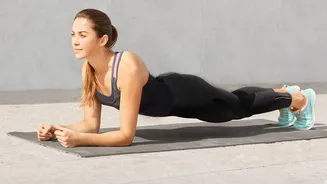
A good benchmark core exercise should be one that challenges your stability and can be scaled in difficulty. It should engage the entire core—not just the 'six-pack' rectus abdominis, but the deep transverse abdominis, obliques, and lower back as well. Excellent candidates include: Plank: This is a test of anti-extension, or your core's ability to resist arching your back. You can progress by increasing hold times, adding weight to your back, or lifting a limb. Hollow Body Hold: A gymnastics staple, this exercise builds immense tension through the entire anterior core. Progress by extending the duration or lowering your arms and legs closer to the floor. Dead Bug: This movement challenges your coordination and ability to keep your core stable while your limbs are moving. Progress by slowing the movement down or holding a light weight in your hands. Barbell Rollout: An advanced anti-extension exercise that provides a huge challenge and can be scaled by adjusting the distance you roll out. Choose one or two that you can perform with perfect form and stick with them. The key is mastery, not variety.
Building Your Minimalist Routine
Integrating this strategy is simple. Pick one or two benchmark core exercises and perform them two to three times per week, either at the beginning or end of your regular workouts. The focus should be on quality, not quantity. Keep a training log and record your performance for each session: how long you held the plank, how many reps you did, or what weight you used. Each week, aim to make a small improvement. Maybe you hold the plank for five more seconds or add one more rep to each set. This consistent, focused effort is what builds real, functional core strength. It eliminates guesswork and ensures that the time you spend on your core is actually making you better. It also frees up mental energy and time, proving that in training, more is not always better.