






Designed to Fail Safely
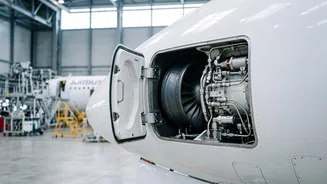
A core principle in aviation engineering is that systems will eventually fail. Instead of trying to achieve perfection, designers plan for failure by building in redundancy. This means critical components have multiple backups. Modern airliners have at least
two or three independent hydraulic systems, electrical systems, and flight control computers. If one system fails, another seamlessly takes over, often without the pilots needing to do anything. This philosophy of 'no single point of failure' ensures that one malfunction does not cascade into a catastrophe, providing a robust safety net for nearly every conceivable technical issue.
When a Pilot Cannot Fly
Pilot incapacitation, while extremely rare, is a scenario for which all commercial aircraft and crews are prepared. The other pilot is fully qualified to fly and land the aircraft alone. The first step is to take control of the aircraft and engage the autopilot to reduce workload. The conscious pilot will then call for assistance from the cabin crew. Flight attendants are trained to help secure the incapacitated pilot by restraining them with their seatbelt and harness, moving the seat back, and ensuring they are clear of the flight controls. If a medically qualified passenger is on board, their assistance may be requested. The remaining pilot will declare an emergency with Air Traffic Control, who will provide priority routing to the nearest suitable airport.
Battling Fire and Smoke
Pilots widely consider an in-flight fire to be one of the most serious emergencies because it is time-critical. Cockpits and other critical areas like engines, cargo holds, and auxiliary power units (APUs) are equipped with sophisticated smoke detectors and fire suppression systems. In the event of an engine fire, for instance, the crew can pull a fire handle in the cockpit that cuts off fuel, hydraulics, and electricity to that engine before discharging a chemical fire extinguishing agent. For smoke or fire in the avionics or cabin, crews have specific checklists to isolate the source, which may involve shutting down certain electrical systems. Portable extinguishers are also available in the cockpit and cabin for the crew to use manually.
The Dark Cockpit and Fly-By-Wire
Modern cockpits are designed with a 'dark cockpit' philosophy. This means that when everything is operating normally, no lights are illuminated. A light or a chime only appears when something needs the pilots' attention, preventing sensory overload and allowing them to immediately identify a problem. Many modern jets, like the Airbus A320 family, use a 'fly-by-wire' (FBW) system, where pilot inputs are sent as electronic signals to computers. These computers are programmed with a 'flight envelope protection' that prevents a pilot from making a control input that would put the aircraft into an unsafe state, like stalling or over-speeding. Even in these advanced aircraft, mechanical or electrical backups for essential controls like the rudder and pitch trim often exist in case of a complete FBW failure.
The Human Factor: Crew Resource Management
Technology is only half the battle. The human element is managed through a system called Crew Resource Management (CRM). Born from accident investigations in the 1970s that found technically proficient crews failed due to poor communication, CRM is a set of training procedures focused on teamwork, decision-making, and communication. It encourages a less authoritarian cockpit, where the First Officer is expected to challenge the Captain if they spot a mistake. This training extends to the entire crew, including flight attendants, ensuring everyone works as a coordinated team to use all available resources—people, equipment, and information—to resolve an emergency safely.