




The Soul of Street Food
Street-style red chutney is not one single, monolithic recipe. It's a family of intensely flavourful condiments found across India, each with a regional twist but a shared purpose: to add a blast of heat and flavour. You'll find a dry, crumbly version
dusted inside a Mumbai vada pav, a slightly wetter paste slathered in a Gujarati dabeli, and a smoother, sauce-like version drizzled over Delhi-style chaat. The common thread is the potent combination of red chillies and garlic, creating a chutney that’s unapologetically bold. Its role is to cut through richness, add a spicy kick, and make every bite memorable.
Choosing Your Chillies and Garlic
The secret to both the vibrant colour and the manageable heat of street-style chutney lies in the chillies. Most vendors and home cooks favour Kashmiri or Byadgi dried red chillies. These varieties are prized for their brilliant red hue but are relatively mild in heat, allowing you to use more for colour without overwhelming the dish. For an extra kick, a few spicier chillies can be added to the mix. The second star is garlic. Use fresh, firm cloves for the best pungent flavour. The amount can be adjusted, but a true street-style chutney is generous with its garlic, providing a sharp, aromatic foundation.
The Two Main Styles: Dry vs. Wet
Your path to red chutney glory will likely follow one of two roads. The first is the 'sukha' or dry chutney, famously associated with vada pav. This version is a coarse, powdered mix, typically made by roasting garlic, dried coconut, peanuts, and sesame seeds before grinding them with red chilli powder. The second is the 'geela' or wet chutney, used for chaat, samosas, and sandwiches. For this style, dried chillies are soaked in hot water to soften them before being blended into a smooth paste with garlic, a touch of salt, and often an acid like lemon juice or tamarind to balance the flavours.
A Blueprint for a Classic Wet Chutney
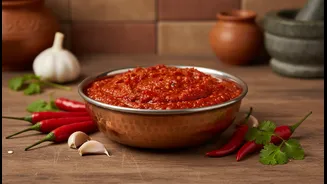
To create a versatile, wet red chutney perfect for chaat, start by de-stemming about 15-20 dried Kashmiri red chillies. Soaking them in hot water for 30 minutes is a crucial step; it rehydrates them and mellows their heat. Drain the chillies and place them in a blender with 10-12 peeled garlic cloves, a teaspoon of cumin powder, a pinch of salt, and the juice of half a lemon. Blend the mixture into a smooth paste, adding a tablespoon or two of water as needed to get the blades moving. Be careful not to add too much water; you're aiming for a thick, spreadable consistency, not a watery sauce.
Pro-Tips for Authentic Flavour
To truly capture the street-side essence, consider a few vendor tricks. For dry chutneys, always roast your ingredients—garlic, coconut, peanuts—separately on a low flame until aromatic and lightly browned. This deepens their flavour significantly. For wet chutneys, some recipes call for a small amount of sugar or jaggery to balance the heat and tang. For a thicker, more stable emulsion in wet chutneys, some cooks add a surprising ingredient like a couple of tablespoons of boondi (fried gram flour droplets) before blending. Finally, don't be afraid to make it your own. Adjust the garlic, chilli, and tang to suit your personal preference.
Storage and Serving
Both types of chutney store well, making them excellent for meal prep. The dry garlic chutney can be stored in an airtight container at room temperature for a couple of weeks, though refrigeration will extend its life further. The wet red garlic chutney should be stored in a clean, airtight jar in the refrigerator, where it will stay fresh for up to two weeks. A thin layer of oil on top can also help preserve it. Use it to spice up sandwiches, drizzle over chaat, serve alongside pakoras, or mix into a curry base for an extra layer of flavour.