



A Toxic, Thin Veil vs. A Breathable Blanket
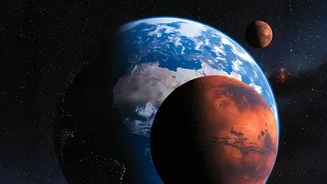
The most fundamental difference lies in what the atmospheres are made of. Earth’s air is a nourishing blend of 78% nitrogen, 21% life-giving oxygen, and small amounts of argon and other gases. This composition is perfect for the life that has evolved
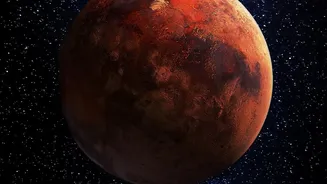
here. Mars, on the other hand, is shrouded in a toxic mix that is about 95% carbon dioxide, with the remainder being mostly nitrogen and argon. There are only trace amounts of oxygen, making it completely unbreathable for humans. The high concentration of carbon dioxide might sound like it would be great for plants, but the other atmospheric conditions make that impossible.
The Crushing Weight of Air Pressure
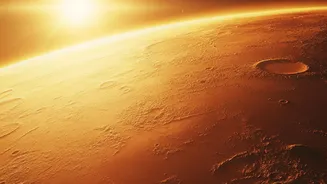
Imagine the entire sky pressing down on you. That's atmospheric pressure. On Earth, at sea level, we experience a comfortable pressure of about 1,013 millibars. This pressure is crucial; it’s what keeps water in a liquid state on the planet's surface. Mars has a dangerously thin atmosphere, with an atmospheric volume of less than 1% of Earth's. Its average surface pressure is a mere 6 to 7 millibars. This is less than one-hundredth of Earth's pressure, equivalent to what you would experience at an altitude of 45 kilometers on our own planet. At this incredibly low pressure, water can't exist as a liquid on the surface; it immediately boils and turns into vapor.
One Planet's Thermostat, Another's Deep Freeze
Earth’s thick atmosphere acts like a global thermostat, trapping the sun’s heat through the greenhouse effect to maintain an average temperature of about 15°C. This regulation prevents wild temperature swings between day and night. Mars, despite its carbon dioxide-rich air, has too thin an atmosphere to retain significant heat. The result is a planet of extreme temperatures. The average temperature on Mars is a frigid -63°C. Daily temperatures can swing dramatically, from a relatively mild 20°C near the equator on a summer day to a bone-chilling -120°C or colder at night.
Weather: Rain and Clouds vs. Planet-Spanning Dust
Weather on both planets is driven by solar heating, but the outcomes are vastly different. Earth's weather systems are dominated by a complex water cycle of evaporation, cloud formation, and precipitation as rain or snow. Mars, being cold and dry, has a much simpler weather system. It doesn't rain water on Mars. Instead, its weather is characterized by wind and dust. These winds can whip up colossal dust storms that can, in some cases, grow to cover the entire planet for weeks. While Mars does have clouds and even snow, they are not made of water but of frozen carbon dioxide (dry ice).
Why The Drastic Difference?
Evidence suggests that billions of years ago, Mars was a warmer, wetter world with a much thicker atmosphere. The leading theory for its transformation centers on the loss of its global magnetic field. Earth's magnetic field acts as a shield, deflecting the solar wind—a constant stream of charged particles from the Sun—and protecting our atmosphere. Mars, being a smaller planet, cooled more rapidly, and its internal dynamo shut down, causing its magnetic field to disappear. Without this shield, the solar wind relentlessly stripped away Mars's atmosphere over millions of years, leaving behind the thin, cold, and inhospitable environment we see today.