

A Fiery, Unsolved Puzzle
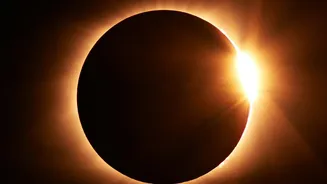
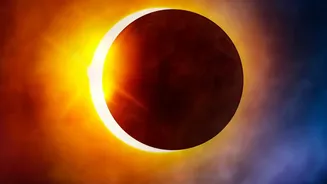
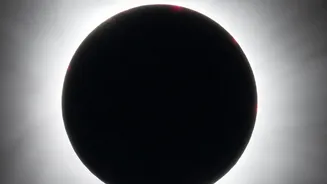
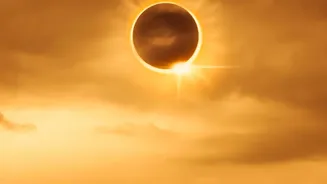
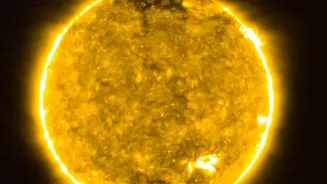
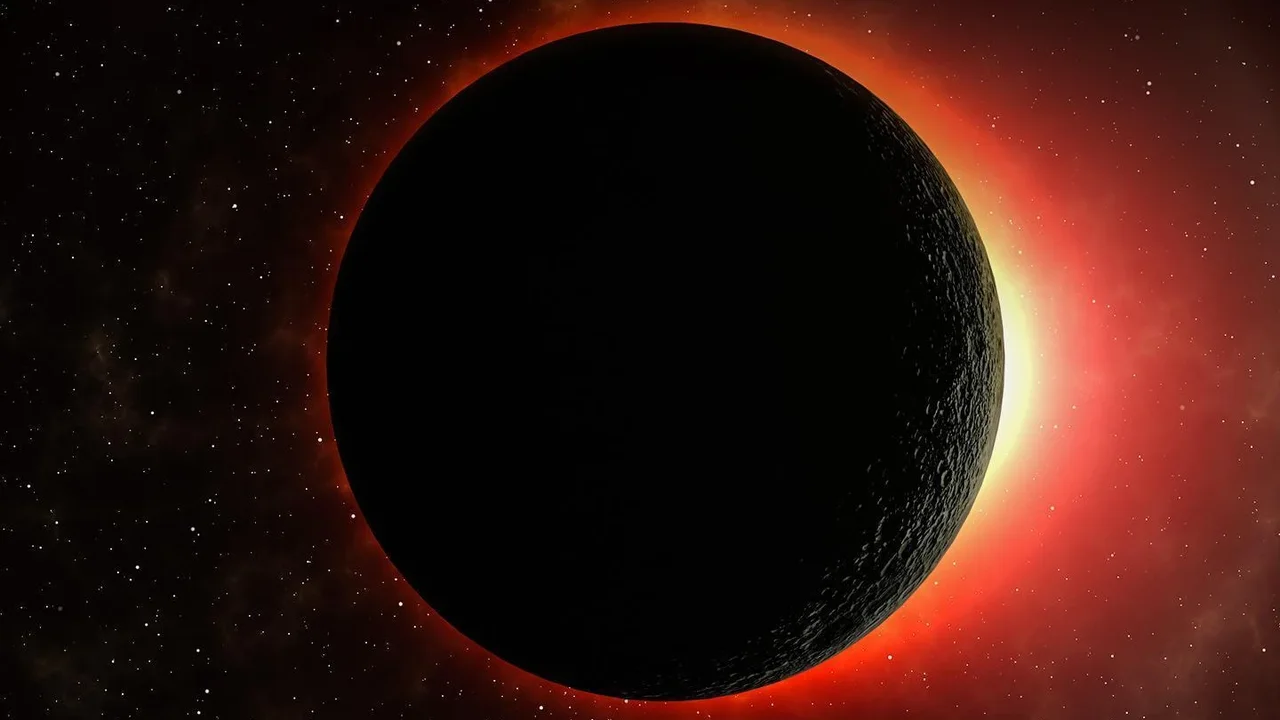
For centuries, one of the most baffling questions in astrophysics has been the coronal heating problem. The Sun's visible surface, the photosphere, sits at a relatively cool 6,000 degrees Celsius. Yet, its outer atmosphere, the corona, which becomes visible during
an eclipse, sizzles at over a million degrees. It defies the basic laws of physics, like a fire being cooler than the air around it. Scientists have long theorised that the Sun's complex magnetic field is responsible for transporting energy outwards to superheat the corona, but the exact mechanism has remained elusive. The 2026 eclipse was a prime opportunity to hunt for clues, with research teams positioned across the path of totality from Greenland to Spain, armed with the most advanced instruments ever used for eclipse observation.
Chasing the Shadow for Clues
To get the clearest possible view, some researchers didn't stay on the ground. NASA flew one of its WB-57 high-altitude jets along the eclipse path over the Atlantic. Flying at 50,000 feet, the aircraft soared above potential cloud cover and the thickest parts of Earth's atmosphere that can distort light. This airborne observatory effectively chased the Moon's shadow, extending the brief window of totality and allowing its sensitive cameras to gather more data. These instruments were designed to capture the corona in multiple wavelengths of light, helping scientists analyse its temperature and composition with unprecedented detail and providing crucial new information on the processes that drive the solar wind—the stream of charged particles constantly flowing from the Sun.
New Insights from Artificial Eclipses
Complementing the ground-based observations was the European Space Agency's Proba-3 mission, which has been creating its own artificial eclipses in space. By using two satellites flying in precise formation, one blocks the Sun's light for the other, allowing for extended views of the inner corona for hours at a time—far longer than the few minutes of a natural eclipse. Recent findings from Proba-3 have already delivered surprises. Scientists discovered that gusts of the 'slow' solar wind were moving three to four times faster than models had predicted for that region close to the sun. Data gathered in the weeks leading up to the natural eclipse was used to help forecast what the corona's structure would look like on August 12, allowing teams to test and refine their models of the Sun's magnetic environment.
A Glimpse of Solar Turbulence
Early analysis from the eclipse reinforces theories about the role of turbulence in heating the corona. Previous research, analysing data from over a decade of eclipses, identified turbulent structures and vortex rings in the corona, often originating from large, looping structures called prominences. These prominences are much cooler and denser than the surrounding plasma, and the friction at their boundaries is thought to generate waves and turbulence that transfer energy into the corona. The high-resolution images from the 2026 event are expected to show these complex interactions in action. Scientists are looking for confirmation of phenomena like the Kelvin-Helmholtz instability, a type of turbulence seen in fluids, which was recently confirmed on the Sun for the first time by the Daniel K. Inouye Solar Telescope.
Why It Matters for Earth
Understanding the corona isn't just an academic exercise. This is where space weather is born. Violent solar flares and coronal mass ejections can hurl massive amounts of energy and particles toward Earth, posing a risk to our satellites, communication systems, and even power grids. The unique structure seen during the 2026 eclipse, occurring as the Sun transitions away from the peak of its activity cycle, Solar Cycle 25, provided a rare snapshot of its atmosphere in a complex state. By feeding the new data into their computer models, scientists can dramatically improve their ability to forecast space weather, giving us more time to prepare for potentially disruptive solar storms. This work is critical for protecting our increasingly technology-dependent world.