



Meet Roman: NASA's Next Great Observatory
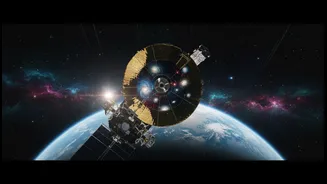
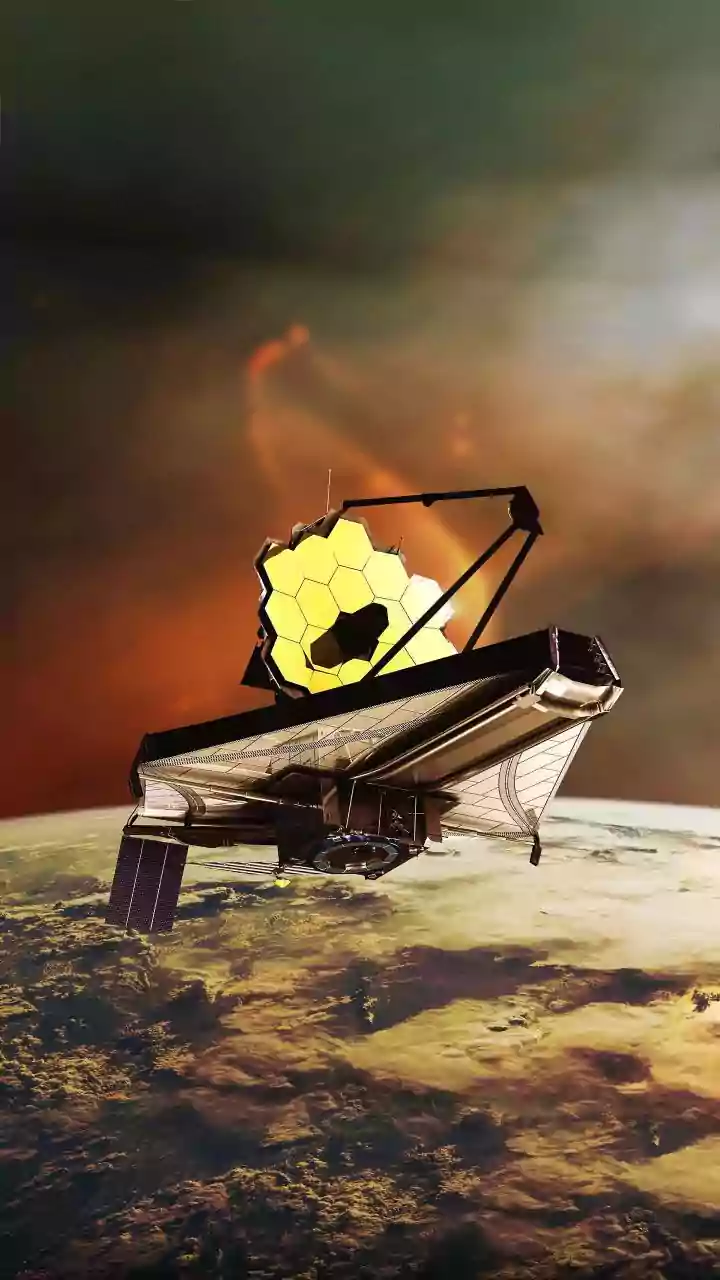
Scheduled for launch on August 30, 2026, the Nancy Grace Roman Space Telescope is NASA's next flagship mission in astrophysics. Named after Nancy Grace Roman, the agency's first chief of astronomy and the visionary 'Mother of Hubble', this new observatory
is designed for discovery on a grand scale. While the Hubble and James Webb space telescopes zoom in on specific cosmic targets with incredible detail, Roman is built for breadth. Its primary mirror is the same size as Hubble's at 2.4 meters, but its groundbreaking Wide Field Instrument (WFI) will give it a field of view 100 times larger. This allows it to map vast stretches of the sky with the same sharp resolution as its famous predecessor, but thousands of times faster. After completing its final tests, the telescope arrived at the Kennedy Space Center in Florida in late June 2026 to begin final preparations for its journey to space.
A Cosmic Census of New Worlds
One of Roman's primary goals is to conduct a massive survey of exoplanets—planets orbiting other stars. While previous missions like Kepler and TESS have found thousands of planets by watching for the dimming of a star's light as a planet transits in front of it, Roman will primarily use a different technique called gravitational microlensing. This method detects planets by observing how their gravity, and that of their star, acts like a lens, briefly magnifying the light from a much more distant, unrelated star. This technique is sensitive enough to find planets of all sizes, including those much smaller than Earth, those on wide orbits far from their star, and even free-floating 'rogue' planets that don't orbit a star at all. Scientists anticipate Roman could discover anywhere from 100,000 to 200,000 new planets, providing an unprecedented statistical census of the worlds in our galaxy and helping us understand how common solar systems like our own truly are.
Shining a Light on the Dark Universe
Beyond searching for planets, Roman will tackle the profound mysteries of the 'dark universe'. This refers to two enigmatic components that appear to govern the cosmos: dark matter and dark energy. Dark matter is the unseen 'scaffolding' whose gravity holds galaxies together, while dark energy is the mysterious force causing the expansion of the universe to accelerate. Together, they are thought to make up about 95% of the universe, yet we know almost nothing about them. Roman will investigate dark energy by surveying over a billion galaxies and thousands of distant exploding stars called supernovae. By precisely measuring their positions and distances, the telescope will create a vast 3D map of the cosmos, allowing scientists to trace the history of cosmic expansion in detail and test theories about what dark energy could be.
A Wider, Deeper View of the Cosmos
The transformative power of the Roman Space Telescope comes from its ability to combine depth and breadth. In the time it would take Hubble to painstakingly stitch together a mosaic of a neighboring galaxy like Andromeda, Roman could capture a similar image in just two snapshots. This incredible survey speed means that one month of Roman's observation time could be equivalent to a century of observing with Hubble. This capability will not only serve its primary goals but will also create a treasure trove of data for all areas of astrophysics, from studying the formation of stars to mapping small objects within our own solar system. The mission also includes a Coronagraph Instrument, a technology demonstrator designed to block the overwhelming glare of a star, which will pave the way for future telescopes to directly image Earth-like planets and study their atmospheres.