




A Marathon Pace on Another World
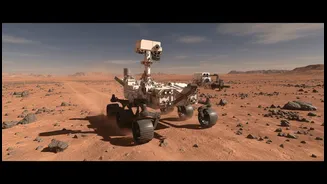
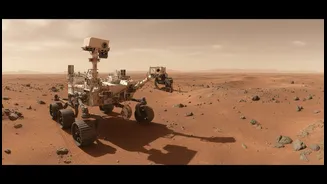
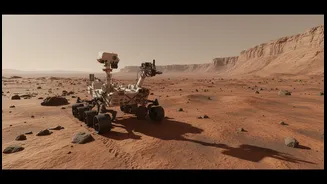
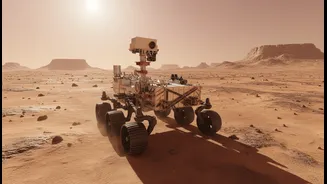
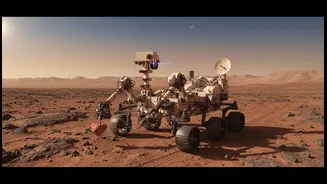
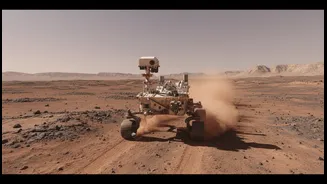
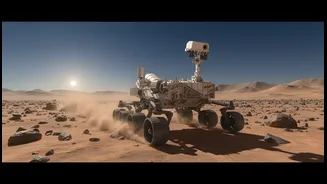
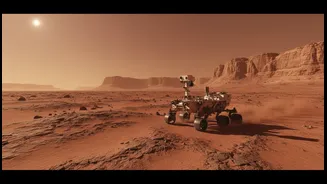
In a remarkable display of longevity and speed, the Perseverance rover surpassed the 26.2-mile (42.195-kilometer) mark on the Red Planet. It accomplished this impressive journey in just over five years, reaching the milestone on its 1,890th Martian day.
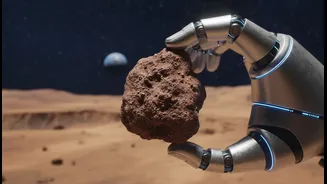
To put that in perspective, it took the previous record-holder, the Opportunity rover, more than 11 years to cover the same distance. While a top speed of under 0.1 miles per hour might not sound fast, it's a blistering pace for a vehicle navigating a hazardous, unmapped alien world millions of miles from its drivers. This achievement isn't just about setting records; it’s a deliberate strategy. Perseverance's primary mission is to explore diverse geological sites and collect rock and soil samples, a task that requires covering significant ground. Its speed and endurance are what make this ambitious science possible.
The Self-Driving Scientist
The secret to Perseverance's speed is a major upgrade in its autonomy. The rover is equipped with an advanced navigation system called AutoNav, which effectively allows it to be a self-driving vehicle. Unlike its predecessor, Curiosity, which had to stop, take images, and wait for human controllers on Earth to plot a safe path, Perseverance can 'think while driving'. It uses a dedicated onboard computer to continuously capture stereo images, create 3D maps of the terrain ahead, identify potential hazards like sharp rocks or sand traps, and plot a safe course around them in real-time. This leap in processing power means that rover drivers at NASA's Jet Propulsion Laboratory can now act more like supervisors. They give the rover a destination, but largely trust it to figure out the best way to get there, freeing up valuable mission time that was once spent on painstaking, stop-and-start navigation.
A New Philosophy: More Science, Less Driving
This newfound speed changes the entire philosophy of a rover mission. For previous generations of rovers, driving was the main event of any given Martian day, a time-consuming and cautious process that limited the scope of exploration. With Perseverance, driving is becoming more of a commute. The ability to autonomously traverse hundreds of meters in a single day allows the science team to move rapidly from one high-priority geological site to another. This means less time is spent simply getting from A to B, and more time can be dedicated to the mission's core purpose: conducting experiments and searching for signs of ancient microbial life. The rover can now access a wider variety of terrain within its planned mission timeline, creating a richer and more diverse collection of samples than was ever possible before.
Paving the Way for Sample Return
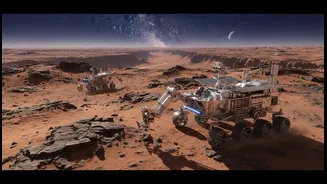
Perseverance’s capabilities are a crucial field test for one of NASA's most ambitious projects yet: the Mars Sample Return (MSR) campaign. This multi-mission effort, planned in cooperation with the European Space Agency (ESA), aims to bring the samples collected by Perseverance back to Earth for analysis in advanced laboratories. The success of MSR will depend on future, even more sophisticated robots, including a 'fetch rover' that will need to travel quickly across the Martian surface to retrieve the sample tubes Perseverance has cached. By proving the viability of high-speed, autonomous navigation, Perseverance is not just conducting its own mission; it is laying the technological groundwork and demonstrating the capabilities essential for the next giant leap in our exploration of the Red Planet. This shift ensures that future rovers will be faster, smarter, and more capable of performing complex logistical tasks far from home.